ETF Education, Bond Allocation and Portfolio Rebalancing: Key Ideas for Investors
Retirement Planning Raph Antoine 306 reads
A roundup of ETF education, bond allocation and portfolio design, with a practical reminder to treat allocation changes and rebalancing as deliberate choices.

ETF education and portfolio design are the main themes in this collection, with one clear thread running through them: investors benefit from understanding what sits behind an allocation before changing it. The featured material spans bond strategies, risk premia and access to ETFs, while the recognition of an independent investing publication highlights the value of explaining these choices clearly to European readers.

ETF access and investor education
Banker on Wheels was nominated for ETF Educational Content of the Year at the ETF Stream Awards 2026. The publication, launched in 2020, shares the shortlist with J.P. Morgan Asset Management. Its nomination recognizes work examining barriers that European investors may encounter when trying to access ETFs that are intended to be available to them.

For an investor, access is only one part of the decision. It also matters whether a fund’s structure, costs, holdings and trading arrangements fit the role it is meant to play in a portfolio. Clear educational material can help readers ask those questions before choosing a fund, and distinguish a product’s label from the exposures it actually provides. An award nomination is a sign of industry recognition; it does not establish that a particular fund or strategy is right for an individual household.

The accompanying resources point to two related portfolio questions: how much to allocate to smaller-company value shares, and how to diversify beyond US technology through global funds that exclude the United States. These are questions of portfolio construction, not automatic instructions to buy or sell. Their relevance depends on an investor’s existing holdings, time horizon, tolerance for volatility and reasons for seeking a particular exposure.

What a systematic bond approach can include
A featured 18-page BlackRock paper considers a systematic approach to fixed-income allocation. It introduces risk parity, momentum and carry as broad concepts that can inform allocation tilts. In this context, risk parity concerns the way different assets contribute risk to a portfolio; momentum refers to trends in asset prices; and carry describes returns associated with holding an asset, which can change as market conditions and relative values shift.

The paper’s framing is that these tilts can adjust gradually as long-term return expectations evolve. They may include long exposures in some assets and short positions relative to others. That makes the approach different from simply choosing a fixed bond percentage and leaving every part of the allocation untouched: the strategy uses changing signals to shape exposures within a broader allocation framework.

There is a trade-off. A systematic process can give investors a defined way to consider changing conditions, but it also requires them to understand the signals and accept that a strategy can behave differently from a simple, steady allocation. The collection recommends treating the paper’s discussion of timing with care, while regarding its introduction to risk parity, momentum and carry as useful educational material. That’s a sensible distinction for readers: learning how a strategy works does not require adopting every element of it.

Bond moves and the portfolio role of fixed income
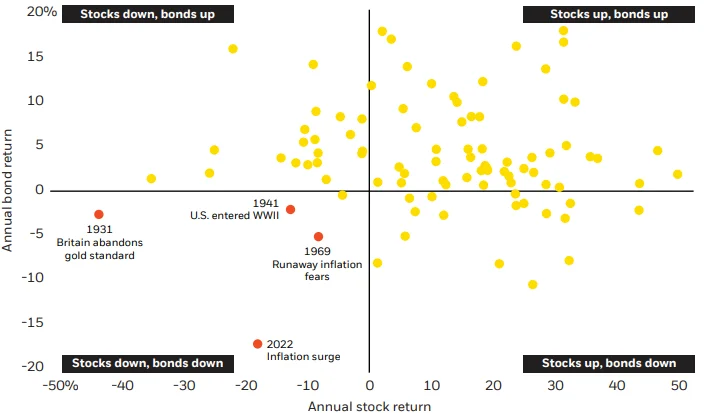
Related reading extends the discussion to higher yields and long-term portfolios, and to 20 episodes since 1963 when bond yields spiked. Together, these subjects invite a practical question: what job are bonds meant to do in a household’s portfolio? They may be included as a source of income, to balance other exposures, or to support a planned spending need. The answer affects how an investor should judge a period of falling bond prices or rising yields.

A change in yields can alter bond prices and the income available from newly purchased bonds. But the effect on an investor’s overall plan depends on the bonds held, their maturities and the rest of the portfolio. Looking at past episodes can provide context for how assets have behaved in difficult periods; it cannot promise that the next episode will follow the same pattern. Historical examples are most useful when they sharpen the questions an investor asks about risk, diversification and the purpose of each holding.

One way to use this material is to write down the intended role of fixed income, then compare that role with the portfolio’s actual holdings. If bonds are there to reduce reliance on shares, an investor can consider whether the mix still serves that purpose. If they are intended to meet a future spending need, timing and the availability of funds may matter more. These are general planning considerations, not a personalized recommendation.
Rebalancing as a deliberate choice
Rebalancing means bringing a portfolio back toward its chosen allocation after market movements cause holdings to drift. The process can involve selling assets that have grown beyond their intended share and adding to those that have fallen below it. The aim is to restore a plan’s risk profile, not to predict which market will lead next.
Before making a change, investors can review the allocation they originally chose, identify which holdings have moved away from it, and consider the practical costs of adjusting. Depending on the account and country, transactions may involve fees or tax consequences, so the mechanics deserve attention alongside the target percentages. A household that has no written target may find it useful to define one before reacting to market moves.
Rebalancing can also be done with new contributions or withdrawals, where available, instead of selling existing holdings. That may reduce the need for transactions, though it won’t suit every portfolio or fully correct every drift. Whichever method is used, a consistent review schedule can help investors make changes for a stated reason rather than in response to a burst of market anxiety.
Keep the plan connected to real life
The broader reading list ranges from wealth management and lifestyle planning to technology and the economy. Those topics matter because a portfolio is a tool for supporting a household’s plans, not an end in itself. Changes in goals, spending needs or comfort with risk can all prompt a review of whether the allocation still fits.
A useful next step is modest: identify the purpose of each major holding, check whether the portfolio still reflects that purpose, and learn how any strategy under consideration works before applying it. ETF access, bond tilts and rebalancing each deserve careful thought. The clearest portfolio decisions connect the investment mix to the life it is meant to support.