Premium Research Pricing, Renewal Locks and Access Dates Explained
Family & Life Money Raph Antoine 833 reads
Compare three plans, understand the 2026 access and renewal dates, and check the refund, downgrade and upgrade rules before joining.
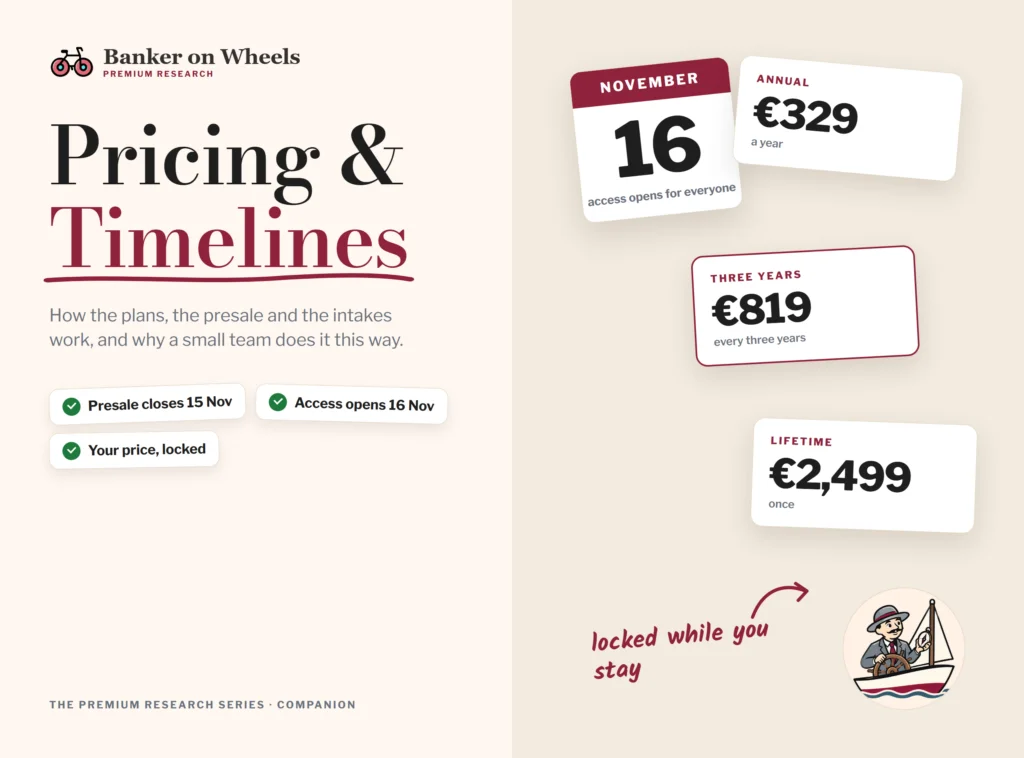
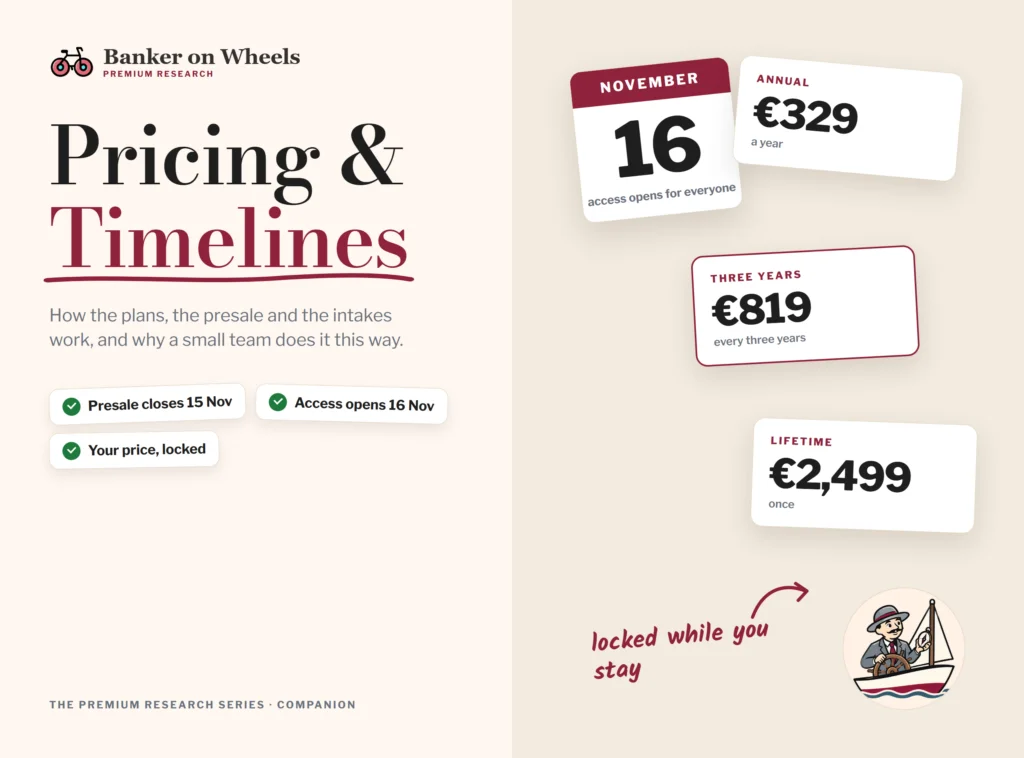
The main trade-off in Premium Research is straightforward: commit for longer to pay less per year, or choose an annual plan with a smaller upfront cost. The presale prices are €329 for one year, €819 for three years and €2,499 for lifetime access, plus VAT where it applies. Access begins for everyone on 16 November 2026, and the price you pay during the presale is intended to stay in place for as long as you remain subscribed, subject to a stated inflation exception.
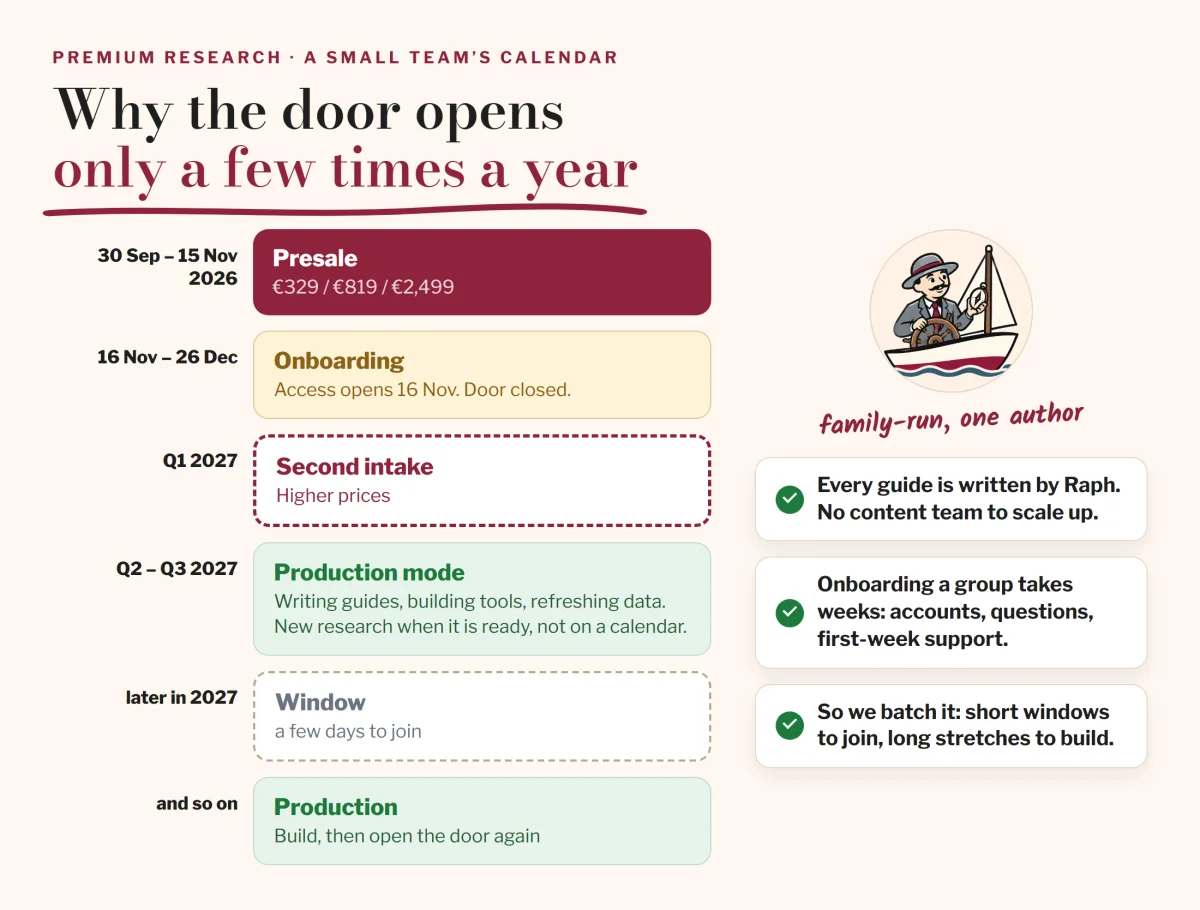
That setup reflects the way Banker on Wheels describes its work: a family-run operation building apps, licensing financial data and producing research. It opens enrolment in batches so the small team can onboard members, then return to developing tools and guides. For anyone weighing the purchase, the important details are the dates, what each plan costs over time, and what options are available if the choice doesn’t feel right.
Dates that shape the offer
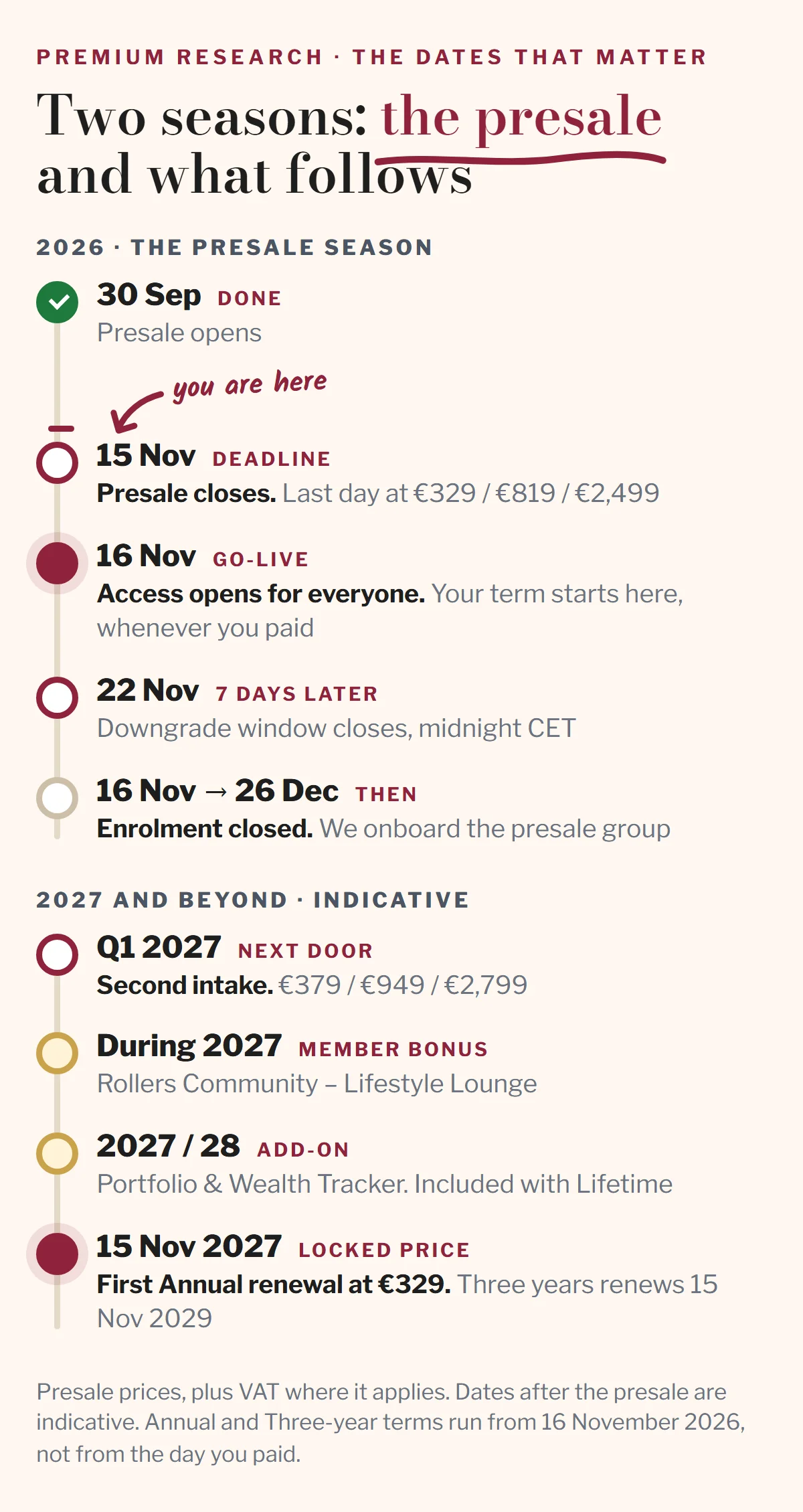
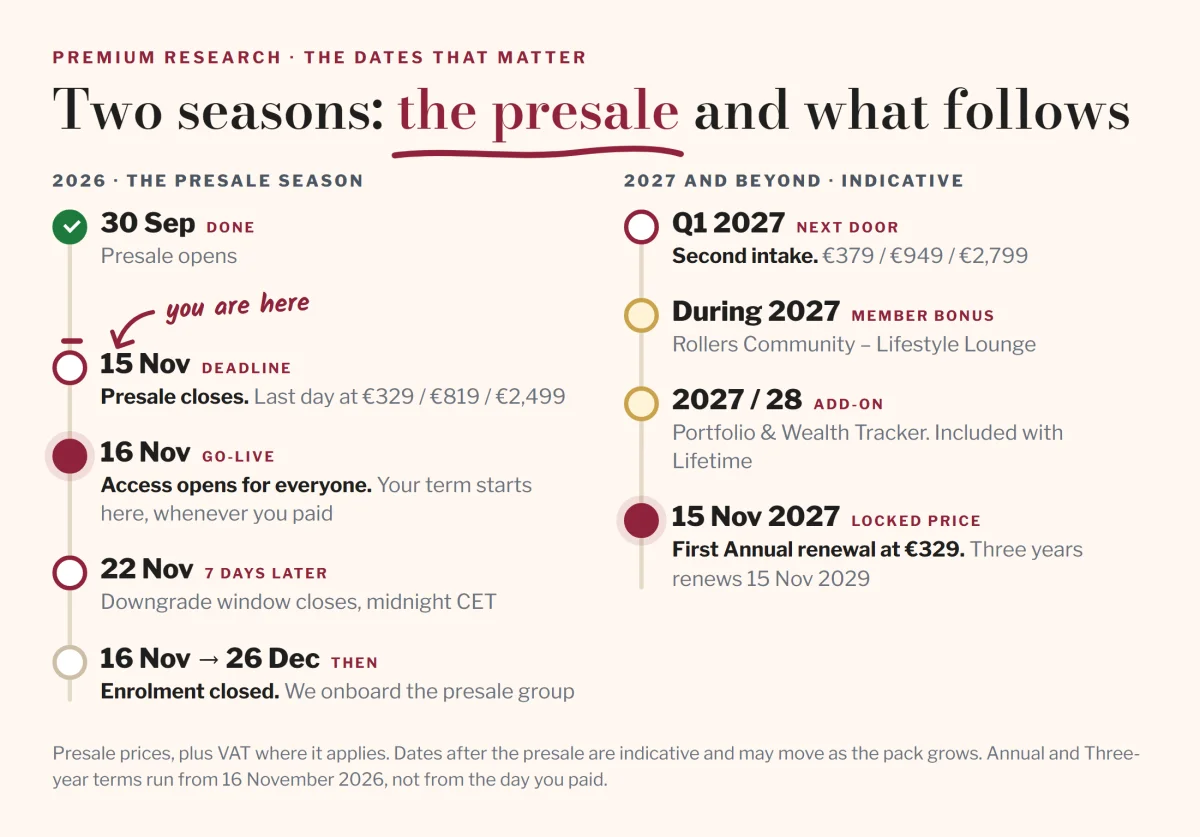
The presale opened on 30 September 2026 and closes on 15 November. That is the last day to buy at €329 for Annual, €819 for Three years or €2,499 for Lifetime. All amounts are before applicable VAT.
Access starts on 16 November for the entire group, regardless of when each person paid. The Annual and Three-year terms also begin that day. Someone who pays on 1 October, for example, still gets an Annual term through 15 November 2027; paying early doesn’t start the subscription clock early.
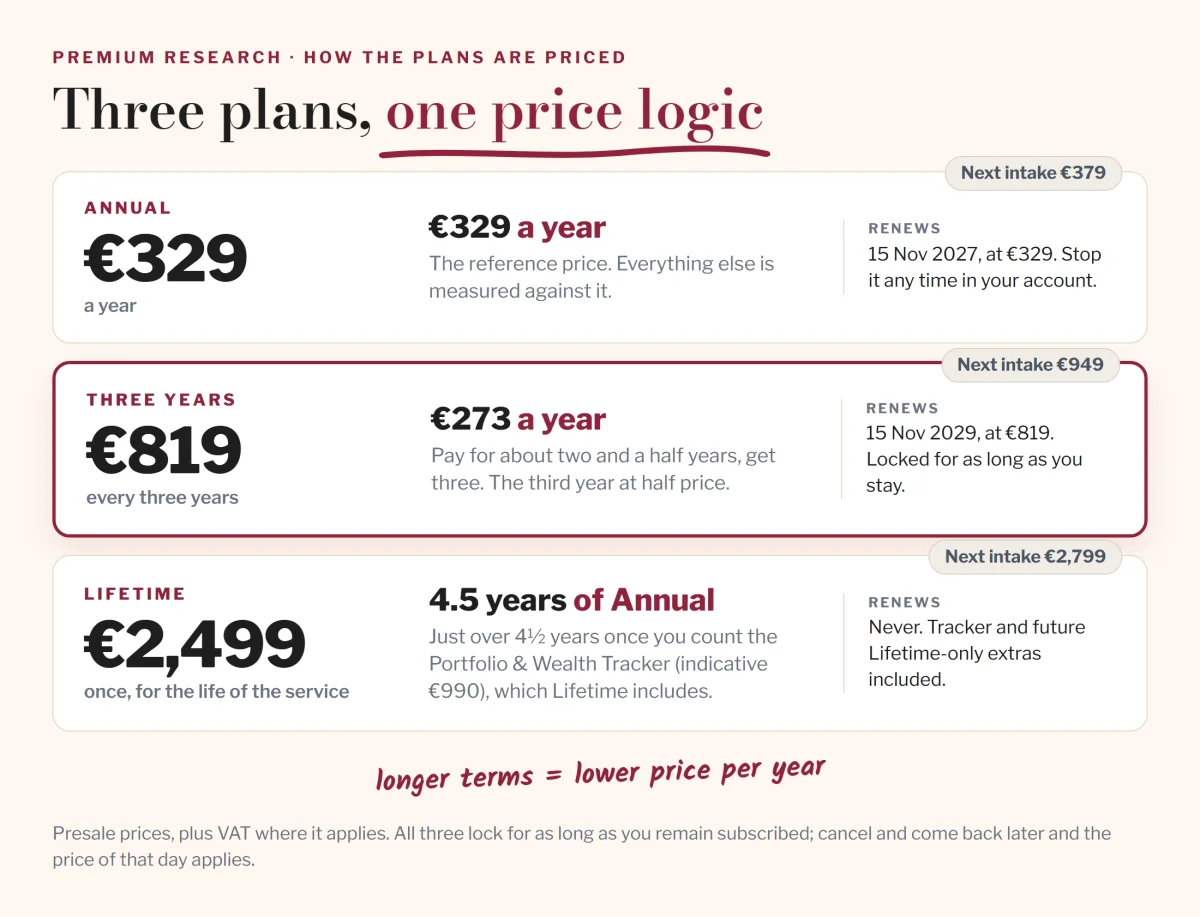
After access opens, enrolment closes until the next intake in Q1 2027. The listed prices for that intake are €379 for Annual, €949 for Three years and €2,799 for Lifetime, plus VAT where it applies. Those prices will also be used as the reference for upgrades after the presale.
Three plans, different commitment levels
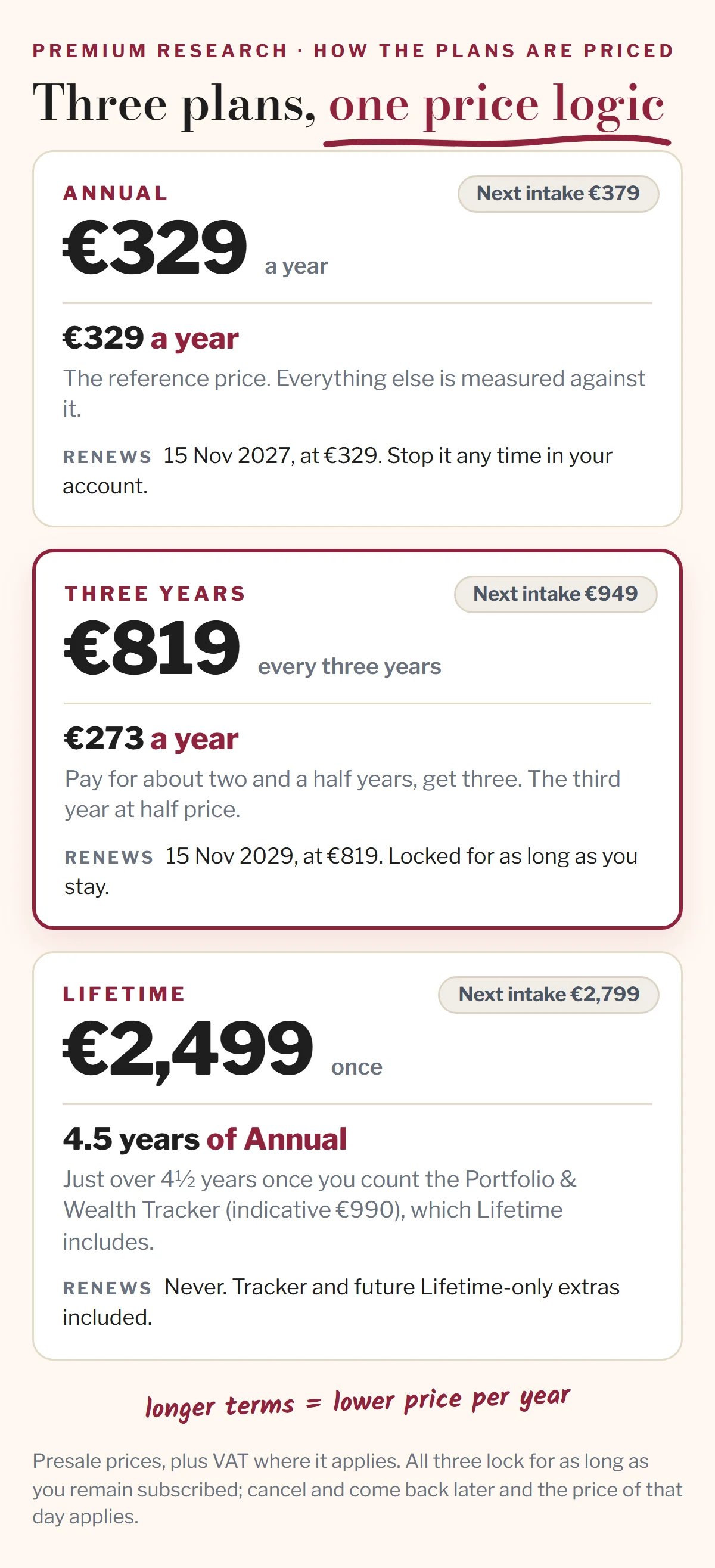
Annual is the simplest point of comparison at €329 a year during the presale. The Three-year plan costs €819, or about €273 per year. The provider describes this as paying for roughly two and a half years and receiving three, with the final year effectively half price. Lifetime costs €2,499 as a one-time payment.
Longer commitments cost less per year because they give the business more certainty about future research time and data contracts. That discount comes with a practical trade-off: paying more up front means committing more money before you have had as long to use the service.
Lifetime deserves a particularly careful comparison. At the presale price, €2,499 equals about 7.6 years of the €329 Annual price. Lifetime also includes the Portfolio & Wealth Tracker, which is in development for 2027/28 and is expected to be offered separately at an indicative price of €990. The provider’s own internal accounting treats the Lifetime price as covering just over four and a half years when that planned add-on is counted. The service describes Lifetime as access for the life of the service; its team says it has operated for almost seven years and intends to continue for decades. That intention is not a promise about how long any service will exist, so the plan suits people who understand that uncertainty and expect to use the offering for a long time.
Prices are listed before VAT. VAT for customers in the EU and UK is added at checkout, with Stripe determining the amount based on location. VAT-registered businesses are asked to contact the provider before paying; qualifying business purchases may be eligible for the reverse-charge mechanism.
How the renewal price lock works
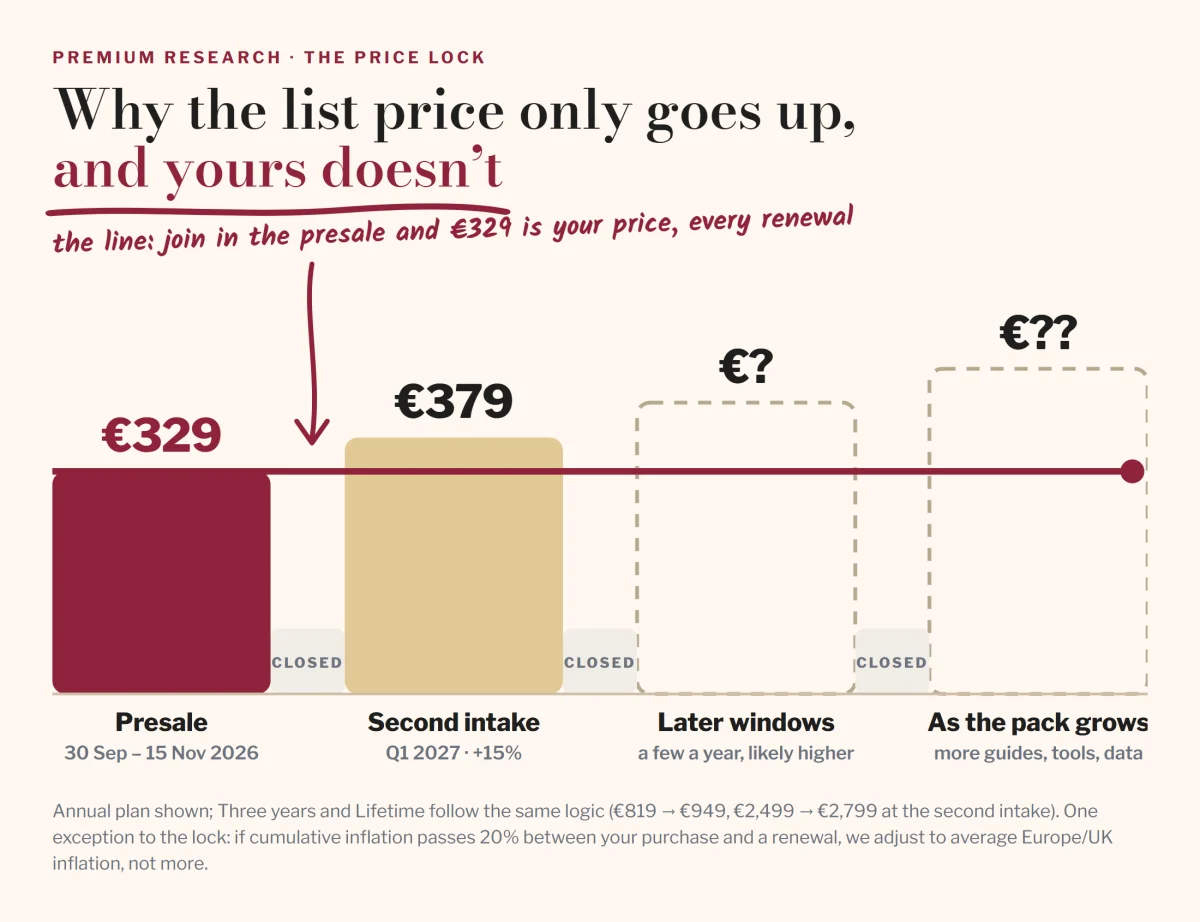
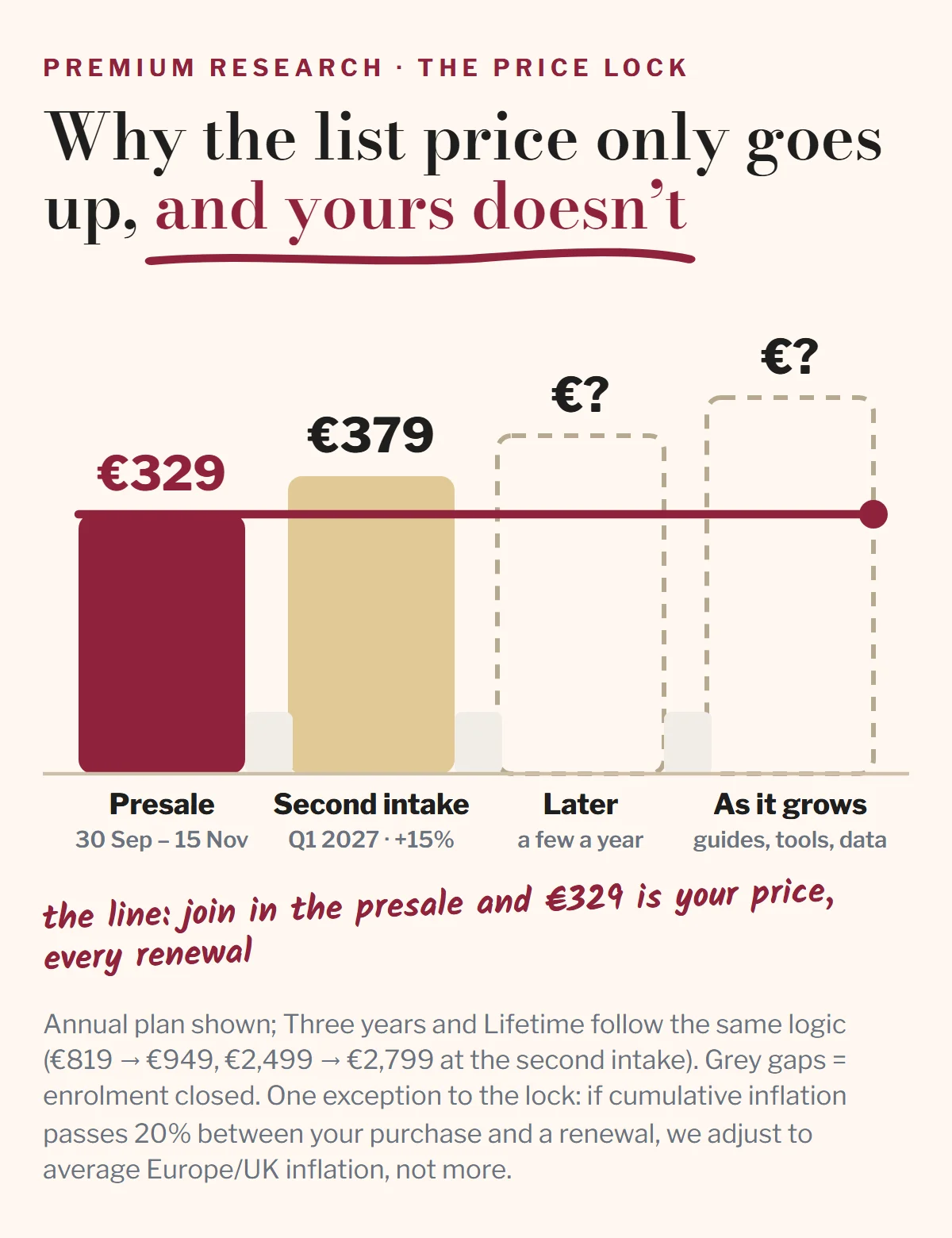
Members who join during the presale are promised their purchase price for renewals for as long as they stay subscribed. An Annual member who pays €329 renews at €329, and a Three-year member who pays €819 renews at €819. A person who joins at the Q1 2027 intake would renew at that intake’s price: for example, an Annual plan at €379 would renew at €379 in 2028.

There is an inflation exception. If cumulative inflation between purchase and renewal exceeds 20%, the provider says it may adjust the price to average inflation in Europe and the UK, with the increase capped at inflation. It gives rising fixed costs, including data and infrastructure, as the reason. The company says it aims to keep the price-lock rule, but reserves the right not to offer it to future intakes.

Prices are expected to rise at later enrolment windows as the package adds guides, tools and data, though later prices have not been set. If a member cancels and returns in a later intake, the price at that time applies; the lock is for members who stay subscribed. The provider also says it does not plan to offer discounts, citing the cost of its work and data and the concern that later deals would be unfair to people who paid the published price earlier.

Why enrolment happens in groups
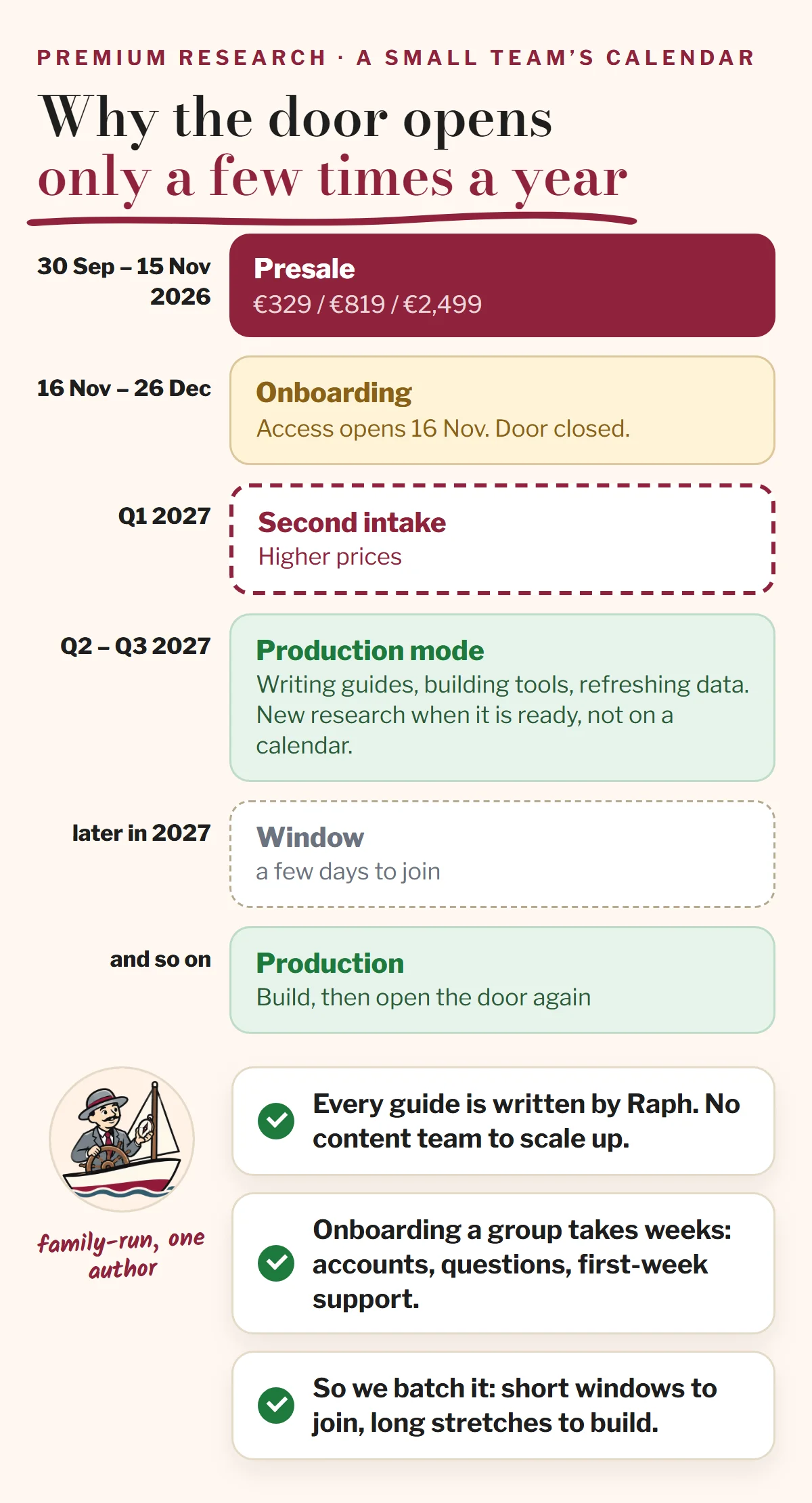
Joining is available during set windows rather than continuously. The team says onboarding a group takes weeks and draws time away from writing guides, maintaining data and building apps. Batching that work allows it to focus on members at the start, then spend longer in production before onboarding another group.

The schedule is not fixed beyond the next intake. The team says it may hold a couple of enrolment windows a year at the beginning. Its stated aim is to build a high-quality community for individual investors in Europe, rather than to maximize its size. For prospective members, the practical consequence is that waiting may mean paying a higher listed price and waiting for the next window.

What the subscription pays for
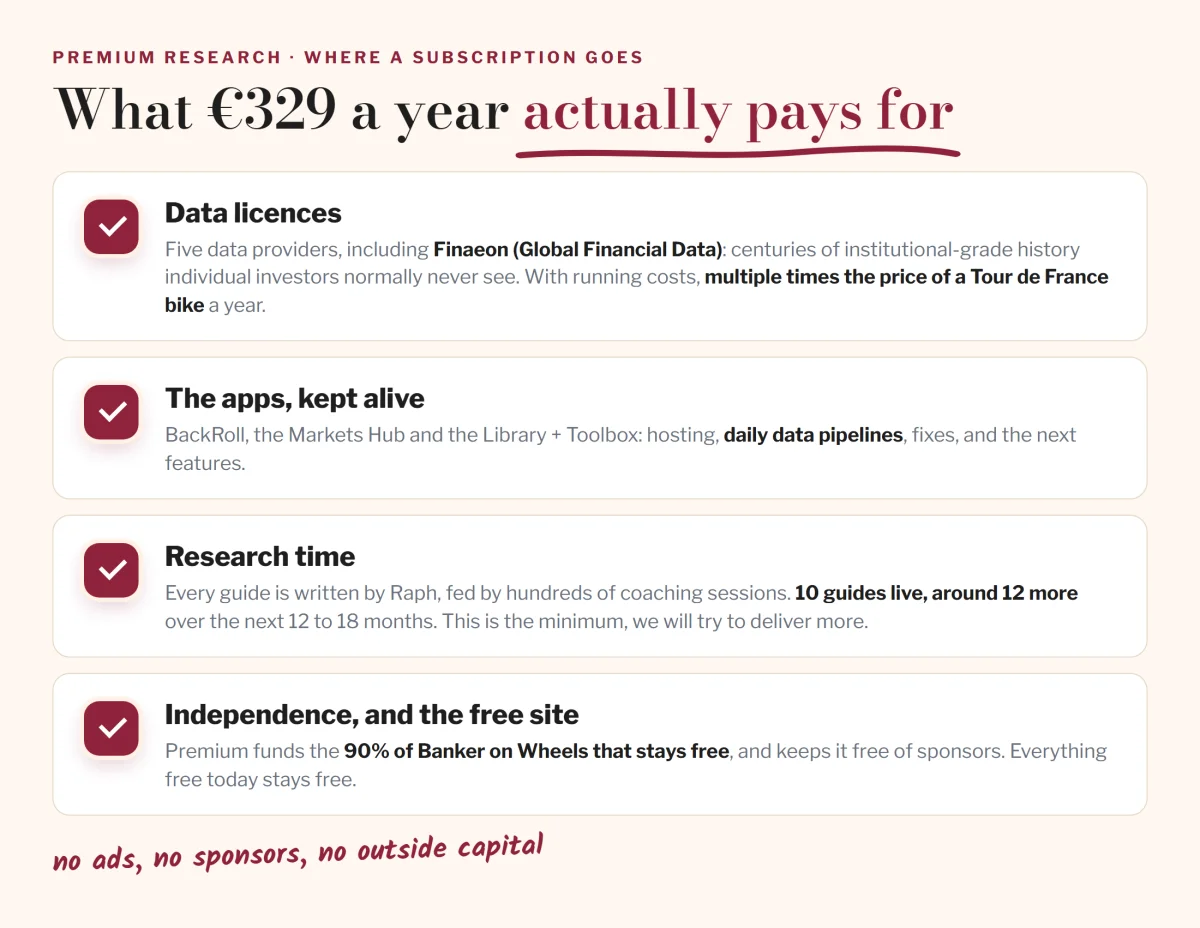
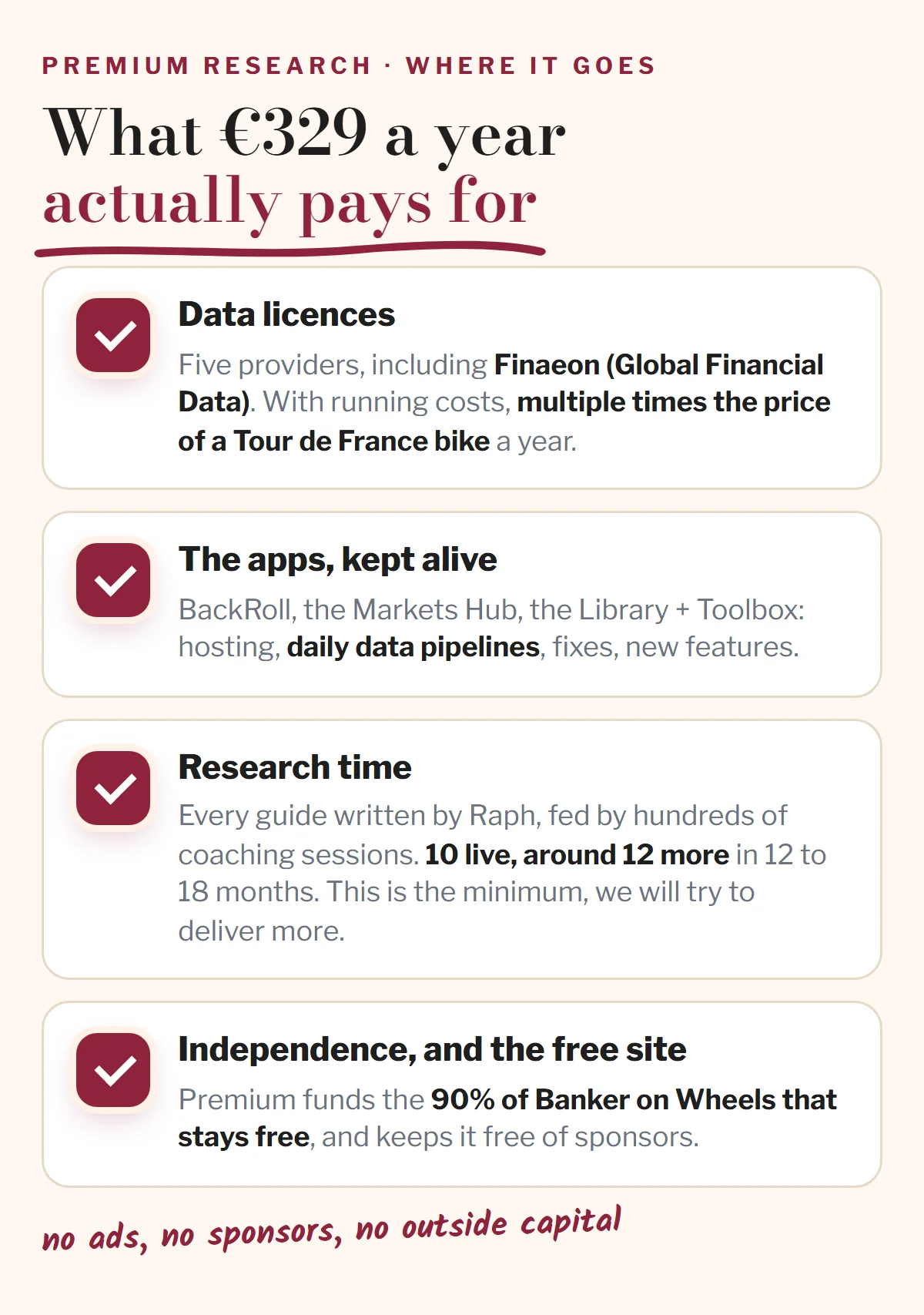
The provider identifies four main uses for subscription revenue: data licences, apps and their upkeep, research time, and maintaining an independent business. It uses five data providers, including Finaeon (Global Financial Data), for historical financial information. The team says the licences and running costs are substantial.
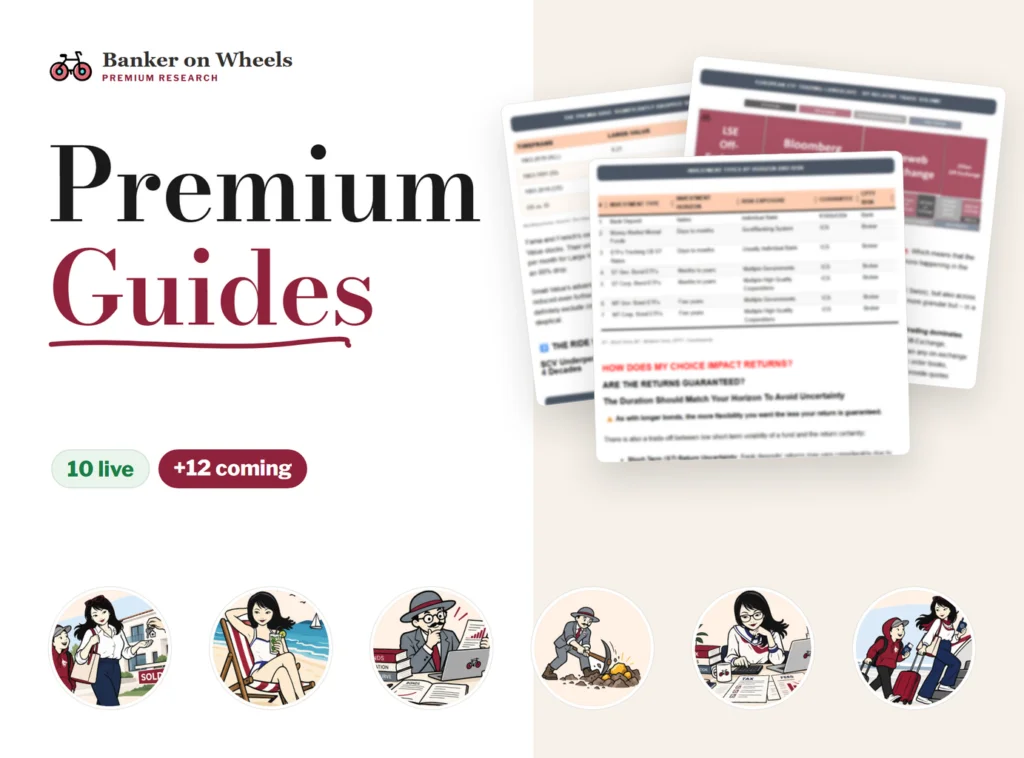
The current package includes Premium Guides, the BackRoll app, the Markets Hub app, and the Library + Toolbox. Ongoing work covers hosting, daily data pipelines, maintenance and new features; the provider also plans to add currencies, data and series in the coming months. It says ten guides are live and around twelve more are planned over the next 12 to 18 months, at a minimum. The Portfolio & Wealth Tracker is in development for 2027/28 and is included with Lifetime; the provider describes it as a separately sold add-on for other customers.
The team says it takes no advertising, sponsorship or outside capital. That structure supports its stated goal of keeping the research independent, while leaving the small team’s capacity as a limit on how quickly it can publish and build.
Options if you change your mind
There is no trial. The provider points to its free site, which it says has been running for almost seven years, as a way to assess its work before paying. It lists four options for members who want to change plans or stop.
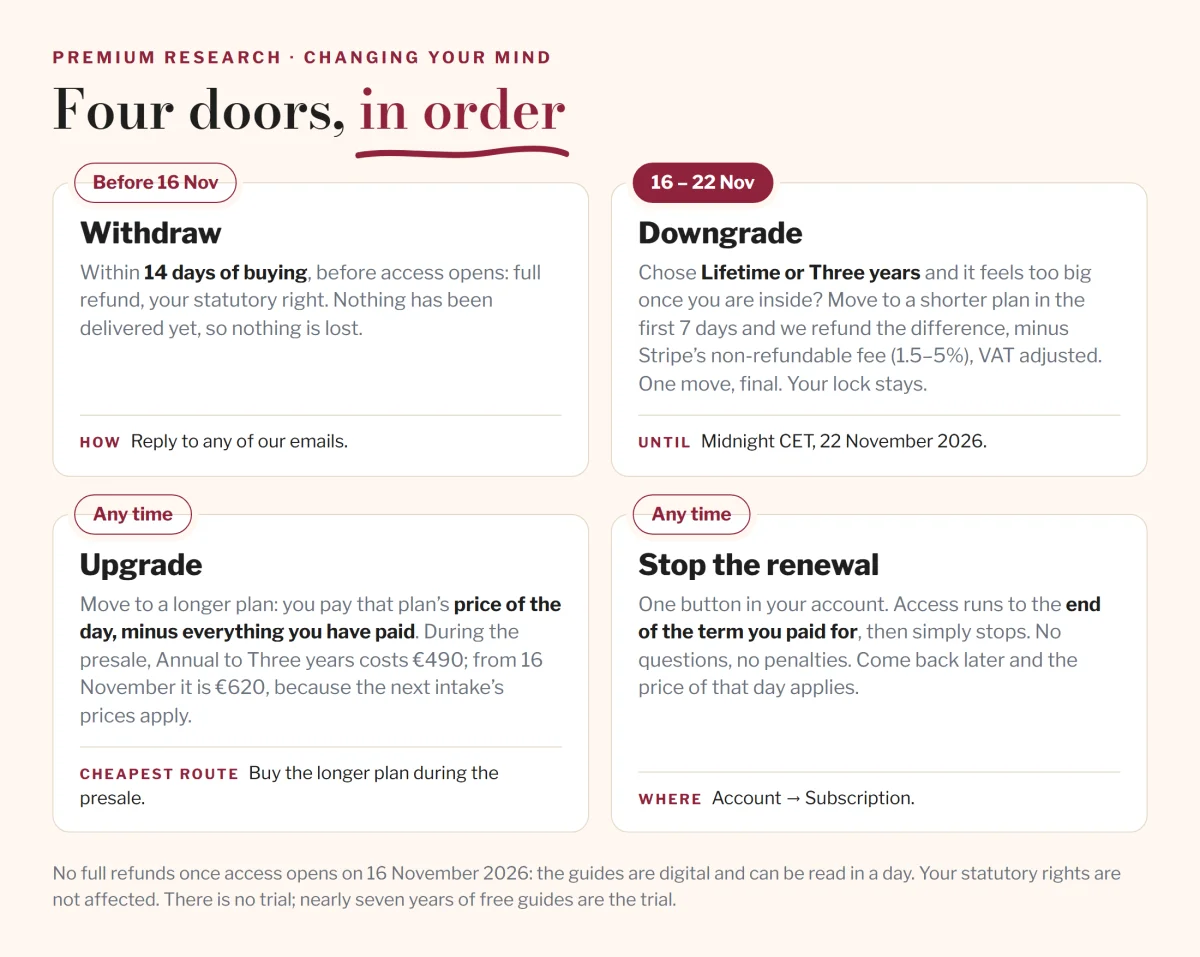
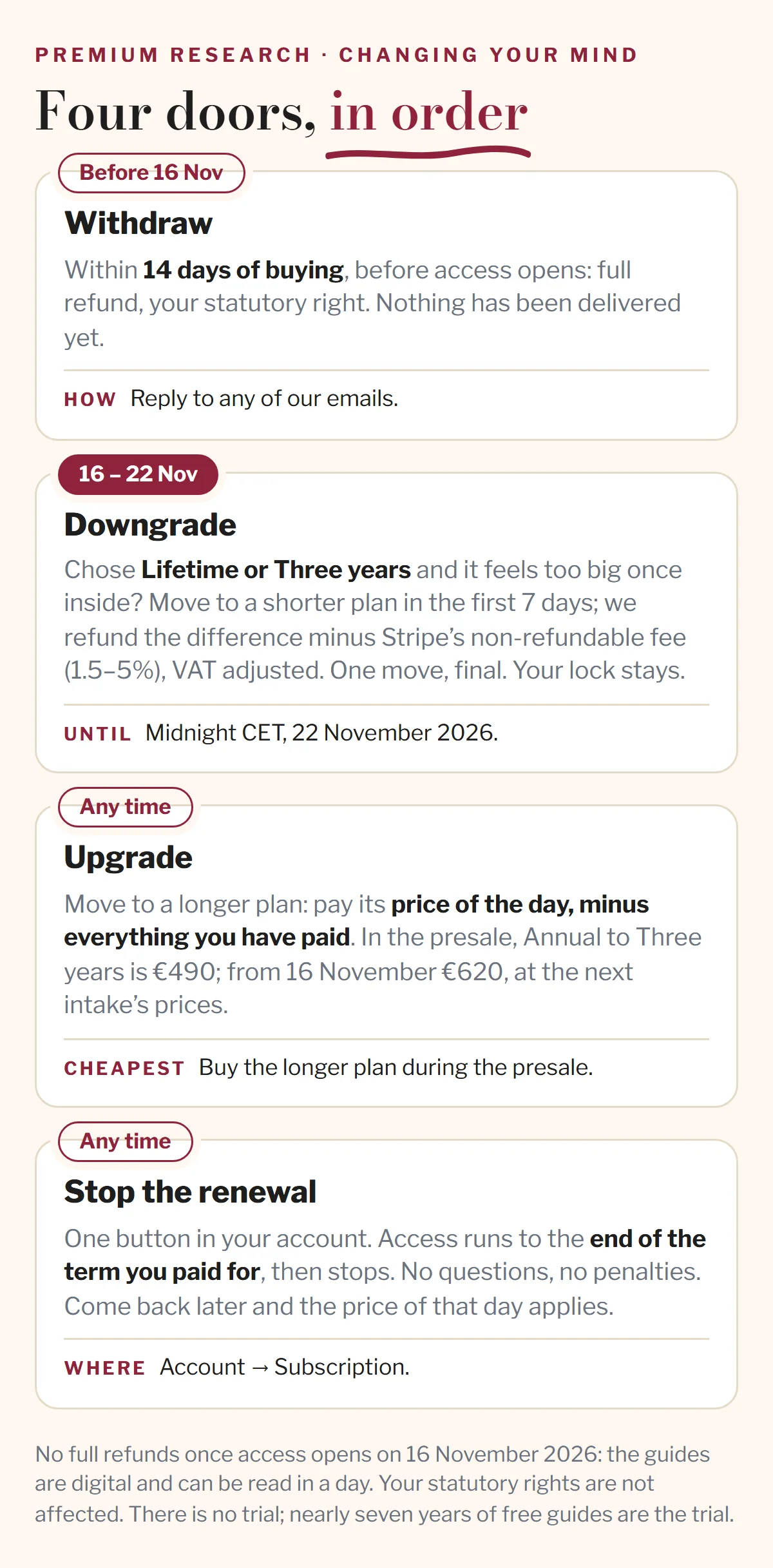
- Withdraw before access opens. Within 14 days of purchase, and before 16 November 2026, customers can request a full refund.
- Downgrade during the first week of access. From 16 through 22 November, someone who bought Lifetime or Three years can move to a shorter plan and receive the difference back. The stated differences are €2,170 from Lifetime to Annual, €1,680 from Lifetime to Three years, and €490 from Three years to Annual. Stripe’s non-refundable fee, listed as 1.5% to 5%, is deducted, with VAT adjusted. The change is limited to one move and must be made by midnight CET on 22 November. The member’s price lock remains.
- Upgrade at any time. Members can move to a longer plan by paying its applicable price minus what they have already paid. During the presale, the listed upgrade amounts are €490 from Annual to Three years, €2,170 from Annual to Lifetime, and €1,680 from Three years to Lifetime. From 16 November, the next intake’s prices apply, and those upgrade amounts become €620, €2,470 and €1,980, respectively. The provider notes that choosing the longer plan during the presale costs less than upgrading later.
- Stop renewal whenever you choose. Members can turn off renewal in Account, under Subscription. Access continues through the paid term and then ends, with no stated penalty.
Full refunds are not available once access begins on 16 November. The provider’s reason is that the guides are digital and can be read within a few days, so access delivers the content immediately.
Who may want to join now, and who can wait
The presale may suit readers who already know the free material and expect to use at least some of the guides, BackRoll or the Markets Hub. They can compare the presale price with the higher Q1 2027 prices and decide whether the price lock is useful for their expected period of membership.
Waiting may make more sense for someone unsure they will use the service, or whose portfolio is still small. The provider gives €20,000 to €30,000 as an example of a portfolio size where a flat annual fee may take a relatively large share, and says its free material covers many needs at that stage. The next intake is listed at €379 for Annual; after 15 November 2026, the €329 presale price will no longer be available.
The decision comes down to expected use, the upfront cost and the value of keeping a renewal price. Check the plan terms and applicable VAT before paying, and make sure the access and change-of-plan dates fit your needs.