Portfolio Guides for Non-US Investors: What’s Available and What’s Planned
Retirement Planning Raph Antoine 712 reads
Ten portfolio guides are live, with about twelve more planned over the next 12 to 18 months for investors weighing withdrawals, portfolio setup and cross-border moves.
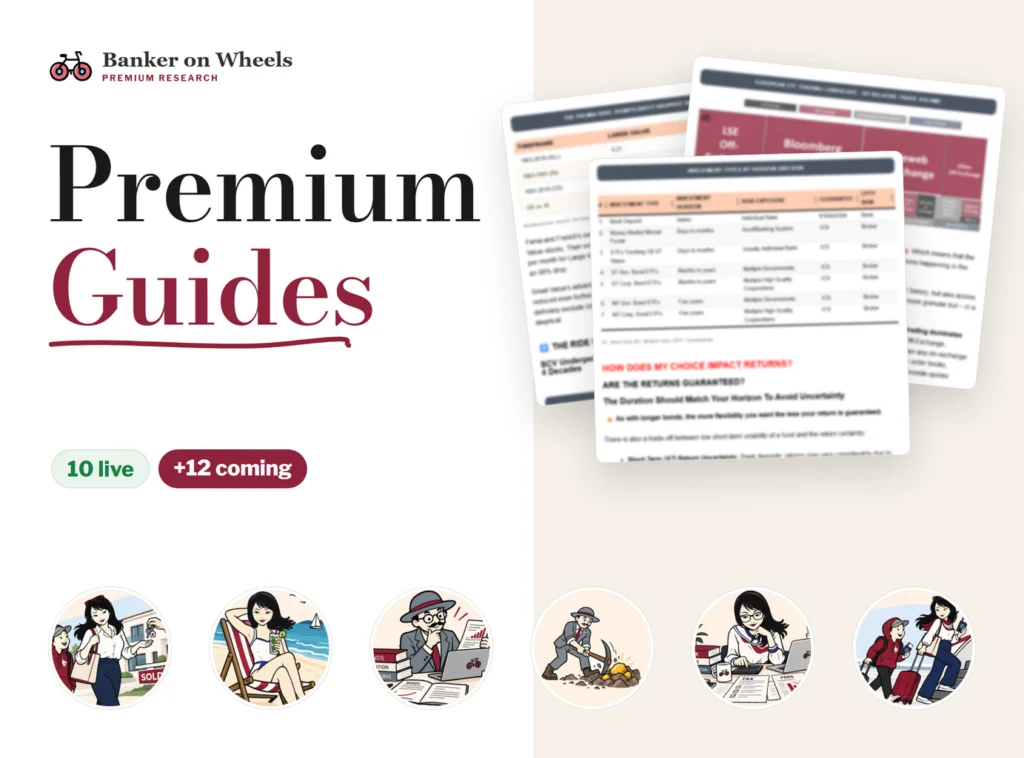
For investors building financial independence outside the United States, useful guidance often needs to address more than choosing investments. Questions about withdrawals, a business sale, an inheritance or a move to another country can change how a portfolio should be organized and used. Banker on Wheels Premium puts written guides at the center of its research offering, alongside digital tools designed to help users test plans and track market assumptions.
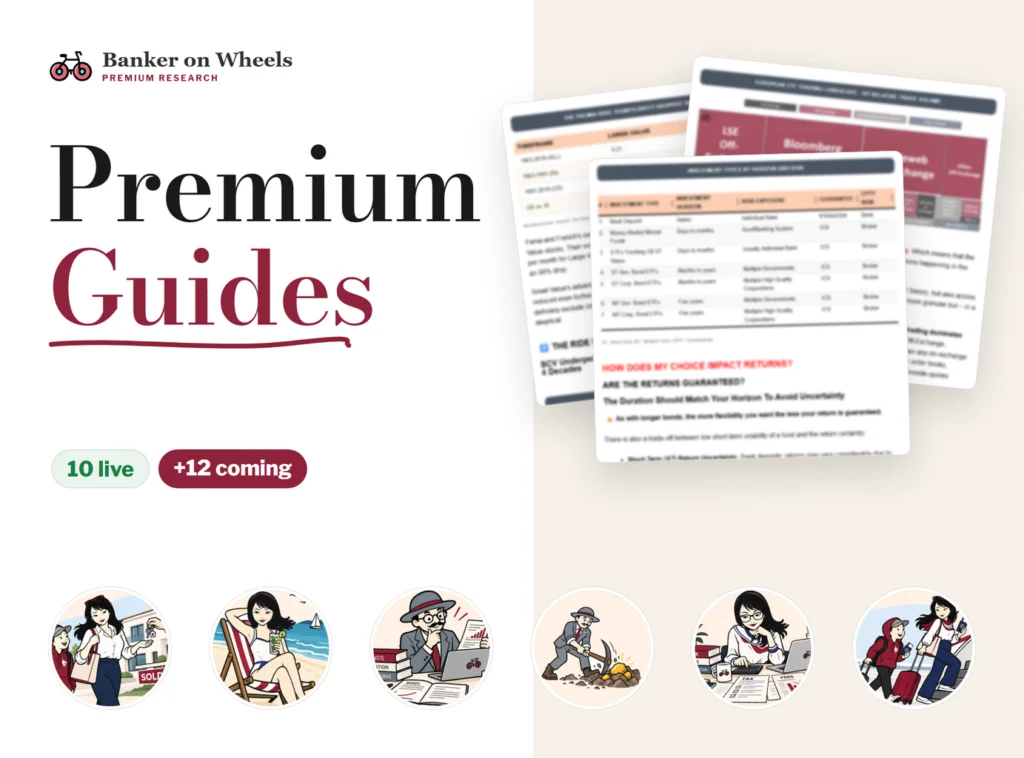
The guides draw on recurring questions from hundreds of one-to-one coaching sessions that began in 2023. Their focus is portfolio construction: explaining choices in accessible language and addressing practical challenges that may not get much attention in US-centered material. Ten guides are available now, grouped across five sections. Around twelve more are planned for the next 12 to 18 months, though the proposed topics may change or expand in response to member demand.
Start with the decisions investors face
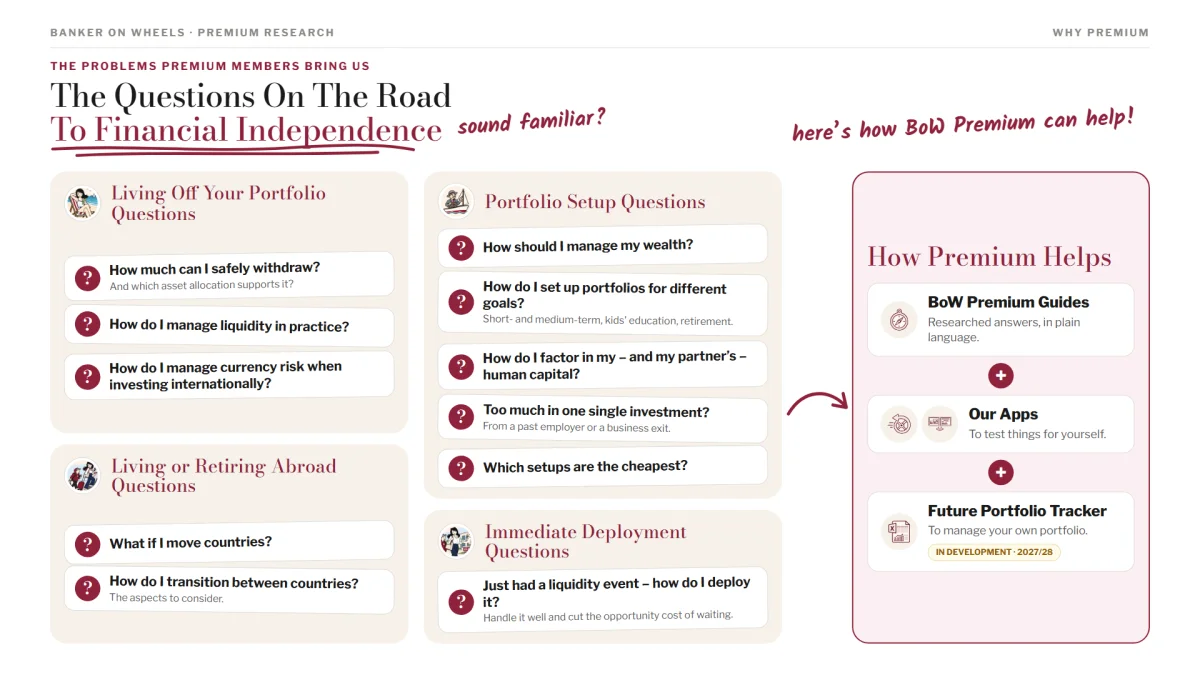
The questions behind the guides point to a broader goal than maximizing returns. Many investors are trying to gain more control over their time, make work more flexible, spend time with family, protect their health or retain the option to live in another country. For some, financial independence means covering all spending from a portfolio; for others, it means having enough support to make different choices about work and life.
That leads to several connected planning challenges: estimating sustainable withdrawals, keeping enough liquidity, managing currency exposure, choosing allocations for different goals and understanding how employment affects an investment plan. A job can shape both future income and portfolio risk—for example, when an investor already has substantial exposure to an employer through pay or company shares. The guides also address putting a large sum to work after a business sale or inheritance, and the practical questions that arise when living or retiring abroad.
These materials are aimed at people who want to make and manage their own investment choices. They are not designed to select individual stocks for someone.
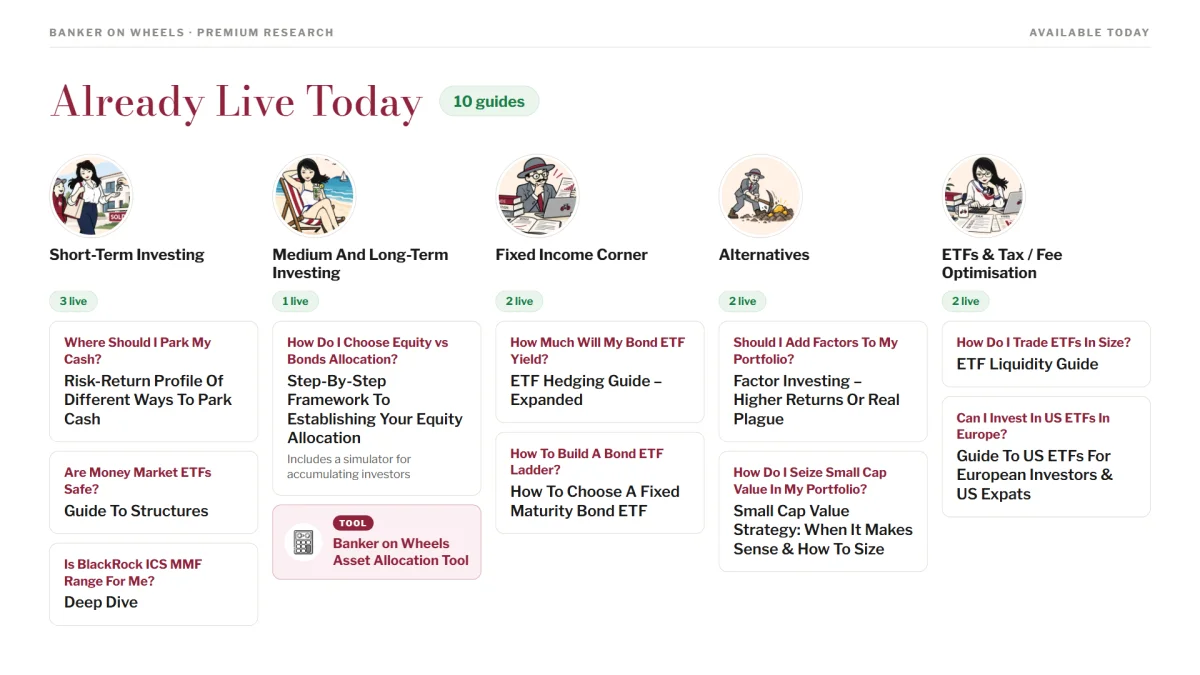
Ten guides are live across five sections
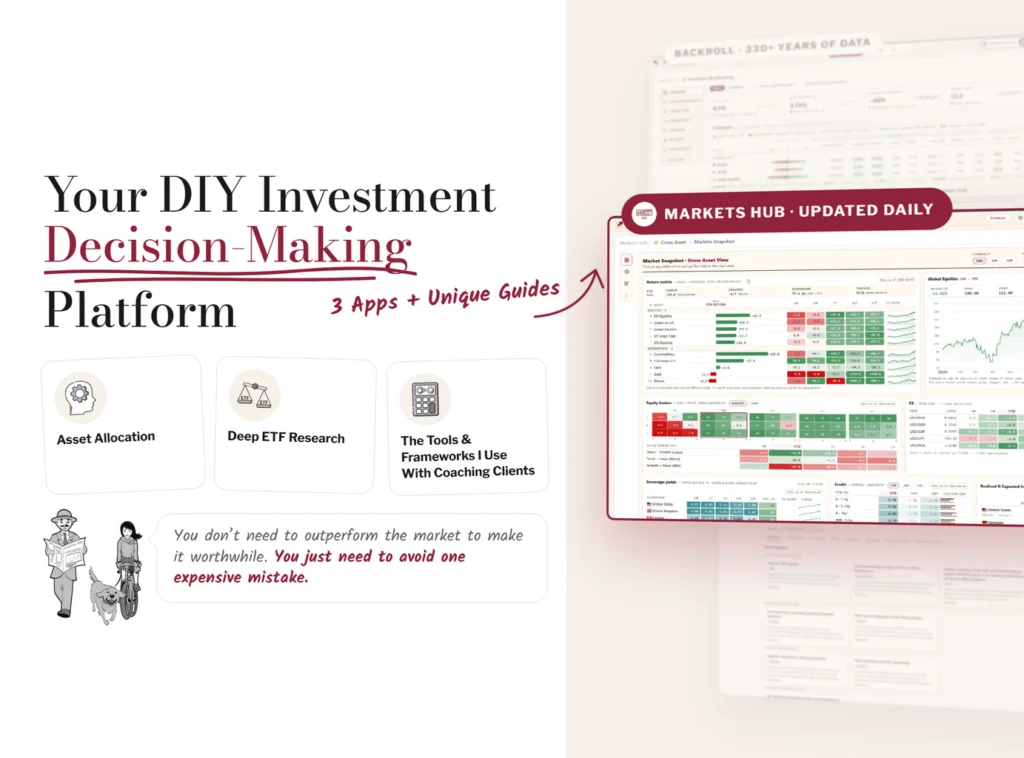
The current collection covers short-term investing; medium- and long-term investing; fixed income; alternatives; and ETFs, tax and fee optimization. Topics range from where to hold cash and how money market ETFs work to asset allocation, bond ETF ladders, small-cap value and trading ETFs in larger amounts. The collection also includes an asset allocation tool and a simulator for investors who are still accumulating wealth.
Fixed income and alternatives serve different roles in a portfolio, so the planned material treats them as separate areas. Fixed income topics may include deeper looks at particular ETFs and subjects such as credit and catastrophe bonds. The alternatives section is intended to examine approaches that could help investors through a weak stretch for traditional assets, while explaining their differences and trade-offs.

Planned topics include withdrawals and portfolio diversifiers
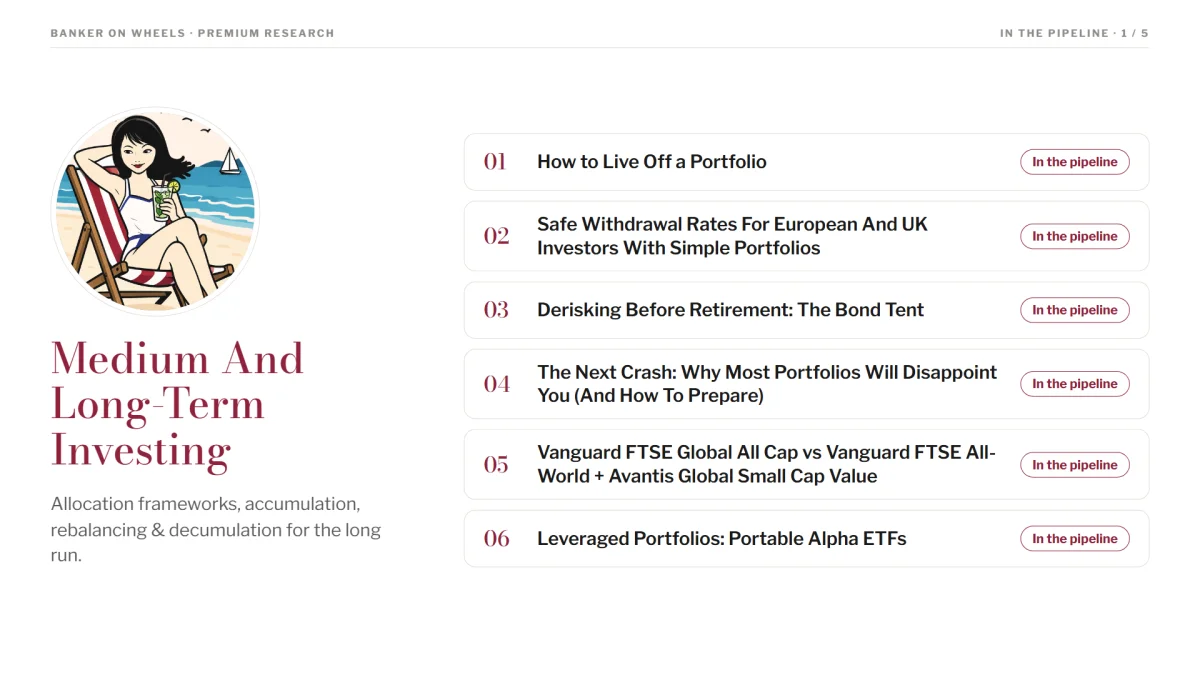
Over the coming 12 to 18 months, the planned guides are expected to cover how to live from a portfolio, withdrawal rates for European and UK investors, and ways to reduce risk as retirement approaches. Other proposed subjects include preparing for a market downturn using ETFs, leveraged portfolios and portable alpha strategies for more advanced investors.

Alternatives are also high on the planned list. An upcoming guide is intended to compare gold, commodities, managed futures, tail-risk hedging, illiquid assets and Bitcoin. Another is expected to look at methods for replicating managed futures strategies. The aim is to help readers understand what these approaches do and how they differ, rather than treat them as interchangeable solutions.

For tax and international topics, the planned emphasis is on broadly applicable questions. Country-specific tax guidance is not the priority, though it could be added later. Generic topics such as tax-lot optimization and the choices available through international brokerages and private banks are part of the proposed coverage.

The list is a guide to the direction of the work, not a fixed publication calendar. Additional guides, resources or tools may be added as member needs become clearer.

How the guides fit with the tools
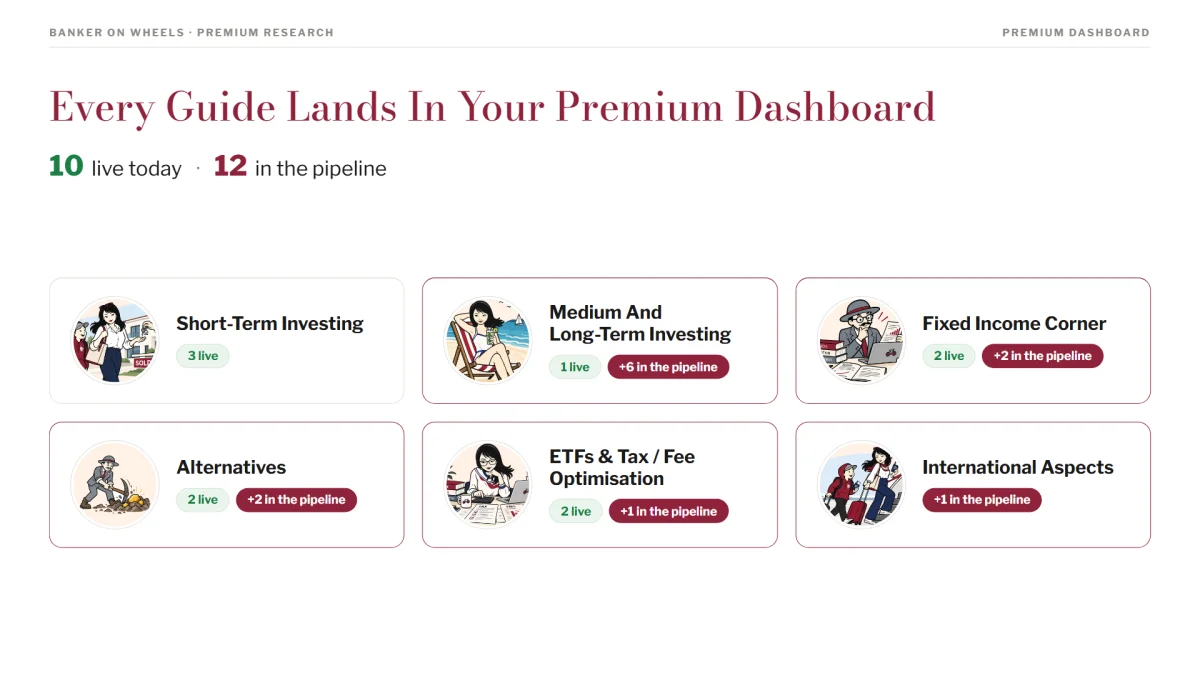
Each guide is housed in a Premium Dashboard, organized by topic. The broader Premium Research offering also includes BackRoll, a backtesting tool; the Markets Hub, which monitors market information and assumptions; and a Library and Toolbox. The guides explain decisions and approaches, while the apps let users explore plans and market inputs for themselves.
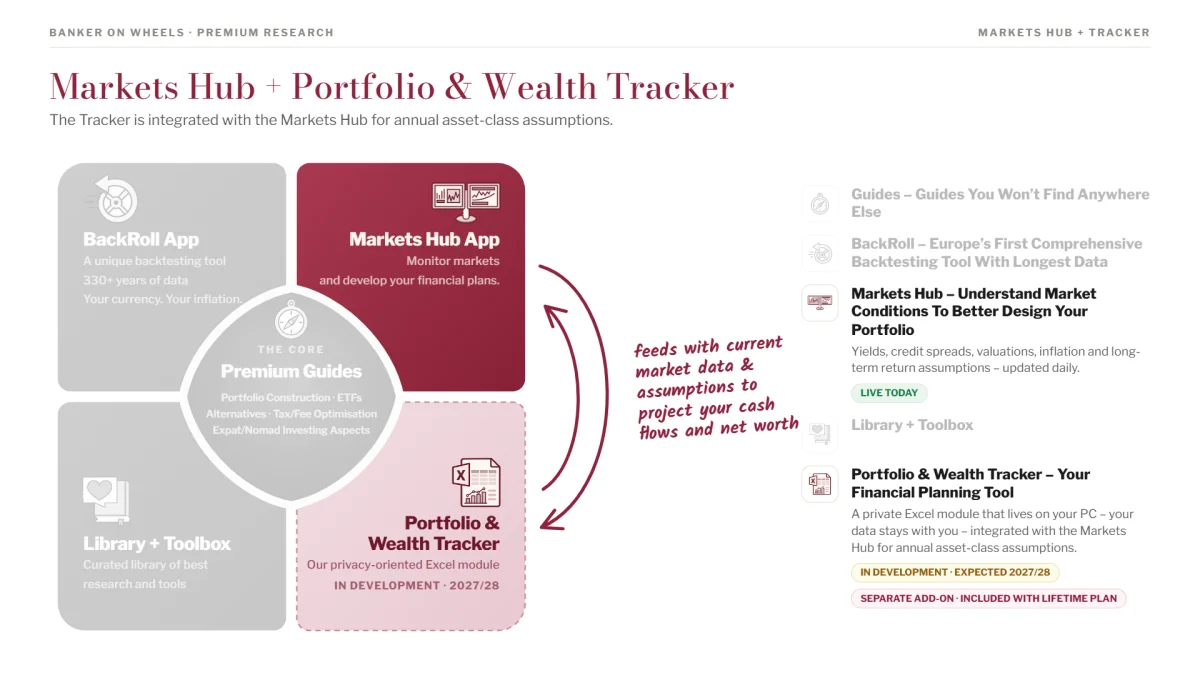
A Portfolio and Wealth Tracker is in development, with an expected release in 2027/28. It is designed to run on a user’s own PC: users would not upload brokerage statements or share account credentials with a website. The planned tracker would hold personal financial figures and goals, while drawing current market assumptions—such as yields and valuations—from the Markets Hub. Together, those inputs would be used to project cash flows and net worth against personal goals.
The tracker is described as a separate add-on that would be included with the Lifetime plan. Its release is still in the future, so its expected timing and features remain plans rather than currently available services.
Who may find the collection useful
The guides are designed for investors outside the US who want to build or manage a portfolio around their own goals, including people considering withdrawals, adjusting allocations, handling a large cash event or moving countries. Readers looking for individualized stock picks are unlikely to find what they need here. The material is general research, and decisions about taxes or personal finances can depend on circumstances the guides may not cover.
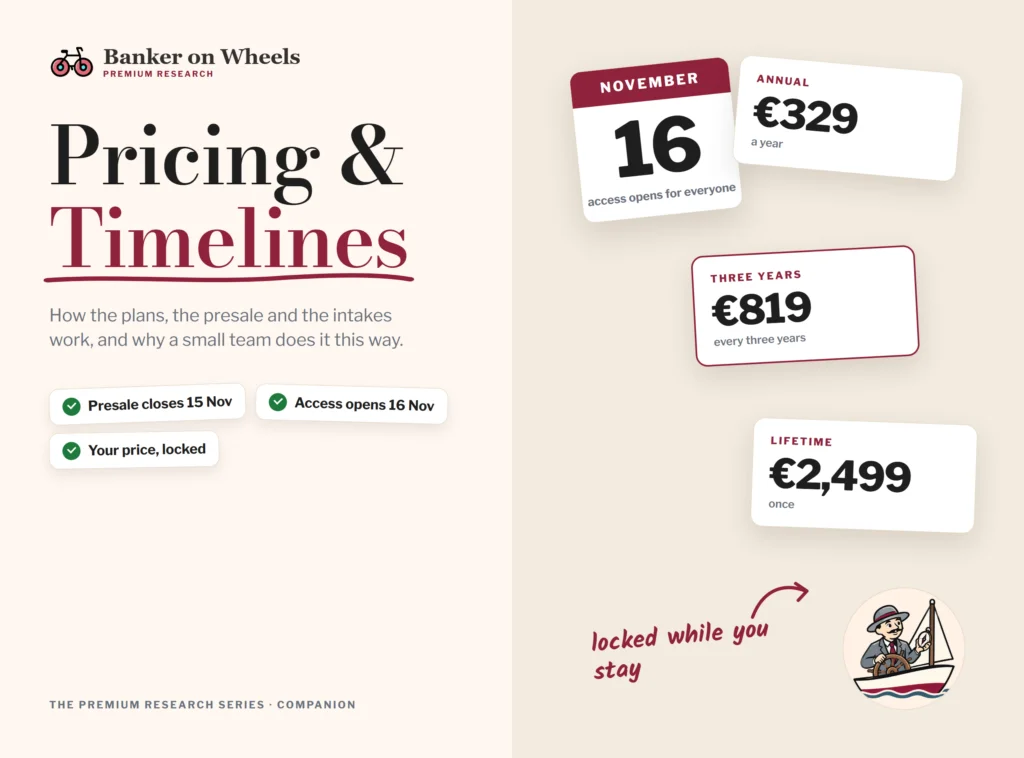
The presale is open until 15 November 2026, with access scheduled to begin on 16 November as part of Premium Research. For readers comparing the offering with their needs, the clearest test is whether its portfolio-focused explanations and planning tools address the questions they actually face—and whether the planned guides match the decisions still ahead.