Portfolio Rebalancing, Broker Fees and Retirement Flexibility: Money Decisions to Review
Retirement Planning Raph Antoine 443 reads
A closer look at rebalancing trade-offs, brokerage fee plans and retirement withdrawal research for non-US investors.

Several money decisions share a common tension: sticking to a plan can help manage risk, but following it mechanically can create costs or force awkward choices. This week’s themes include portfolio rebalancing, brokerage pricing, retirement withdrawal research and ways to assess places to hold cash. The useful thread is to understand what each tool is designed to do—and what trade-offs come with it.

Rebalancing is about keeping risk in line
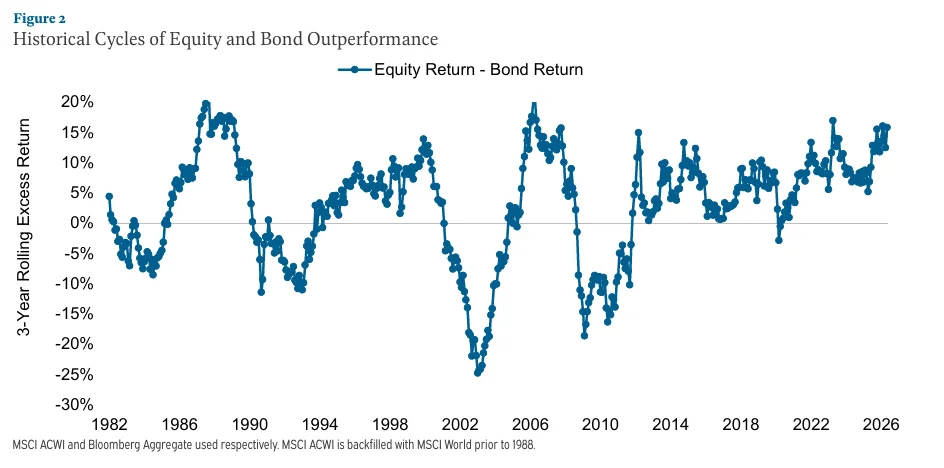
A study of a hypothetical global portfolio holding 60% equities and 40% bonds, covering 1979–2026, examines rebalancing as a way to keep a portfolio near its intended allocation. Its central point is that rebalancing’s primary purpose is risk control, rather than generating higher returns.

In the period studied, rebalancing consistently reduced volatility compared with a buy-and-hold approach. Buy-and-hold produced higher returns over that same period, when equities outperformed. That result describes one historical span; it doesn’t establish which approach will deliver higher returns in another one. The more durable decision is how much allocation drift an investor can accept while keeping the portfolio aligned with their goals.

Rebalancing frequency matters because transactions can carry costs. Less frequent adjustments and wider allocation bands generally improved cost efficiency in the study, while allowing holdings to drift further from their targets. Those choices pull in opposite directions: tighter bands can preserve the planned risk mix more closely, while wider bands may reduce the need to trade. An investor’s time horizon, account costs and comfort with changing allocations all shape the practical balance.

Illiquid holdings add a further complication. Public assets can be repriced quickly during a market downturn, while private asset valuations may adjust more slowly. As a result, private assets can appear to make up a larger share of the portfolio even if their underlying value hasn’t changed at the same pace. This denominator effect may leave an investor looking over target in private assets and underweight in liquid holdings.

For institutions, restoring the target allocation in that situation could mean selling liquid equities after a fall. The study’s discussion points to a genuine trade-off: maintaining allocation discipline may involve selling assets at depressed prices, while waiting for valuations to catch up allows the portfolio to remain out of balance. There’s no perfect fix. The important step is to understand in advance how an investment policy handles illiquid assets and market stress.

Brokerage pricing needs to match trading patterns
Interactive Brokers offers fixed and tiered pricing plans, and a comparison focused on exchange traded funds examines which may suit different users. The relevant question isn’t simply which plan has the lower headline fee. Costs can depend on the pricing structure and on how a person trades, so the answer may vary with transaction size, frequency and exchange.

A separate guide explains how to identify stock exchanges in Europe. That detail can matter when checking which market a security trades on and assessing the costs attached to an order. Before choosing a plan, investors can compare the current fee schedules for the exchanges they actually use and consider their usual order sizes. Pricing changes over time, so older examples may no longer describe the cost of a trade today.

Cash options call for a closer look at risk
Cash held for a near term goal has a different job from money invested for long term growth: access and stability may matter more than the highest available yield. Bank deposits are one familiar option, but the discussion of cash alternatives stresses that yield should be considered alongside the risks and the party responsible for the money.

A higher rate can reflect a different set of risks rather than a free improvement. Some cash like products use financial structures that may be harder to understand than a deposit account, and a product’s label alone doesn’t show how it could behave in a crisis. Investors weighing alternatives can ask what supports the value, how quickly they can access funds and what might happen under market stress. The material doesn’t give current rates for the options described, so comparing yields requires checking up to date product terms.

Retirement tools can help test assumptions
Research tools featured in the reading include BackRoll, which is described as testing safe withdrawal rates across more than 330 years of data, with the user’s currency and inflation taken into account. The wider research offering also includes a factor analyser for non-US investors, market monitors and guides on portfolio construction, exchange traded funds and alternatives.
Long historical tests can help show how a withdrawal plan might have fared across different past conditions. They can’t tell an individual household what will happen next or guarantee that a particular withdrawal rate will work. Results depend on the assumptions and data used, including the currency and inflation measures selected. A sensible use of this kind of tool is to compare scenarios and understand how sensitive a plan is to its inputs, then consider whether the assumptions reflect the household’s own circumstances.
The research business described the premium service as a family run operation and said its presale was due to close on 15 November 2026. It presented the service as including guides, analytical tools and market monitoring. For any paid research product, the practical questions are what access includes, when it begins, what the ongoing price will be and what cancellation terms apply. Those details should be checked before committing.
Across these topics, the most useful habit is to match a decision to its purpose: rebalance to manage the risk mix, compare broker plans against actual trading, and judge cash choices by access and risk as well as yield. For retirement planning, historical analysis can sharpen questions, but the assumptions deserve as much attention as the result.