RRIF at 65: Monthly Income, Tax Credits and Withdrawal Rules in Canada
Retirement Planning Dale Roberts 816 reads
A RRIF can provide regular income and access to age-related tax credits, but withdrawals affect your taxable income. Here’s what to weigh at 65.
Turning 65 can make a Registered Retirement Income Fund (RRIF) useful for more than drawing down retirement savings. For a Canadian retiree without an employer pension, converting some RRSP savings to a RRIF may create a regular income stream and make the first $2,000 of eligible pension income count toward the Pension Income Amount. The trade-off is that RRIF withdrawals are taxable income, so the timing and amount belong in a broader retirement cash flow plan.
Coordinate public pensions with withdrawals
The author, who has just turned 64, expects to start Old Age Security (OAS) next year, alongside Canada Pension Plan (CPP) income of about $20,000 in total. The plan is to open a RRIF before then. The decision sits alongside a larger question: when to begin CPP and OAS.
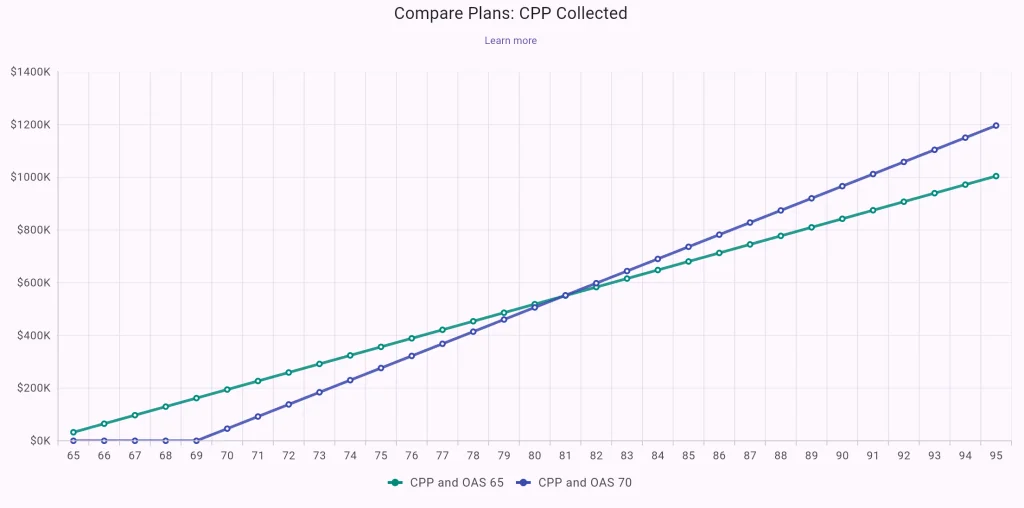
In the example given, someone who delays CPP from 65 to 70 receives 42% more, while delaying OAS over the same ages increases the payment by 36%. For a couple, delaying both benefits can raise household income from these sources. But higher payments later also mean giving up some payments earlier, so the best fit depends on spending needs, health, other income and how long the plan needs to last.
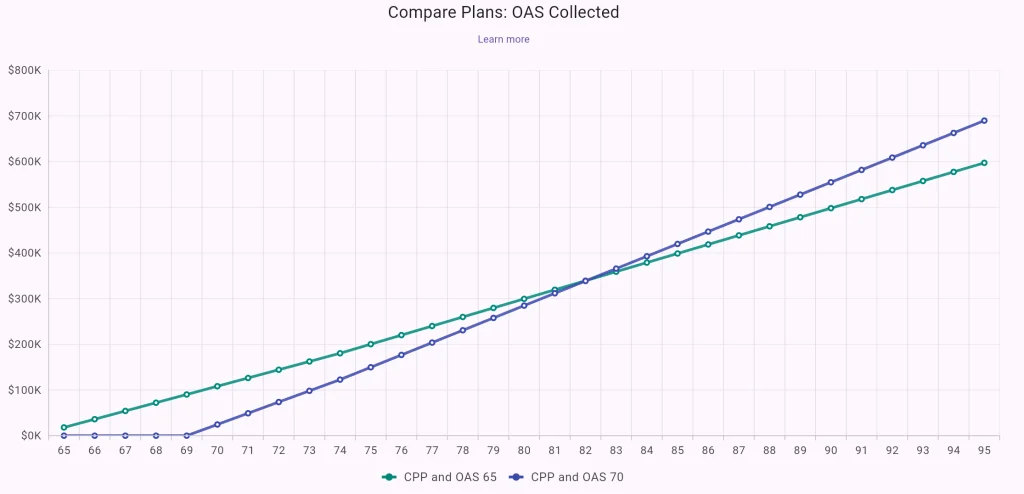
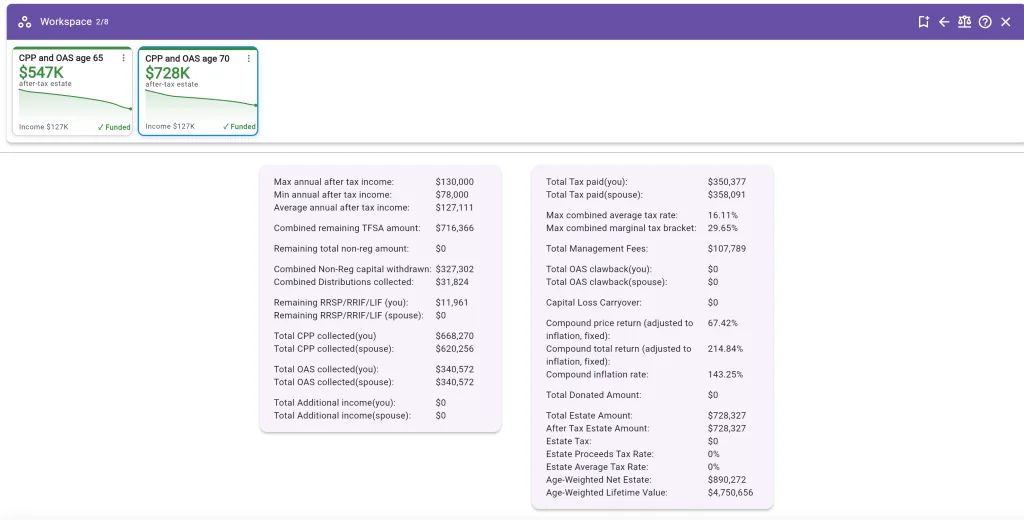
A retirement cash flow projection can help compare those choices with withdrawals from registered accounts, workplace pensions and other savings. One MayRetire model for a couple with generous CPP and full OAS payments projected their finances to age 95. It estimated a final estate $181,000 higher under a plan that delayed CPP and OAS until age 70. Total benefits in that scenario were $1,969,000, compared with $1,672,000 in the age 65 scenario—a difference of $297,000.
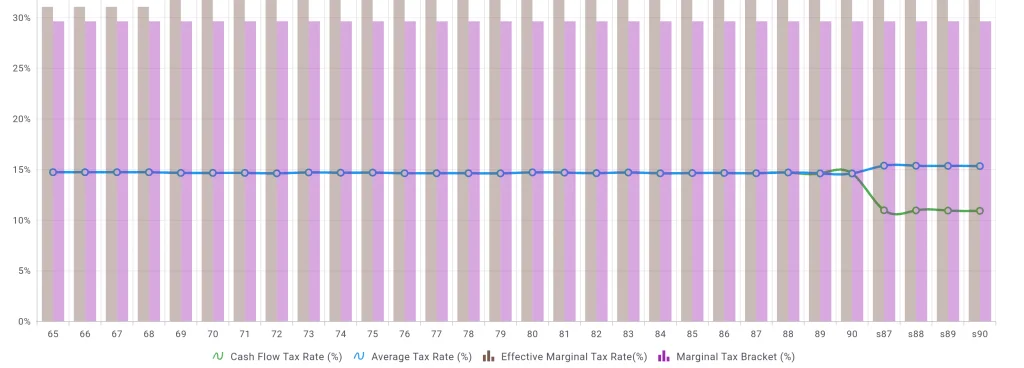
Those figures belong to that particular model and its assumptions; they aren't a forecast for every household. The useful lesson is to compare the timing options using your own income, expenses and longevity assumptions. The author says their CPP and OAS choices are based on a cash flow plan that includes longevity projections. A planner who charges for advice without managing investments is another option for people who want help assessing a plan.

Why open a RRIF at 65?
The author’s stated reason is that they don't have an employer pension and want to use the Pension Income Amount. The first $2,000 of qualifying pension income may be eligible for a federal tax credit worth up to $280; most provinces also offer a related credit. Eligibility and the actual tax benefit depend on the rules that apply to the taxpayer, so the amount shouldn't be treated as a guaranteed saving.

Moving RRSP savings into a RRIF may also avoid the brokerage’s $25 fee for each RRSP withdrawal. That can matter when someone expects to take money out regularly. The author also notes that withdrawals up to the RRIF minimum aren't subject to withholding tax. That affects how much tax is deducted at the time of withdrawal, not the final tax bill: RRIF income still has to be included when filing taxes.

Minimum withdrawals and monthly income
RRIF holders must withdraw at least the required minimum each year. The source lists these annual rates for ages 60 to 69, using the holder’s age or a spouse’s age:
| Age | Annual minimum |
|---|---|
| 60 | 3.33% |
| 61 | 3.45% |
| 62 | 3.57% |
| 63 | 3.70% |
| 64 | 3.85% |
| 65 | 4.00% |
| 66 | 4.17% |
| 67 | 4.35% |
| 68 | 4.55% |
| 69 | 4.76% |
At age 65, the listed minimum is 4%. Using that rate, a $375,000 RRIF would pay out $15,000 over a year, or $1,250 a month if divided evenly. The example is a way to estimate the account size needed for a target withdrawal; actual payments depend on the account balance and applicable minimum rules. Minimum withdrawals rise with age in the table, so the payment amount can increase over time even if the holder doesn't choose to take more.

Plan for the money left after spending
A larger RRIF withdrawal can push income above household spending needs. The author says they have TFSA contribution room and may direct surplus money toward a spouse’s RRSP while that spouse is still working. The idea is to compare the tax rate on the withdrawal with the potential tax treatment of saving or contributing the surplus. Whether that approach makes sense depends on each person’s circumstances and contribution room.
The author also expects to receive an age credit of $9,448 next year and says the full credit applies for the year someone turns 65, even if their birthday falls late in the year. Tax credit amounts and eligibility can depend on the relevant tax year and individual circumstances, so confirm the figures that apply before building them into a plan.
A RRIF can turn retirement savings into a predictable monthly deposit, while its minimums, tax treatment and interaction with CPP and OAS shape the rest of the plan. Before converting funds, compare the income schedule with likely spending and other sources of income; that projection will show whether the planned withdrawal supports the household without creating more taxable income than it needs.


