Frugal Week Wins: Free Finds, Batch Soup and a Budget Grocery Run
Budgeting & Saving Belinda 636 reads
A Halloween gathering, a stock up trip and free secondhand finds show how planning and flexibility can help keep everyday spending in check.

Free household finds, a planned grocery stock up and a fresh batch of freezer soup shaped this week’s frugal routine. The savings came through ordinary choices: enjoying a shared meal with friends, making food ahead and knowing when a secondhand price didn’t feel like a bargain.

Shared plans that kept the evening simple
Last Friday, a friend hosted a Halloween party around a bonfire. Guests had hot dogs, chili, chips and sweets, followed by a tour of a haunted house the hosts had built. It was a lively evening, with dinner and entertainment part of the same get together.
That kind of invitation can make for a memorable night without requiring each guest to arrange a separate meal or activity. There’s no need to calculate a precise saving to appreciate the value: the hosts provided food and an experience, and the evening centered on time together. When friends share what they have, a good outing doesn’t have to mean a long list of individual purchases.
A grocery trip with a monthly rhythm
On Tuesday, book club spent two hours discussing Sand County Almanac. Afterward, Bailey and Belinda drove to Dalton, Georgia, for their monthly grocery stock up at UGO and Kroger.
A regular stock up trip can make household shopping easier to organize. Combining a larger grocery run with an existing outing may also reduce the need for separate trips, although the account doesn’t specify travel costs or how much the household bought. The practical value is the routine itself: shopping has a planned place in the month, and the household can use pantry and freezer supplies between trips.

For families considering a similar rhythm, the useful question is whether a bigger shop fits the way they cook and store food. A planned trip works best when the household has a sense of what it already has, what meals are coming up and which staples need replenishing. Buying ahead can support convenience, but the budget benefit depends on choosing items that will actually be used.
Set a price that feels fair to you
Belinda also mentioned a video from Prepper Princess about farmers market prices. The video argues that some sellers charge too much; Belinda agrees that some prices feel out of line. That’s a personal judgment rather than a universal measure, since prices and shoppers’ priorities differ. For anyone weighing a market purchase, it helps to compare the price with the value the item offers to their household and decide what fits the budget.

The same thinking applies to yard sales. Belinda’s rule of thumb is that used items typically sell for about 25% of what the buyer originally paid. She leaves items behind when a seller asks close to retail, unless the item is new in its package.
That guideline isn’t a fixed valuation. Condition, age, demand and local prices all affect what a secondhand item may be worth. Still, a personal ceiling can make browsing easier: decide what you’re willing to pay before making an offer, and don’t let a low price compared with a shop label distract from whether the item is useful or in good shape. Walking away is part of keeping a purchase within budget.
Free household goods can stretch a budget
Bailey visited several yard sales after an early book club meeting on Saturday. Because Halloween had kept the crowds small, one homeowner told her that no one had been stopping by and offered everything for free. Bailey brought home folding chairs, blankets, a camping chair, glasses and several Pyrex dishes.
The dishes were especially appealing: after washing them, she used some to serve dinner. That put the finds to work right away, instead of leaving them stored indefinitely. Chairs, blankets and glasses can also fill household needs, though free items still take time to collect, clean and store. A useful check is whether each item has a place and a likely purpose before it comes through the door.
For someone setting a household up for camping or hosting, secondhand finds may help avoid buying everything new at once. The trade off is that condition and completeness matter. Inspect items, clean them as appropriate and consider whether any missing parts or repairs would make a supposedly free find costly or impractical.
Cook once, portion and save for later
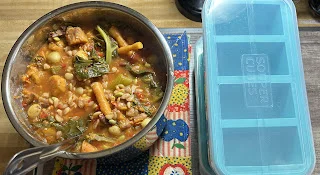
The household ran out of soup in the freezer, so Belinda made another batch and portioned it into Souper Cubes. The account doesn’t list the recipe, ingredients or yield, but the approach is straightforward: prepare soup in a larger batch, divide it into portions and freeze it for later meals.
Freezer portions can make a busy day easier and give leftovers a planned destination. They also help a household see what is ready to eat, rather than relying on memory when deciding what to cook. For the best use of the effort, label portions with their contents and date, and choose sizes that suit the people eating them. The point is practical convenience; the amount saved depends on the ingredients and what those portions replace.
A week of varied meals
Meals included tamales, lentil loaf, chicken, steak tacos, salmon patties and chicken fajitas. That mix shows several ways to vary the week’s menu without reducing it to one repeated dish. The details don’t say how each meal was made or what it cost, so there’s no basis for assigning a specific grocery saving. The useful habit is having a range of meals in rotation and making use of what the household has on hand.
This week’s frugal wins came from a blend of planning and openness to opportunity: a monthly grocery run, food prepared for the freezer, a secondhand price limit and useful items found for free. The next time a household reviews its spending, those small routines can be easier to repeat than a one off bargain hunt.