Stagflation, Cash and Bond Ladders: What's Worth Weighing Before Premium Closes
Retirement Planning Raph Antoine 603 reads
Premium's presale closes Sunday 15 November at midnight CET. Here's what the newsletter covers on cash, bond ETF ladders and stagflation.


Here's the thing about deadlines: they push everyone to decide at once. The Premium presale for Banker on Wheels closes Sunday 15 November at midnight CET, and access opens for subscribers on Monday morning. After that, there are no new intakes this year. The next one arrives in 2027 at up to €300 plus VAT more. Anyone who joins now keeps the lowest presale price for as long as they stay subscribed.

What the timing is really about
The note from Raph explains the work behind this release: data contracts, app development, deep testing of BackRoll and the Markets Hub with early users, and a long run of new guides. The stated aim is to raise the bar for financial education, which is harder than it sounds. New asset allocation guides, deeper looks at portfolio diversifiers and further BackRoll features are on the way. My read is that the presale matters less as a sales tactic and more because the team is capping how many people it can onboard this year.

Premium access bundles several pieces. There are Premium Guides on portfolio construction, ETFs and alternatives. The BackRoll app backtests more than 330 years of data in your own currency and adjusts for inflation. The Markets Hub helps you monitor markets and develop plans. A library and toolbox sit alongside them, and a portfolio and wealth tracker is still in development.

Parking cash without the blind spots
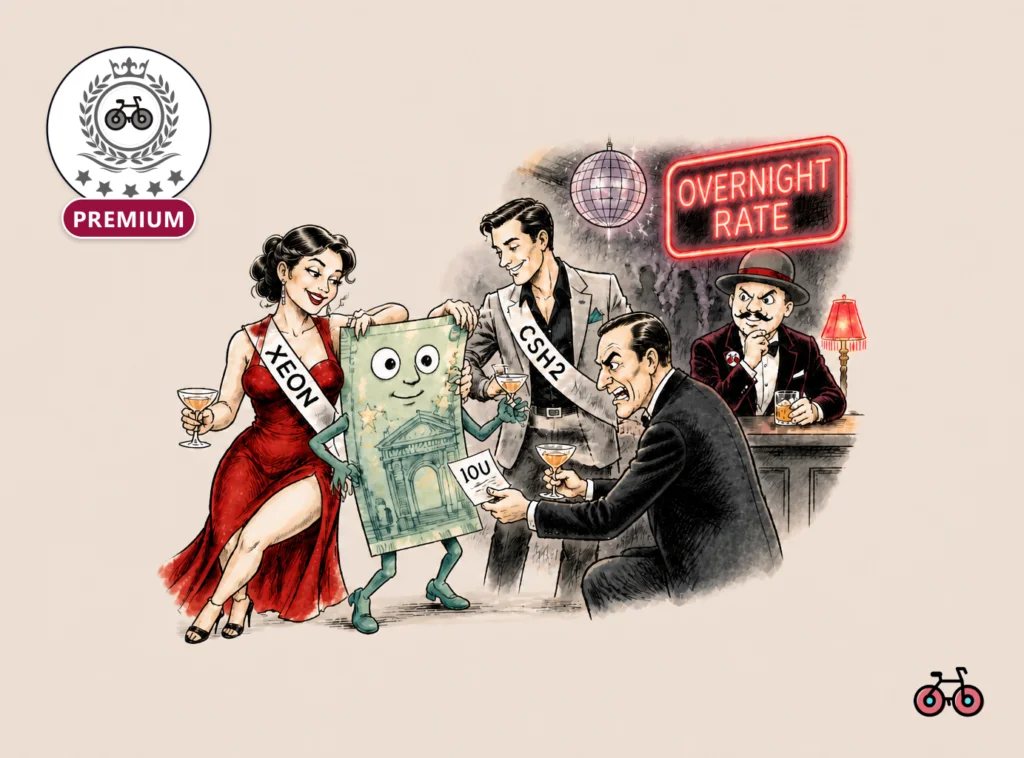
Cash is where many readers start, and it's where the Premium coverage looks hardest. Cash ETFs are popular across Europe and turn up often in coaching portfolios. Guidance on them is everywhere, yet it rarely covers the hidden risks. The Premium piece compares what these funds return against the alternatives and sets out what to check before buying. Companion pieces review a money market fund range and walk through ten ways to park cash, including what each one pays and what can go wrong.
The useful habit here is to treat any product that looks like a no-brainer as a product with structure, costs and failure modes. Read those before you commit, especially if the money is needed on a fixed timeline.
Bond ETF ladders for money with a date on it
Some money has a date attached. A house deposit in 2028, university fees from September 2029, or a cash flow bridge for the first years of retirement before the pension starts. Bond ETF ladders are designed for goals like these. The newsletter's tool tracks 116 funds from five issuers, maturing every year out to 2036.
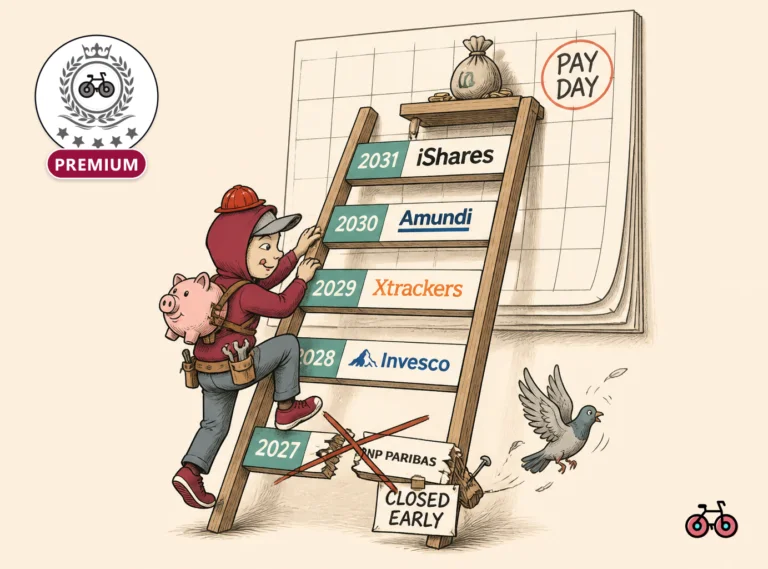
The coverage explains how a EUR/USD bond ETF ladder works, how it compares with other options, and how to build one with the tool. It also includes a section for UK investors. When these funds were reintroduced in 2023, the coverage called them a potentially useful tool if rates stayed high. Rates have stayed high. The trade-off is that a ladder spreads maturity dates across time, but each rung still moves with its bond market and carries its own fund-level details. The headline itself flags that a few rungs have broken, so checking each fund's current status matters.

Stagflation and what it does to a 60/40 portfolio
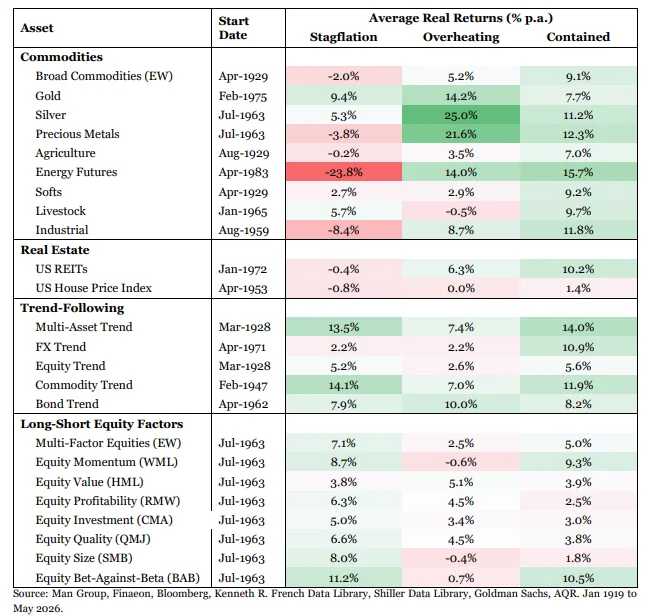
The Man Group research sits at the heart of the portfolio section. It uses 107 years of monthly US data and sorts each month into one of three regimes: Overheating, Stagflation or Contained. The sorting relies on real-time inflation and growth signals rather than fixed inflation thresholds or after-the-fact recession dating.

The numbers are sobering. A 60/40 portfolio earned -1.3% a year in real terms during Overheating and -0.2% during Stagflation. In Contained periods, it earned 9.0%. Both high-inflation states produced poor returns. The broader panel adds commodity futures, equity factors and trend-following strategies to test how far diversification can go, starting with how each asset class held up under inflationary pressure.

My take: the question worth asking of any portfolio isn't how it does in a good year. It's how it behaves when inflation and weak growth show up together. Historical real returns are backward-looking, though, and a US dataset won't map neatly onto every market or time horizon. Treat the findings as a stress test for your thinking, not a forecast.

Who this suits, and who it doesn't
Premium fits readers who want structured, step-by-step material on asset allocation, cash and bond ladders, and who are comfortable working through tools themselves. It's a weaker fit for anyone looking for a ready-made answer or a personal recommendation. Everything here is general information, not advice tailored to your tax situation, goals or risk tolerance. A free Wheelers account gives access to the Weekend Reading archive and a growing set of ETF and investing guides, which is a sensible way to test the water.

If you're deciding, start with three questions. Which of your goals have dates? Where is your cash working, and what does it cost you? Has your portfolio been tested against a year when inflation and growth both disappoint? If the presale price matters to you, decide before Sunday midnight CET. If it doesn't, the next intake is in 2027, and it costs more.