Oil, Bond Yields and Slowing Earnings Weigh on Indian Markets
Debt & Credit Truemind Capital 531 reads
Oil above $100, rising bond yields and weaker earnings pulled Indian stocks down about 5% in July–September. Gold ETFs drew strong inflows.

Here's the short version of July to September: a quarter that opened with hopes of peace in West Asia ended with oil back near $109 a barrel and Indian stocks sliding. Brent had dropped to around $72–73 by the end of June. It climbed above $100 in July and reached roughly $109 in mid-September as tensions in the region flared again. That single move fed into inflation, interest rates and the rupee, and it shaped nearly everything else in the quarter.
Indian equities: a weak quarter with a longer backdrop
The Sensex and Nifty 50 each fell about 5.2% between July and September, and most of that decline came in September. Higher crude prices, rising US bond yields, a softer rupee and renewed selling by foreign investors all weighed on sentiment. Domestic institutional investors cushioned the fall but couldn't stop it.
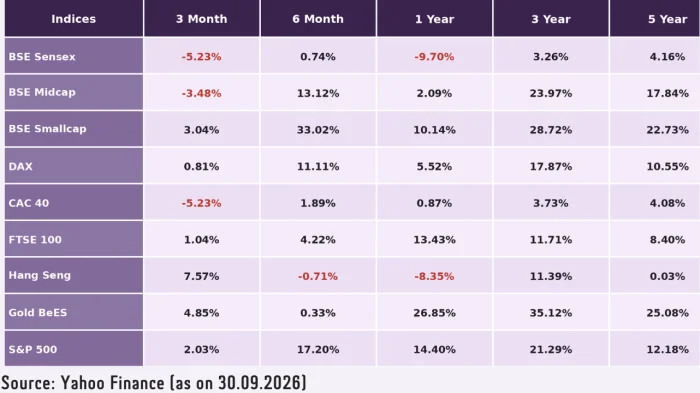
The longer view is sobering. The Sensex closed at about 84,300 on September 30, 2024, after a strong run that had taken it to record highs. On September 30, 2026, it stood near 72,480, roughly 14% below its level two years earlier. Investors who held through that stretch have seen very little progress. Truemind Capital's view is that the next leg depends mainly on corporate earnings rather than on a rebound in sentiment alone.
Revenue is growing, but profits aren't keeping pace
This is the part of the quarter that stands out most. Nifty 50 revenue grew 18.4% year on year, yet operating margins for non-financial companies contracted by about three percentage points to 20.5%. Profit growth came in at 11.8%. Put simply, companies are selling more but keeping less of each rupee of sales, because costs are climbing faster than prices.
Earnings expectations have moved the same way. Growth estimates for FY27 were cut to 9.2% from 16.4% in March. That's a significant downgrade, and it changes the valuation maths. A market that has fallen 5% can still look expensive if the earnings underneath it are shrinking in expectation.
That's why Truemind Capital argues a correction on its own doesn't make equities attractive. Valuations have to be weighed against the earnings companies can realistically deliver. The firm says it wants to see a sustained improvement in earnings before expecting a firmer, more durable recovery in Indian stocks.
The US rally is narrower than the index suggests
The S&P 500 gained about 2% over the quarter, but the gains stayed concentrated in large technology companies and AI-linked themes. Leadership did start to broaden, with investors looking beyond some of the most crowded AI trades. Truemind Capital doesn't read this as the end of AI's long-term potential. Its concern is about scale: heavy investment, high expectations and open questions about how quickly that spending will produce returns. Those factors make valuations and risks worth checking closely.
Here's the thing about AI-related investments: the opportunity may be real while the prices paid for it are not. The firm's point is that demand for AI may hold up, but the price investors are willing to pay for future growth could become harder to justify. Trades that depend on one story tend to be the most sensitive to a change in expectations.
Bonds: yields rose across major economies
Borrowing costs climbed sharply in the US, UK and Japan during the quarter, reaching levels not seen in years. Investors were reassessing inflation, interest rates and sovereign borrowing all at once. India didn't escape. Its 10-year government bond yield rose from about 6.75% at the end of June to roughly 7.19% by September 30.
The timing made things harder. Oil-driven imported inflation was back on the table, and a weaker rupee added to the pressure. Higher yields in developed markets also made global investors more selective about where they put money. Bonds in India faced a tough backdrop even as steps to attract foreign capital started to pay off.
Those steps show up in the numbers. Net non-resident deposit inflows reached $119.2 billion between April and August, compared with $5.6 billion in the same period a year earlier. Yet the inflows didn't stop longer-term yields from rising. Global rate moves, inflation worries and foreign selling in the bond market kept pushing in the other direction.
Domestic liquidity added another twist. Strong deposit growth left the banking system with surplus liquidity, which the Reserve Bank of India absorbed through its liquidity operations. The result was a steeper yield curve. Short-term rates eased somewhat, while longer-term yields kept climbing.
Why Truemind Capital is staying measured on duration
The RBI raised its repo rate by 25 basis points to 5.50% on October 7, just after the quarter closed. For Truemind Capital, that move, combined with elevated global yields and renewed inflation pressure in India, calls for caution on the interest-rate outlook. The firm believes rates could stay high, with further hikes possible if inflation persists. That's one reason it has been wary of aggressive bets on longer-duration debt.
The firm says it has avoided aggressive duration calls for the past two to three years, and this quarter strengthened that reasoning. Higher yields have improved the income debt investments can produce compared with a few months ago. The 10-year G-Sec yield moved from about 6.70–6.75% in July to roughly 7.15–7.20% by late September. One-year certificates of deposit were offering around 7.45–7.55% as of mid-October. But with rates already rising and more hikes still possible, Truemind Capital sees no strong case for extending duration yet.
In its framing, short- and intermediate-duration instruments strike a useful balance between yield, liquidity and lower mark-to-market risk. Debt still plays a stabilising role: it provides regular income, helps protect capital in uncertain periods and gives room to rebalance into equities when prices look attractive.
Gold, property and the rest of the mix
Domestic gold ETFs returned 4.81% in the quarter and 26.85% over the trailing 12 months to September 30, 2026. Gold sold off briefly in late September as a stronger US dollar index triggered profit-taking. Even so, money kept flowing in. Net inflows into Indian gold ETFs jumped 71% month on month to Rs 4,451 crore in September, as investors moved toward gold while equities corrected. Truemind Capital continues to treat gold as a key diversifier that tends not to move in step with other assets, supported by sustained central bank buying over several years.
Housing shows a more mixed picture. Sales across the top seven cities rose about 3% year on year in July–September, reversing a 6% fall in the previous quarter. New launches rose 18% and prices climbed 7%. With launches running well ahead of sales, unsold inventory grew about 12%. The firm views real estate as a complementary holding rather than a core one, mainly because it's illiquid, cyclical and expensive to transact in.
Current model portfolio and what it signals
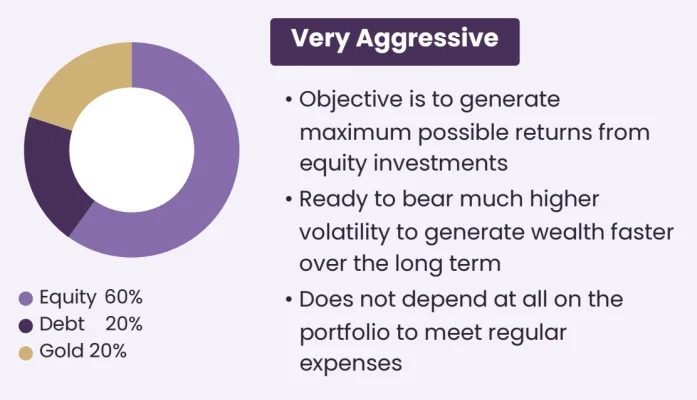
Truemind Capital says it continues to hold equity allocations in the 30–60% range, depending on each investor's risk profile. Its preference is for large-cap and value-oriented investments spread across sectors and geographies. International portfolios provide exposure to Hong Kong and China, Singapore, Brazil, the UAE and Japan, while a healthcare allocation targets businesses addressing needs that don't depend on the AI infrastructure cycle.
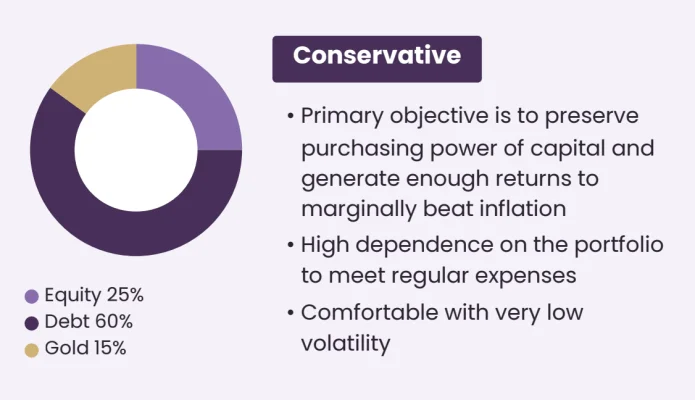
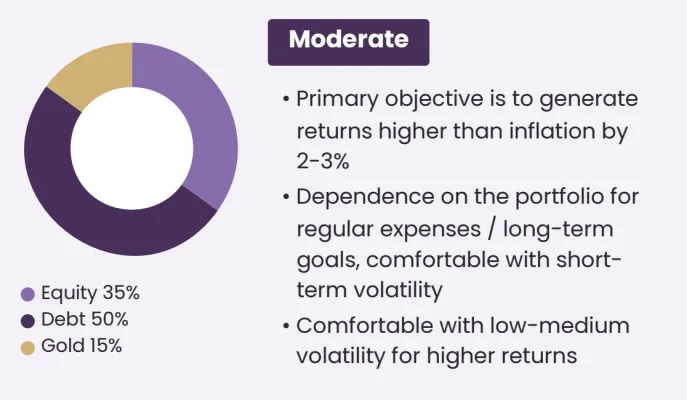
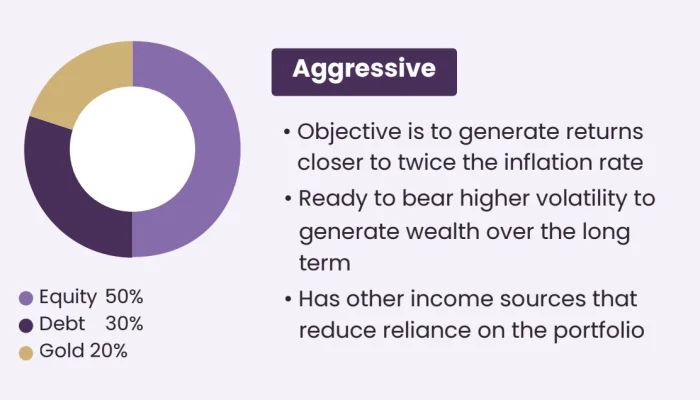
The common thread is patience. The firm's approach is to avoid chasing momentum while valuations stay demanding in parts of the market, hold enough liquidity to act when better prices appear, and keep portfolios tied to long-term goals. For investors, the quarter's main lesson is that oil, rates and currencies can move markets in ways stock selection alone can't offset. Watch whether earnings growth stabilises and whether the RBI's next move signals the hiking cycle is done. Until then, the room for error is narrower than it looked in June.


