Consumer Brands: What the Sell-Off Means for Diageo, Unilever and Reckitt
Family & Life Money [email protected] (Bruce Packard) 372 reads
Once dependable compounders, consumer brands now face slower growth, debt and changing tastes. Diageo’s cheaper shares come with turnaround risks.
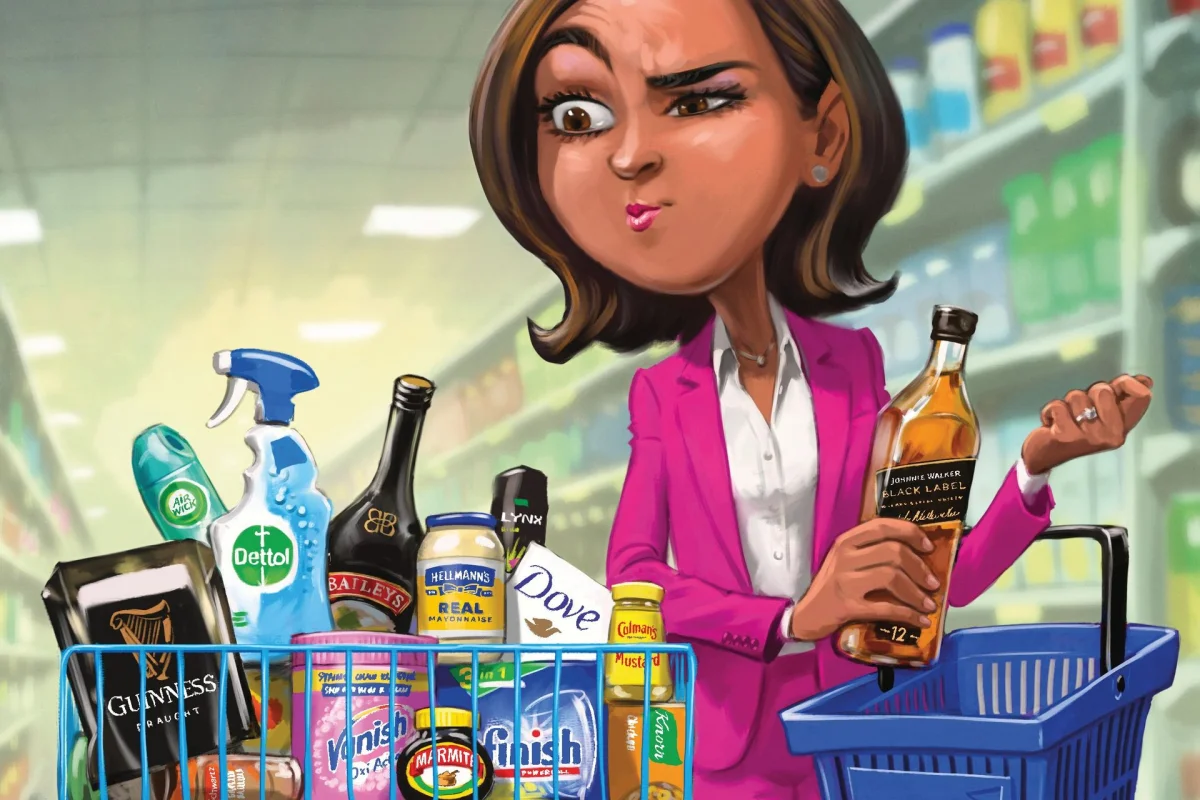
Why consumer brands have lost their shine
Diageo, Unilever and Reckitt built reputations as dependable businesses: their brands travel across borders, their products can command high prices, and their shares once delivered strong long-term growth. That record has faltered. Investors who treated these companies as reliable places to compound wealth have had to reassess what their brands are worth, how much customers will pay and whether management can turn sales around.
The contrast with the previous two decades is striking. From 2000 to 2020, Unilever’s share price quadrupled, Diageo’s rose sixfold and Reckitt Benckiser’s climbed almost elevenfold. The FTSE 100 made little headway over the same period, while shares in some blue-chip companies, including Lloyds Bank and Vodafone, fell by 75% to 95%. That history helps explain why investors were willing to pay a premium for consumer brands. It doesn’t guarantee those businesses will repeat the performance.
Johnnie Walker, Dove and Dettol earn much of their revenue outside the UK, so a weaker pound can help when overseas sales are translated back into sterling. International sales also spread a business across markets. Yet those advantages, alongside high gross margins, haven’t been enough to protect returns in recent years. Even well-known fund managers Nick Train and Terry Smith have been caught out by the shares’ struggles.
Brand value can be hard to measure
Warren Buffett’s purchase of See’s Candies offers a useful way to understand the appeal of brands. In the 1970s, he was asked whether he would pay three times the company’s book value. That was far above the price a traditional value investor might seek for a business whose worth rested on tangible assets. Buffett nearly passed, then reconsidered and bought the company.
The deal helped him see that accounting records can miss much of a brand’s economic value. Research and development spending at a technology or pharmaceutical company may be recorded as an intangible asset. Consumer businesses, meanwhile, often spend 12% to 18% of revenue on marketing, but those costs are generally recorded as expenses as they occur. They don’t appear as a growing brand asset on the balance sheet.
An analyst could add marketing spending back and treat it like investment in research. But that requires estimating how long the resulting asset will last. Some brands, such as Guinness, have held consumer appeal for generations. Others fade even when their owners keep spending on promotion. Tango, once famous for its edgy advertising and for outselling Coca-Cola’s Fanta two to one in the 1990s, lost momentum after Britvic failed to refresh it despite continued marketing investment.
There’s also a difference between a brand built within a company and one it buys. An internally created brand generally doesn’t appear as an asset on the balance sheet. An acquired brand or trademark can. Unilever’s acquired brands included Horlicks, valued at €2.3 billion, Knorr at €1.8 billion and Hellmann’s at €1.2 billion. Knorr and Hellmann’s have since been sold to US food group McCormick in a $44 billion deal announced in March. The planned combined business has $20 billion in revenue and an operating margin target of 23% to 25%. Unilever shareholders will own 55% of the combined group, Unilever will retain 9.9%, and the shares will have a secondary listing in London.
Acquisitions can also show how quickly brand valuations can change. Diageo paid £294 million for premium rum brand Don Papa in early 2023. Of that purchase value, £293 million was assigned to the brand, with £1 million for property, plant and equipment and £6 million for inventory. Two years later, Diageo wrote down the brand’s value by $287 million after changing its reporting currency from pounds to dollars.
Kraft Heinz’s experience shows the risk at much larger scale: in 2019 it reported a $15.4 billion write-down of its best-known brands, five years after a deal backed by Buffett and private-equity firm 3G. Investors may therefore distrust intangible assets, especially when a write-down can take a large balance-sheet value away and managers may be slow to recognize that a brand has weakened.
Diageo’s Casamigos tequila brand, bought from George Clooney and others for $1 billion, recorded an organic sales decline of 25% this year, with no write-down reported so far. Guinness, by contrast, grew sales by 12% this year. The examples make the point: a brand name alone doesn’t tell investors whether customers are still choosing the product.
Inflation exposed the gap between margins and growth
Buffett’s See’s Candies experience also highlights a difference between brand businesses and factories. Berkshire Hathaway’s original textile operations needed expensive replacement equipment to keep generating cash. As prices rose, the company had to spend more on new machinery even though Buffett expected poor returns from that spending. Depreciation accounting assumes equipment has a limited useful life, but it doesn’t automatically account for the higher cost of replacing it. See’s, by contrast, could benefit from the enduring value of its brand without the same burden of replacing production assets.
Consumer brands often have high gross margins, which can help absorb rising production costs. Reckitt and Diageo have reported margins above 60%; Unilever’s have been just under 50%. A company that spends 40 to make a product and sells it for 100 has more room to absorb a rise in costs than a retailer with a much narrower margin. These businesses have kept gross margins stable by passing on higher input costs. The difficulty is that revenue growth hasn’t kept pace with inflation.
Supermarkets Tesco and Sainsbury’s show how lower-margin businesses can still benefit when prices rise. Their gross margins are below 10%, but they’ve passed on higher costs for essential goods, and shoppers have increasingly chosen own-label products. Across Europe’s six largest markets, supermarket own-label brands are growing faster and now account for 50% of grocery sales. Once associated with cheap, low-quality goods, these products are now marketed more effectively.
Since Russia’s invasion of Ukraine, Sainsbury’s shares have risen by a third and Tesco’s by 90%. Diageo has lost half its value over the same period, while spirits groups Brown-Forman, Pernod and Rémy Cointreau have also struggled. Reckitt and Unilever have lagged the food retailers.
Starting valuations help explain the divide. Investors had been paying 20 to 30 times earnings for Reckitt, Unilever and Diageo. Before the pandemic, low interest rates made the modest dividend yields on long-lived brands more attractive. Guinness dates to 1759, and investors once expected established brands to keep producing cash for years. But UK ten-year gilt yields rose from around 1% five years ago to nearly 5.5%, making those low yields less appealing beside the returns available from lower-risk alternatives.
Debt has compounded the challenge. Diageo cut its dividend in February to give management more financial flexibility after falling sales and a 26% decline in reported earnings per share. Net debt stood at $22 billion, or 3.4 times Ebitda. Its interest costs rose 2.3 times between 2022 and 2026.
Households have also carried more debt than in the 1970s, while many middle-income workers have faced a squeeze in wages relative to prices. UK real wages stagnated after the financial crisis. People earning close to the minimum wage saw their pay grow faster than that of median earners, while many in the middle lost ground after inflation. That leaves less room for customers to absorb higher prices, even when a product has a familiar name.
Unilever’s revenue illustrates the strain: turnover of €50.5 billion remains below the €51.3 billion reported in 2012. There are signs of improvement. In its first-half results in June, the company reported underlying sales growth of 4.8%. At £49 a share, it traded at 16.9 times forecast earnings for December 2027 and 12 times forecast EV/Ebitda for the same year. Those figures include its food brands, with the McCormick deal expected to complete the following year.
Management choices and acquisition risks
Some of the companies have also faced criticism over complexity and focus. Diageo’s new chief executive, Dave Lewis, is targeting $1 billion in annual savings, equal to 12% of administrative expenses. His plan includes reducing waste, duplication and inefficiency. Terry Smith questioned Unilever’s direction in a 2021 letter to investors, arguing that management had lost sight of the business while trying to present Hellmann’s mayonnaise as a choice linked to sustainability and environmental friendliness.
Unilever has since reshaped its portfolio. It spun off Magnum Ice Cream in a £9 billion transaction and agreed to combine its food brands with McCormick. Magnum reported first-half organic sales growth of 4.7% in June. Its shares traded at 16 times forecast earnings for December 2027 and 9.2 times forecast EV/Ebitda.
Brands depend partly on emotional connections: customers may choose a product for what it represents, as well as for its price or function. That connection can weaken when a company’s language becomes bland or its message feels detached from customers’ lives. Reckitt describes its purpose as protecting, healing and nurturing people in pursuit of a cleaner, healthier world; Diageo says its purpose is celebrating life. Investors have reason to ask whether those statements help explain why customers keep buying the products.
Reckitt also carries the cost of a major acquisition that hasn’t delivered as hoped. The company bought Mead Johnson Nutrition for $16.6 billion, then about £13 billion, in 2017. It recorded a £5 billion goodwill impairment in its 2019 financial year, mainly reflecting stronger competition in China and weaker market growth there, followed by further large impairments in 2023 and 2024 tied to infant formula.
The business faces an unresolved US dispute over its infant formula. In March 2024, an Illinois jury awarded a plaintiff $60 million. The court overturned that verdict in June this year and ordered a retrial, leaving the eventual liability unclear. Those proceedings add uncertainty to the financial consequences of the Mead Johnson purchase.
At its June 2026 first-half results, Reckitt reported £15.9 billion of goodwill and intangible assets, almost three times shareholders’ equity of £5.7 billion. Net debt was £9.4 billion, or 2.5 times adjusted Ebitda. Like-for-like revenue grew 2.6%, below inflation. The shares traded at 15.2 times forecast 2027 earnings and 11 times forecast EV/Ebita. The scale of the acquired assets makes it especially important to judge whether those brands can still produce cash flows.
Diageo is a turnaround case now
Diageo owns Johnnie Walker, Smirnoff, Guinness and around 200 other brands. Its valuation has fallen from more than 30 times earnings during the pandemic to about 13 times. Homebound customers helped lift sales by around 40% to £15.5 billion over the two years to its June 2022 financial year. That surge wasn’t sustainable. Sales are forecast to remain below $20 billion, or £15 billion, until the June 2029 financial year.
Some investors worry that GLP-1 weight-loss drugs could reduce alcohol consumption. But Diageo’s slow revenue growth began well before those drugs arrived: sales were flat between 2013 and 2018. Management responded with a strategy of “premiumisation”, expecting drinkers to buy fewer products but pay more for higher quality.
That approach may have appealed to management and high-earning fund managers, but it didn’t necessarily fit middle-income customers’ budgets. Generation Z, defined here as people born from 1997 to 2010, is drinking less. The broader issue is whether customers under financial pressure will continue paying extra for premium spirits.
The investment case has consequently shifted from a steady growth business to a turnaround. Lewis, who previously led Unilever and is credited with turning around Tesco, became Diageo chief executive at the start of this year. He cut the dividend in February and presented his plans at an August capital markets day. The company is targeting $1 billion in yearly savings: $850 million from group overheads and back-office operations, plus $150 million from supply-chain efficiencies.
Diageo’s financial year to June showed organic sales down 2% across the group and 8% in North America. Management expects North American weakness to continue, while setting a medium-term goal of low single-digit organic sales growth across the group. Ready-to-drink products, such as premixed gin and tonic, are intended to appeal to younger customers. The company is also putting more emphasis on value brands after stepping back from its premiumisation strategy.
The shares traded at 13.3 times forecast earnings for June 2028 and ten times forecast EV/Ebitda for that year, below historic averages. The dividend yield was 2.5% after the annual payment was cut in February to $0.50, or 37p; the reduced dividend was covered three times by earnings. Shares remained 60% below their 2022 peak but had begun to recover this year. The author’s view is that Diageo is a buy, though the case now depends on Lewis delivering cost savings, stabilizing sales and making the portfolio relevant to squeezed customers.


