Diamonds Are Forever, but Their Resale Value Often Isn't
Earning & Side Hustles [email protected] (Maryam Cockar) 963 reads
Natural diamond prices have fallen sharply as lab-grown stones take over. Here's what that means for buyers, sellers and anyone hoping to invest.
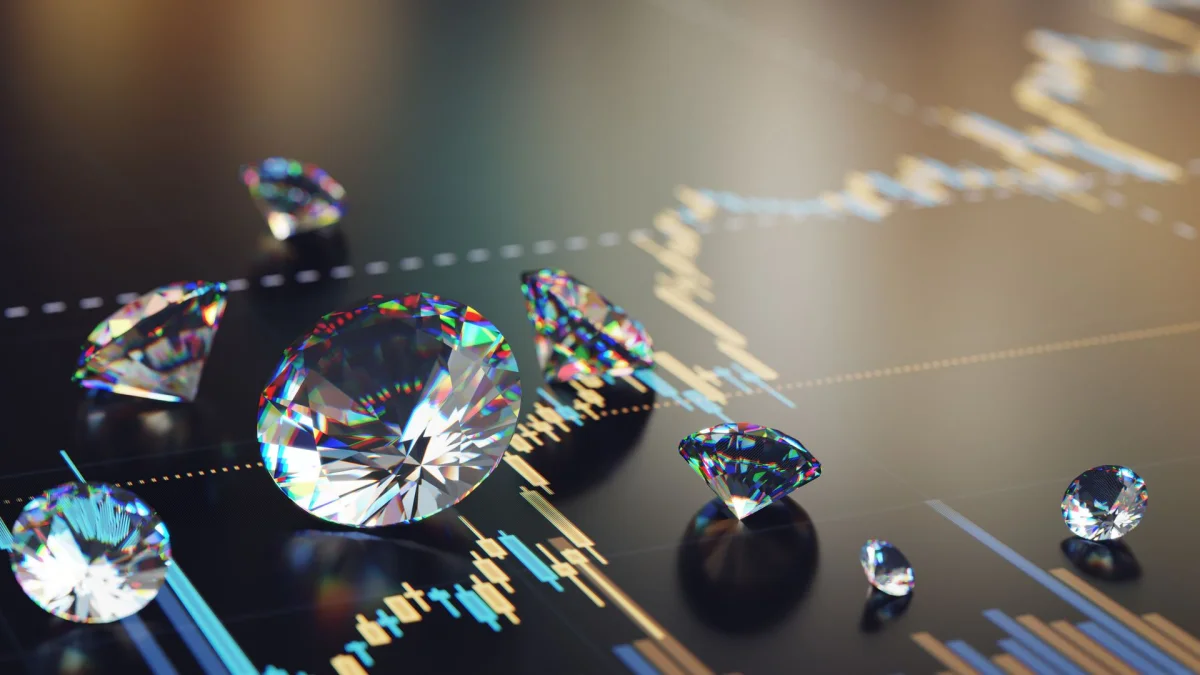
The diamond ring has spent a century doing a very good job of selling itself. The price tag, though, is now telling a different story. Natural diamond prices have dropped more than 50% over the past five years, falling from an average of $8,007 per carat in 2021 to $3,898 per carat most recently. For anyone who bought a stone expecting it to hold its value, that's a sobering number.
How a slogan built a market
Diamonds weren't always the default engagement stone. As marriage shifted from an arrangement about family ties and assets toward a romantic choice, rings came to symbolise love. Post-war affluence, booming South African mines and some very effective marketing did the rest.
The turning point was 1947, when American copywriter Frances Gerety wrote “A diamond is forever” for mining giant De Beers. The line tied a stone's durability to the hope of a lasting marriage. Advertising Age later hailed it as the greatest advertising slogan of the 20th century, and De Beers, which held a near-monopoly on diamond production for most of the past 100 years, went from strength to strength.
The campaign reached well beyond jewellers' windows. Marilyn Monroe sang that diamonds are a girl's best friend in Gentlemen Prefer Blondes in 1953. Ian Fleming's James Bond novel Diamonds are Forever became a film with the same title. In 2026, the British singer Raye demanded a “big and shiny diamond ring” in her hit song Where is My Husband!
De Beers also pushed a rule of thumb that men should spend a set share of their salary on an engagement ring. During the Great Depression, the group suggested one month's earnings. By the 1980s, the advice had crept up to two months, and some people now say three. Before World War II, only 10% of engagement rings in Western countries contained a diamond. By the end of the century, that figure was 80%.
Lab-grown stones change the maths
Here's the thing: the stone that once looked rare is now easy to replicate. Lab-grown diamonds look almost identical to natural ones, and jeweller Queensmith says they're 60% to 85% cheaper. In the example it gives, a 0.3-carat lab-grown diamond costs £390, while a natural one costs £980. A 1.2-carat lab-grown stone can be around £1,630, compared with about £8,000 for a natural equivalent.
The shift in buying habits has been fast. According to a 2026 study by The Knot, a wedding platform, lab-grown diamonds accounted for 61% of US engagement ring sales in 2025, up 239% from 2020. Buyers also tend to choose bigger stones: the average diamond bought was 1.9 carats, compared with 1.6 carats for natural ones.
The production methods differ too. Natural diamonds form over billions of years in the Earth's mantle and have to be mined. Lab-grown stones are made under extreme pressure and heat, reproducing that geology in a matter of weeks. That gives shoppers more room to choose size, cut, style and price.
Ethics, supply and a shrinking market
Ethics are part of the story. The same study found that 40% of US couples said it was important their diamond was lab-grown, which points to real concern about supply-chain transparency. A lab-grown stone's origin is known. A natural diamond's journey can be much harder to trace.
Some natural diamonds have been linked to conflict zones, where mining has funded armed groups and so-called “blood diamonds” have become a shorthand for that trade. Forced labour and the exploitation of indigenous communities are further concerns raised in the industry. Demand from Chinese consumers has also been weak since Covid, mirroring a slowdown in the wider luxury market.
You'd expect shrinking supply to lift prices, and that's the paradox here. Some major mines are closing or have already closed, including the Argyle mine in Australia and Diavik in Canada. De Beers cut production 12% in 2025 and is sitting on $2 billion worth of unsold inventory. Its joint venture with Botswana's state-backed producer Debswana has reduced output 40% since 2023. Russian miner Alrosa, the world's biggest producer of rough diamonds by volume, has been hit by sanctions and is also lowering output.
Discoveries still happen. In 2024, Canadian miner Lucara found the 2,488.32-carat Motswedi diamond at the Karowe Mine in Botswana. But new mines take a long time and a lot of money to develop, so supply stays tight. Lale Akoner, global market strategist at trading platform etoro, sums up the mood: “Natural diamonds still have appeal, especially rare and high-quality stones.” She also warns that “better jewellery sales do not automatically translate into better prices or profits for miners.” De Beers' rough-diamond prices were still under pressure in the first half of 2026, and the shift to lab-grown stones has blocked a recovery.
De Beers' sparkle is dimming
De Beers once controlled up to 90% of the world's rough diamond supply. The company was formed in South Africa in 1888 through a merger of British colonists' businesses led by Cecil Rhodes and Barney Barnato, backed by the Rothschild family. It was set up to control production and prices, and it did so for generations.
That grip has loosened. Anglo American took control in 2011 and now owns 85% of De Beers, with Botswana holding 15%. De Beers' market share is now around 25%. Consecutive write-downs have wiped about $7 billion from its value since 2023. Last year it posted an underlying loss before interest and tax of $787 million on revenue of $3.5 billion. Anglo American has been trying to sell the business since 2024, and recent reports suggest Cartier's owner Richemont could join a consortium led by former De Beers CEO Gareth Penny to bid for the stake. The price could be as low as $1 billion.
The knock-on effects reach far beyond the boardroom. Diamonds made up 80% of Botswana's exports, 33% of its fiscal revenues and 25% of GDP in 2024, according to the International Monetary Fund. A struggling natural-diamond industry will weigh on growth in countries like that.
Lightbox tells a similar story. De Beers launched its own lab-grown brand in 2018, but it closed in May 2025 amid a steep fall in synthetic gem prices. It faced stiff competition from budget lab-grown brands in India and China. Lightbox initially sold stones at $800 per carat, and De Beers says prices fell 90% by 2025. Anglo American chief executive Duncan Wanblad later told the Financial Times the company could have “been a little bit more aggressive on the signals we were getting” from lab-grown competition.
Buy for the joy, not the portfolio
This is where the marketing promise meets reality. A diamond can be a beautiful thing to own, but it isn't a convenient investment. Russ Mould, investment director at broker and investment platform AJ Bell, points out that diamonds lack liquidity, a tradable market and a transparent spot price, which gold and most other commodities have. Production costs vary so widely with geology and yields that there's no clear floor price to anchor value.
Jewellery adds another hurdle. Mould says it comes with a “hefty retailer's mark-up,” an obstacle for anyone hoping to resell it. Queensmith estimates second-hand sellers could receive 30% to 40% less than they paid, whether the stone is natural or lab-grown. Diamonds also can't do what gold does as a hedge against inflation and market stress. As Akoner puts it, “the test of a hedge is whether I can value and sell it when markets are stressed,” and gold passes that test far more readily than an individual diamond.
For lab-grown stones, the economics point the same way. Supply can grow as production improves and wholesale prices keep falling. Akoner's view is that the lower purchase price is the real benefit, not the prospect of profit on resale.
There's one narrow exception. Rare, top-end stones can attract collectors. The 32-carat “azure blue” diamond sold for $8.4 million at auction in June, and serious collectors often focus on rare colours or pieces with a recognised maker and documented history. Akoner cautions that a headline auction result “is not the return every owner will achieve.” Collectors in this space are betting that someone else will pay more for that rarity later, which is a specialist bet rather than a store of value for most households.
If you're buying a diamond because you love it, that's a sound reason on its own. Just don't count on it as a nest egg. For general information on money decisions like this, the simplest rule is to set the budget around what you'll enjoy wearing, then treat any resale value as a bonus rather than a plan.