Lagarde’s Early Departure Raises Questions About ECB Leadership and French Debt
Budgeting & Saving [email protected] (Matthew Lynn) 655 reads
Christine Lagarde’s planned exit comes as French borrowing costs rise, putting a premium on clear communication from the ECB during the succession.
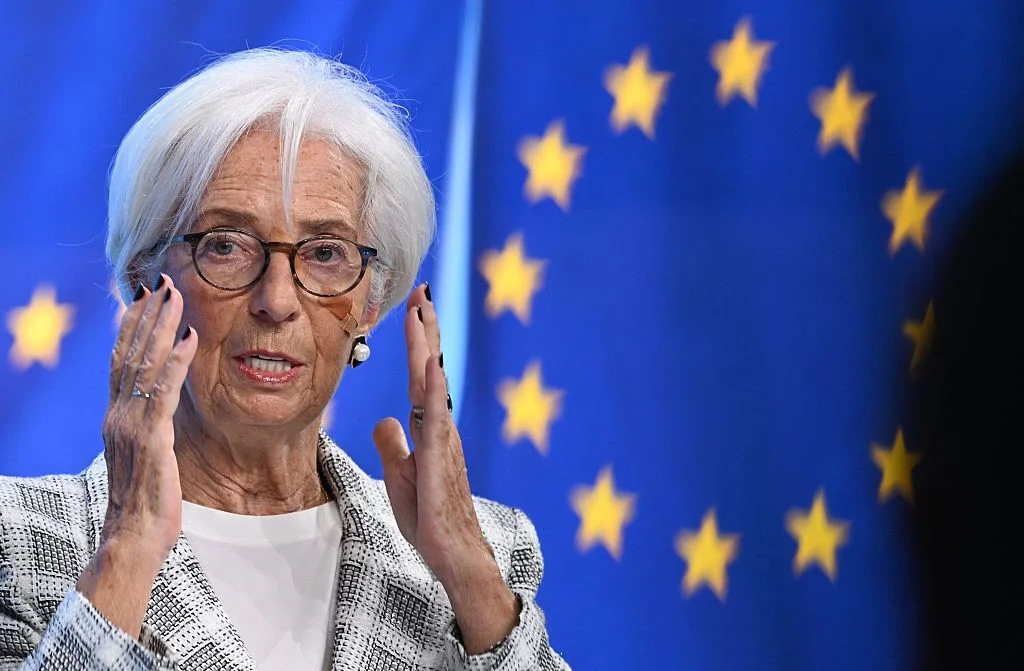
Christine Lagarde is set to leave the European Central Bank (ECB) a few months before her term as president ends, creating a leadership transition while concern about French debt is rising. The timing matters because investors’ confidence can depend partly on whether they believe the ECB would respond if a country’s bond market came under severe pressure.
The succession is already taking shape. Pablo Hernandez de Cos, the former governor of the Bank of Spain, and Klaas Knot, formerly of the Dutch central bank, are early contenders. Member states may take months to settle on a successor. Until then, Lagarde will remain in charge, but an announced departure can weaken a leader’s influence as attention turns to who will take over.
Why France is central to the transition
France’s public finances are the immediate source of concern. Its debt-to-GDP ratio has reached 120%, and its deficit is expected to exceed 5% of economic output this year, despite the absence of a special crisis. The economy has stagnated and is close to recession, limiting the prospect that faster growth will ease the debt burden. The country already collects close to 50% of national output in taxes, leaving little room to raise more revenue.
Budget uncertainty adds to the strain. Political paralysis makes it difficult to see how a budget for next year will pass, while street unrest complicates efforts to make substantial reductions in public spending. The outlook for spending adds another layer: leading figures in next year’s contest for the French presidency are promising more of it.
Investors have begun demanding higher yields on French debt. If yields rise sharply, the cost of borrowing can increase and confidence can deteriorate further. The danger described here is not only a French funding problem. France is large enough that a bond market collapse could threaten the stability of the single currency, making the ECB’s response a key part of how investors assess the risk.
For background on the pressure in the French bond market, see the discussion of France’s debt concerns. France’s weak growth also matters: an economy near recession has less capacity to grow its way out of a high debt load.
The ECB’s credibility is part of the market calculation
The argument that the ECB helped enable France’s borrowing is a pointed one. Lagarde’s leadership included large-scale money creation and a cap on Italian bond yields when those yields threatened to climb too far. The criticism is that such support made it easier for France to borrow heavily for longer. That is an assessment of the past, but it also shapes the question facing the next ECB president: how can the bank contain financial stress without appearing to underwrite unchecked borrowing?
There is also a perception problem in Lagarde’s nationality. If a French president of the ECB were involved in arranging support for France, other countries could see the decision as a conflict of interest, even if the bank acted to protect the wider currency area. A successor from Spain, the Netherlands or Germany might face less suspicion on that particular point. Yet nationality alone would not resolve the underlying challenge: the ECB would still have to weigh support for financial stability against concerns about who bears the cost.
The market’s current confidence may rest partly on the belief that the ECB would find a way to help if France reached a crunch point. That belief can be fragile. Investors may reassess it if they hear doubts from a potential successor, or if the succession process appears to distract the bank from its immediate responsibilities. If confidence slips, bondholders can sell quickly, pushing yields higher and increasing pressure on the market.
Uncertainty around the handover
There is speculation that Lagarde’s departure could allow Emmanuel Macron to select a successor before Marine Le Pen potentially takes office. The claim is that a central bank appointment might constrain what a future French leadership could do on economic matters. That remains speculation; the timing alone does not establish that this is the reason for Lagarde’s decision.
What is clearer is the risk of a prolonged contest for the job. Potential contenders may be drawn into succession discussions, while Lagarde’s authority could diminish as her departure approaches. That leaves the ECB needing to communicate steadily through a period when French borrowing costs are already rising. Careful public remarks and a clear account of the bank’s role could help avoid adding uncertainty, though they cannot settle France’s budget choices or guarantee that markets remain calm.
Lagarde’s early exit therefore puts two questions together: who will lead the ECB, and how firmly will the bank stand behind the currency area if French debt stress intensifies? Investors will be watching both the succession and the bank’s response to market pressure. For now, the practical test is whether the transition can proceed without making doubts about French debt or the ECB’s capacity to respond harder to ignore.