AI Could Speed Up Drug Discovery, but Pharma’s Biggest Winners Are Unclear
Earning & Side Hustles Harry Waight 634 reads
AI is helping drug companies work faster, but long trials and uncertain profits mean greater productivity may not reward every pharma business.
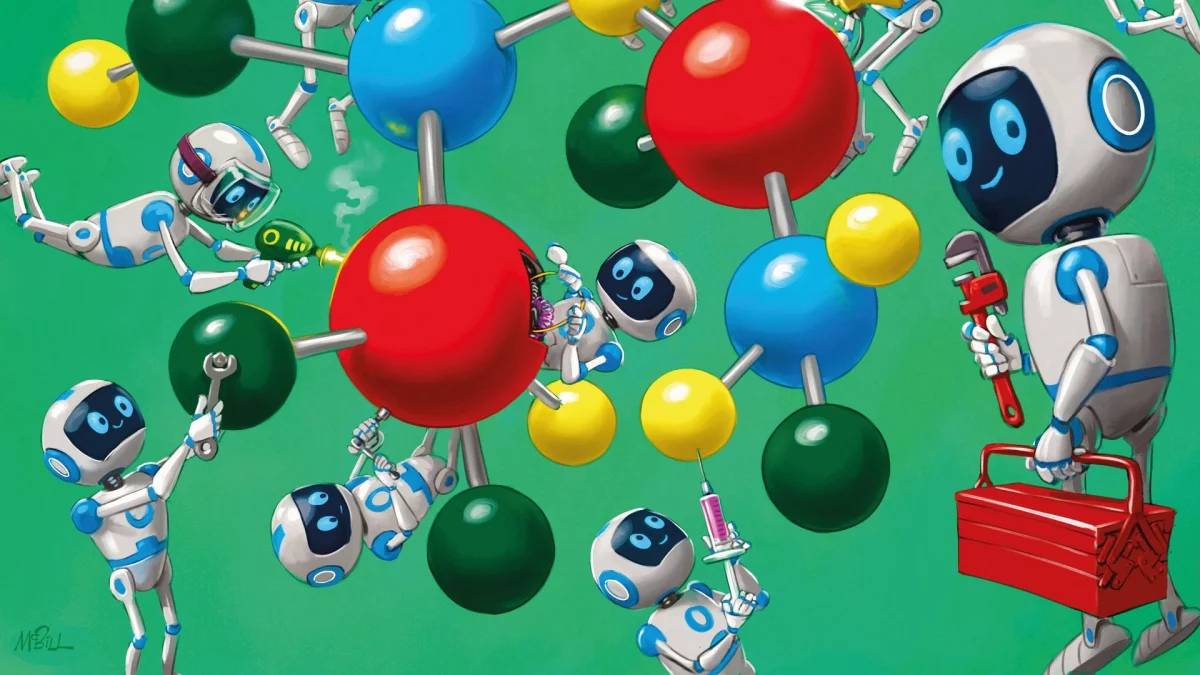
Artificial intelligence could make drug development faster and less expensive. That doesn’t guarantee that established pharmaceutical companies will earn more from it. The key question for investors is who will capture the value: today’s large drugmakers, technology firms, or newer companies built around AI.
The distinction matters because the industry has spent decades trying to improve its research output. AI is already helping with some tasks, including clinical-trial planning and paperwork. Its bigger promise is to help researchers design molecules and predict which ones might work in people. That promise is still being tested.
AI has already made some research tasks faster
A turning point came in 2020, when Google DeepMind announced that its AlphaFold platform could predict a protein’s three-dimensional structure from its amino-acid sequence. Proteins play important roles in the biological processes behind disease, so understanding their structure can help researchers study how medicines might interact with them.
Before this kind of prediction, determining a protein structure experimentally could take months or years. AlphaFold could produce useful predictions in minutes, giving researchers a faster way to explore how proteins work. DeepMind co-founder Demis Hassabis and director John Jumper shared the 2024 Nobel Prize in chemistry for their work on the discovery.
The potential is considerable because drug research has faced a long-running productivity problem. Life-sciences analyst Jack Scannell called it “Eroom’s Law,” a reversal of Moore’s Law, which describes the historical doubling of transistor counts on computer chips about every two years. Scannell found that from 1950 to 2010, the number of new drugs approved per billion dollars of research and development spending halved every nine years. In inflation-adjusted terms, the yield fell almost 80-fold.
The costs and risks remain high. A 2025 Rand Corporation study put the mean cost of developing a new drug at more than $1 billion, and other studies have estimated that pivotal clinical trials typically cost more than $40,000 per patient. Only around 10% of drugs entering Phase I trials eventually receive approval, after a development process that can take a decade.
For now, AI’s contribution looks more incremental than transformative, says Mene Pangalos, a former executive vice-president of biopharmaceuticals research and development at AstraZeneca. He describes the current effect as a “significant benefit” that can shave a year or two off research or development, while stopping short of compressing a seven-year process into one.
Some of the clearest early gains come from work around research rather than the invention of new medicines. AI can help with patient recruitment and with preparing documents and submissions. Tasks that previously took around a year can now take a few months. That can free researchers from time spent entering data and completing routine forms.
Novartis offered a practical example involving a 14,000-person, late-stage cardiovascular trial of its cholesterol drug Leqvio. The company used AI to identify clinical-trial sites that were likely to perform better. The selection process, which typically took four to six weeks, was reduced to a two-hour meeting.
The hard part is proving a drug works in people
For AI to change drug discovery more deeply, it needs to help with creative work: designing molecules, predicting how compounds will interact with biological targets, and identifying candidates that can become medicines. That could help counter Eroom’s Law. But faster ideas don’t remove the challenges of testing a medicine safely and effectively in people.
Biology is complex. A molecule that looks promising in a computer model or laboratory can prove ineffective, toxic, or difficult to administer in the human body. Clinical trials also require time because researchers need to observe what happens to patients over meaningful periods. In some Phase III studies, measuring overall survival means following participants for years, Pangalos says.
This creates a limit on what faster computing can achieve. AI may speed up the path from an idea to an experiment, but it cannot make human biology respond more quickly. As of the time described, no drug designed by AI had been approved for sale.
Mikael Dolsten, a former chief science officer at Pfizer who advises and sits on the boards of several AI companies, sees a larger opportunity. He divides AI’s effect into two areas. One is improving workflows and routine operations. The other is “generative AI”: using the technology to develop new insights and drugs, with faster discovery and greater predictive power.
Dolsten says AI already outperforms humans at designing new molecules in some areas of biologics. These injectable medicines account for the majority of cancer and immune-disease therapies. AI can produce hundreds of times more molecule iterations than a person working alone, he says, and that figure could rise to “a thousand to ten-thousand-fold.” He sees molecule design in these areas potentially shrinking from months to days or weeks.
Those are ambitious claims, and the early results deserve careful scrutiny. A Boston Consulting Group analysis found an 80%–90% success rate in Phase I trials for drugs suggested by AI, though the sample was small. A separate study published in October examined 129 AI-enabled drug candidates across 69 companies. It found a 77.8% success rate among candidates progressing through Phase I, but only a 19.5% success rate in Phase II. By March 2026, only five candidates had reached Phase III.
The pattern suggests that AI may help identify candidates that are promising at the start of testing. Whether those candidates will progress through later trials and become medicines is still an open question.
Shorter development times are possible, but not certain
Dolsten’s best-case scenario is a 90% reduction in development costs, from $1 billion to $100 million, once the necessary investment in AI infrastructure has been made. He also sees the full development timeline potentially shrinking from a decade to three years.
That outcome would require improvements across the whole process, rather than only at the discovery stage. If researchers could identify the right medicine, dose, and patients earlier, trials might be smaller, more targeted, and more adaptive. Earlier evidence about safety and effectiveness could reduce failures and the need for sequential studies. Monitoring patients more closely after a medicine reaches the market could also add information about how it performs.
These are possibilities, not established results. Pangalos points out that long-term studies will still be needed when researchers must measure outcomes over several years. Dolsten, too, acknowledges that changes to trial and approval processes may take five years or more to materialise.
Productivity may not translate into higher profits
Even if AI makes drug development more productive, established drugmakers may not automatically see higher revenue, margins, or share prices. Some of the value could go to newer, AI-native pharmaceutical companies designed around the technology, or to technology businesses that develop their own drug research capabilities.
Dolsten compares the possibility to Tesla’s effect on the car industry. Tesla had no established car business to adapt and was built around different principles. It floated on the stock exchange in 2010 and became the world’s biggest car company a decade later; at times, its market value approached that of the rest of the industry combined. The comparison captures the scale of possible disruption, though it doesn’t tell investors which pharmaceutical businesses will succeed.
Established drugmakers may find it harder to change how they work. “Companies where 90% of staff do not understand AI need to be careful,” Dolsten says. His argument is that firms need to recognise the shift and work with it. Businesses that hold on to older methods may lose ground to companies with the skills and systems to develop medicines differently.
Large pharmaceutical companies still have important strengths. Bringing a drug through clinical trials and into widespread use takes resources and experience. Those capabilities could make established firms valuable partners to AI-native companies, even if they don’t originate every new medicine. Hybrid arrangements could combine AI-led discovery with established companies’ clinical and commercial reach.
Another advantage may be access to high-quality, specialised data. AI models rely on the information used to train and refine them. Companies with deep datasets in specific diseases may be better placed to work with advanced AI systems.
Vertex has a proprietary data pool related to cystic fibrosis, while Roche holds a large volume of proprietary oncology data. If those datasets can be combined effectively with advanced AI, they may support new research. As AI makes some parts of discovery more widely available, access to distinctive data and the capacity to run clinical trials could become more valuable.
Investors face different risks across the sector
The industry’s possible gains come with the risk that businesses now seen as promising may fail to deliver. Established companies could lose ground, while smaller firms may struggle to bring a candidate through trials. The car industry offers examples of both striking success and companies that lost value or fell away, including Fisker and Nikola.
That’s why investors need to distinguish a productivity story from a profit story. Faster, cheaper drug discovery could benefit patients and the industry without increasing the earnings of every company involved. Large companies may use AI to reduce costs or apply it to their own data, while AI-native businesses capture more of the value from new drug discovery.
Roche and Vertex may interest investors who are looking for established businesses with substantial proprietary data. The source article identifies Johnson & Johnson, a diversified healthcare company with medicines and medical-device businesses, as paying a dividend yield of about 2%. It describes Novartis as a focused medicines company, with a 2.8% dividend yield. Dividend income and yields can change, and they don’t remove the risk of a share price falling.
Smaller AI-focused companies can carry much greater risk. Recursion, a US company, runs automated laboratories to test large numbers of cells and uses AI to search the resulting data for drug targets and candidates. Insilico Medicine, listed in Hong Kong, uses generative AI to select disease targets and design molecules. These businesses may offer exposure to AI-led drug discovery, but their prospects remain uncertain and investors could lose their entire investment.
The useful question is not simply whether AI will make drug research more efficient. It’s whether those efficiencies will help particular companies develop successful medicines, reach patients, and retain enough of the resulting value. Investors should watch for evidence of progress through later-stage trials, while remembering that faster discovery alone doesn’t settle who will profit.