Nvidia’s Market Weight Raises Questions About Pension Diversification
Retirement Planning [email protected] (Kalpana Fitzpatrick) 808 reads
Nvidia and other technology stocks feature heavily in major indexes and some funds. Check how that concentration fits your time horizon and plans.
Nvidia’s influence on major stock indexes means a portfolio can hold many funds and still depend heavily on a small group of technology companies. That concentration may matter most when you’re close to using your pension or drawing income from your investments, because a sharp fall can affect several holdings at once.
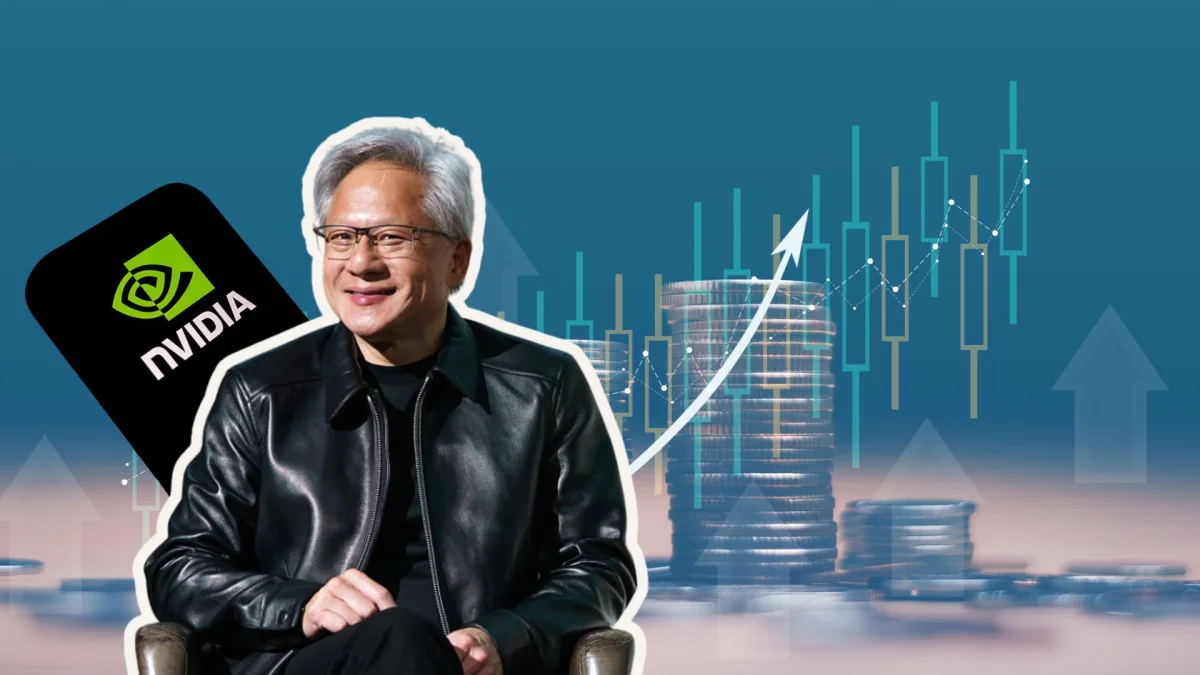
Nvidia’s market value passed $5 trillion in October, making it the first company to reach that level. After reaching its peak, the company lost more than $2.5 trillion in market value amid a controversy and questions about whether it could thrive without chief executive Jensen Huang. Its shares later rebounded after Huang returned. The swings show how one company’s fortunes, and views about its leadership, can affect investors’ portfolios well beyond direct shareholdings.
Why owning several funds may not spread risk
Funds can hold many companies while still placing a large share of their money in the same handful of stocks. A broad index fund, an exchange-traded fund and an investment trust may look like separate holdings in a pension account, but their underlying investments can overlap. If each owns Nvidia and other large technology firms, a setback for that group can reach across the portfolio.
The figures in the source illustrate the concentration. Nvidia makes up around 10% of the Nasdaq Composite, while Apple has the largest weighting at 13%. The index’s 10 largest constituents are all technology stocks. In the S&P 500, Nvidia accounts for just over 5.5%, and its 10 biggest constituents are also technology companies. These weightings mean that movements in a small number of firms can have an outsized effect on index performance.
Exposure can also come through funds with a particular focus. Scottish Mortgage Investment Trust held 6% in Nvidia and more than 4% in Anthropic, both among its top 10 holdings as of 31 October. SpaceX was its largest holding, at just over 11%. The Polar Capital Technology Trust had Nvidia as its largest holding at almost 10%, followed by Microsoft at 6.8%. A fund’s name or broad mandate won’t, on its own, tell you how much exposure it has to a particular company or sector.
Geography is another part of the picture. Figures cited for UK defined contribution plans put about 70% of the £600 billion held in 2023 into overseas equities. The MSCI World index has a 72% allocation to US equities, while UK shares account for less than 4%, according to the De Vere Group. A pension invested in global equities can therefore carry substantial exposure to US companies, even if the saver hasn’t picked individual US shares.
Match concentration to when you’ll need the money
A fall in a few large holdings can pull down an index, but that doesn’t automatically mean every saver needs to change course. The practical question is how much volatility your plan can absorb before you need to draw on the money. Someone in their twenties with no immediate plans to use their pension may have more time to ride through short-term declines than someone nearing retirement who expects to take income soon.
That difference matters because losses shortly before withdrawals can leave less money invested to participate in a later recovery. For people approaching retirement, the timing and amount of planned withdrawals may deserve as much attention as the portfolio’s headline number of funds. A self-invested personal pension holder can check the holdings across the whole account, including investments that aren’t index trackers, and consider whether the mix fits their plans.
Investors should also weigh concentration against the reason these companies have become such a large part of the market: their past success has rewarded many holders. Changing a portfolio in response to recent price swings can bring its own trade-offs. The source gives no single allocation that suits everyone, so age, risk tolerance and expected withdrawals all matter when reviewing the balance.
What to check in your pension
Start by looking through the fund details for your pension and any other investment accounts. Note the largest holdings, the share invested in technology, and the amount tied to US equities. Then compare holdings across funds: two products with different names may own many of the same companies. The aim is to understand what drives the portfolio, not simply count the number of funds.
For workplace pensions, default funds deserve a look too. Many workers are placed into these automatically, and providers are reviewing their holdings. The Pensions Regulator said last month that investment in AI-related activity was growing across global markets. It cited reports that global private AI investment more than doubled in 2025, rising 127.5% year on year, and noted that AI’s growing presence across sectors could create shared risks even in diversified portfolios.
One possible change to default funds is a mix that includes global growth alongside UK companies, infrastructure and private markets. De Vere Group chief executive Nigel Green said he expects more discussion about default fund holdings in 2027 and suggested that a broader mix could make pensions more resilient over time. These are expectations, not a guarantee of how any particular provider will change its funds or how those changes will perform.
Short-term falls are a normal part of investing, and the source notes that indexes have tended to gain over longer periods. Over five years, the Nasdaq had risen more than 52% and the S&P 500 more than 56%. Those past gains don’t rule out future losses, but they put a sharp decline into a longer time frame.
A portfolio check doesn’t have to lead to a dramatic adjustment. It can confirm that your current mix suits your time horizon, or show where overlapping funds leave you more exposed to technology and AI swings than you expected. The useful next step is to understand that exposure before deciding whether any change fits your retirement plans.