Oil Stocks Still Offer a Hedge, but Higher Prices May Leave Less Room to Gain
Retirement Planning [email protected] (Cris Sholto Heaton) 355 reads
Oil shares can cushion some energy shocks, but ample supply and a strong run in prices make the risks harder to ignore.

Oil stocks can still help diversify an investment portfolio, but their appeal depends on what investors expect from crude prices. The case for holding them has shifted: a shortage of oil once looked like a lasting threat, while today the bigger question is whether supply can keep pace with demand that is growing slowly and may eventually decline.
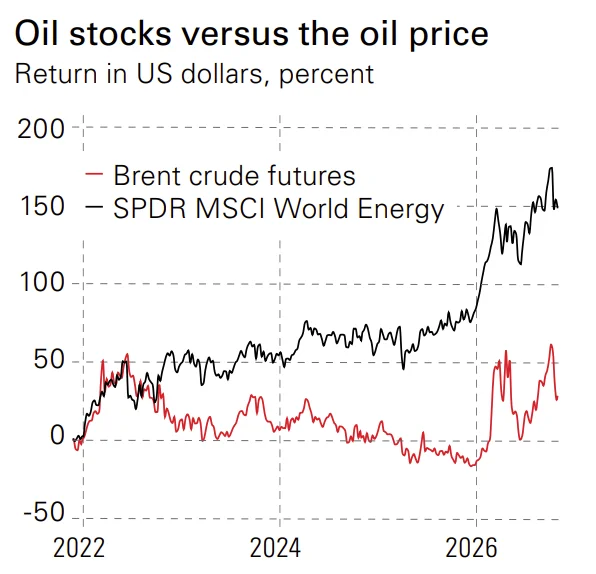
That shift matters for anyone using energy shares as a hedge. Oil producers can benefit when crude prices rise, but the same shares may fall sharply if supply proves plentiful or prices retreat. A hedge can soften the effect of some risks; it doesn’t remove the chance of losses, and a strong run in energy stocks can make them less appealing to buy.
Why the long-term supply story changed
More than 20 years ago, the idea of “peak oil” was widely discussed. The concern was that oil and gas production would fail to meet rising demand, pushing prices higher over time. The expansion of US shale production in the early 2010s changed that picture by adding substantial supply.
Renewable energy has also become a more significant source of alternatives. Improvements in technology and incentives to expand its use have helped widen the options available to meet future energy needs. That doesn’t mean oil will quickly disappear. Aviation and shipping are among the sectors where replacing it remains difficult, and demand can move unevenly as industries and consumers adjust.
The longer-term outlook described here is for enough production capacity to meet modest demand growth, followed by a possible decline. That broad trend can coexist with sharp price swings. Supply disruptions, shifts in production and changes in demand can all produce shorter cycles within a larger pattern of adequate capacity.
Why oil shares looked attractive
Oil and gas stocks became appealing after prices collapsed during the pandemic in 2020. At the time, the argument was straightforward: prices were unlikely to stay at extremely low levels indefinitely, while major producers appeared inexpensive relative to the cash they could generate even under pessimistic assumptions.
Crude later climbed above $100 a barrel and then fell back to $60. At that lower price, US shale producers might have cut investment, potentially setting the stage for a recovery in prices. That possibility wasn’t tested in the period described, because a sharp rise in geopolitical tensions sent prices soaring again.
The episode points to a practical challenge for oil investors. Higher prices can encourage more supply, even when large producers remain cautious about spending on costly new projects. That response can limit how long elevated prices last. Investors assessing the sector therefore need to consider both the demand outlook and how quickly producers may respond to a price rise.
Surplus estimates and near-term supports
The International Energy Agency reported that production exceeded consumption by almost two million barrels a day in October and projected that the surplus could reach 4.5 million barrels a day next year. Those estimates raise the possibility that supply could put downward pressure on crude prices and, in turn, oil shares.
There are reasons not to treat a projected surplus as a certainty about prices. The estimates depend partly on how much production and exports from the Gulf have recovered, and that recovery is not certain. Meanwhile, stockpiles have been drawn down and may need to be rebuilt. Restocking could support demand and prices for a time, even if production is running ahead of consumption.
Refining capacity is another part of the picture. Global capacity is described as down 10%, partly because of damage in the Middle East and Russia. Low stocks of refined products and tight refining capacity can help keep refining margins high. These conditions may support energy businesses in the near term, but they don’t settle the larger question of whether crude supply will exceed demand.
A hedge with a price attached
The State Street SPDR MSCI World Energy ETF (LSE: ENGW) was added to the MoneyWeek portfolio in 2024 as a hedge against energy risks. It was considered inexpensive and out of favour at the time. Its strong performance this year supports the idea that exposure to energy companies can help when oil prices surge. It also suggests investors increasingly expect higher crude prices to persist.
That expectation may leave less room for further gains if prices ease. If tensions in the Gulf decline, the potential downside for crude and oil shares could be substantial. Predicting whether that will happen is difficult, so the more useful question is how much of a portfolio’s recent performance depends on continued high prices.
For investors who already hold energy shares, the trade-off is between keeping protection against another supply shock and recognizing that rising prices may have lifted the value of that protection. The ETF’s recent performance doesn’t guarantee future results, and an energy holding may not suit someone who can’t tolerate sharp swings. A clear plan for reviewing the position can help keep a hedge aligned with its purpose as market conditions change.
Oil remains difficult to replace in some uses, but that alone doesn’t make oil stocks cheap or low-risk. The case for holding them rests on a balance: supply shocks can push prices higher, while a growing surplus can reverse that move. Investors should keep both forces in view when deciding whether the hedge still earns its place.