Market volatility puts retirement concentration risk back in focus
Retirement Planning Dale Roberts 951 reads
A sharp market drop highlights the trade-offs of concentrated portfolios. Retirees can plan for downturns, while long-term savers may have more time to wait.

A steep market drop can expose how much a portfolio depends on a handful of popular stocks or one market. For Canadian investors, the recent pullback has renewed a practical question: how much U.S. technology exposure can a household tolerate, especially when it is already drawing retirement income? No one can know whether the decline will stop soon or deepen. A plan built around that uncertainty can be more useful than a confident guess about the market’s next move.


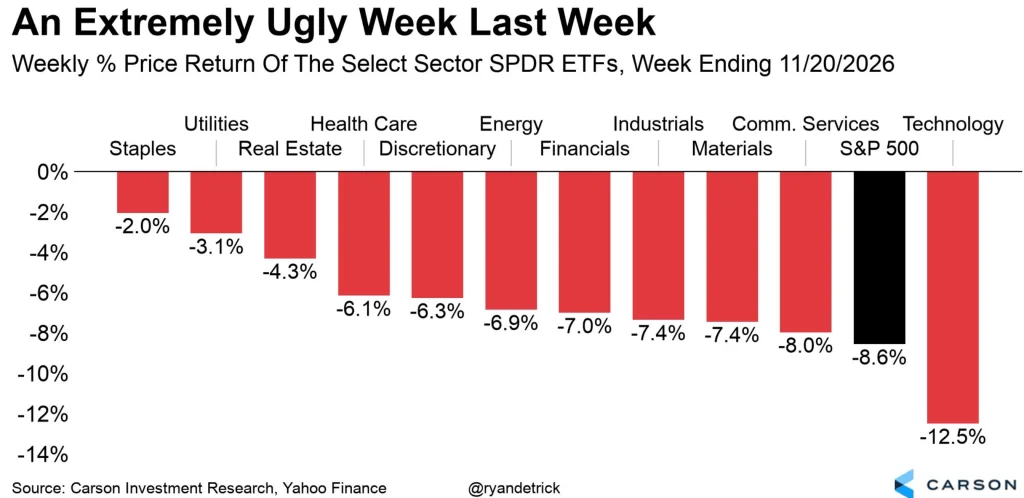
The market’s fall has been linked in part to concern about Nvidia and its chief executive, Jensen Huang, following reports of an investigation involving the company. Some investors fear that the episode could damage confidence in the artificial intelligence trade. That explanation may capture one source of anxiety, but it doesn’t tell us how far prices might fall or when they might recover.
The week was particularly difficult for Canadian investors: Canadian stocks fell 8.0%, while developed international markets lost 7.1% in Canadian dollars. Those figures describe a sharp short-term decline, not a forecast. A single week can make a portfolio feel fragile, but it can’t establish what future returns will be.
Good chart framing the violent dive last week. Wow. pic.twitter.com/FQbY0wkWEM
— CutTheCrapInvesting (@67Dodge) November 21, 2026
Why a downturn can feel different in retirement
People who recently retired may have less flexibility to wait for a recovery if they need to sell investments to cover regular expenses. That’s one reason portfolio concentration and starting valuations deserve attention in retirement planning. U.S. markets had been historically expensive for several years, which can leave investors vulnerable to a stretch of weaker returns. It does not mean a fall is certain, or that anyone can reliably time one.

A range of portfolio choices may help manage reliance on a single market or sector. The approach described here includes holding fewer U.S. stocks, adding defensive or lower-volatility equities, and keeping bonds or cash in the mix. Each choice comes with trade-offs. Defensive shares can still decline; cash and bonds may behave differently from stocks, and reducing exposure to a strong-performing sector can also mean missing some gains if it rises again.
The correction in question began on October 6, 2026, and moved faster during the latest week. The portfolio comparisons described for that period show how different holdings can perform as money shifts away from technology and toward other sectors or value stocks. They offer a look at one period, not proof that a particular strategy will protect a portfolio in the next decline.
For a Canadian low-volatility example, BMO’s ZLB-T was up 5.1% from October 6, 2026, according to the figures reported here. That result is tied to the period measured and shouldn’t be treated as a promise about future returns. The fund’s performance in a different market could look different.
Defensive shares can soften a fall, but not remove risk
A Canadian blue-chip defensive portfolio held in a registered retirement savings plan (RRSP) provides another comparison. Over the most recent month described, that portfolio was down 3.8%, while the S&P/TSX Composite Index was down 7.9%. The comparison suggests the portfolio fell less during that interval. It doesn’t show that defensive holdings will always outperform or stay positive when markets drop.
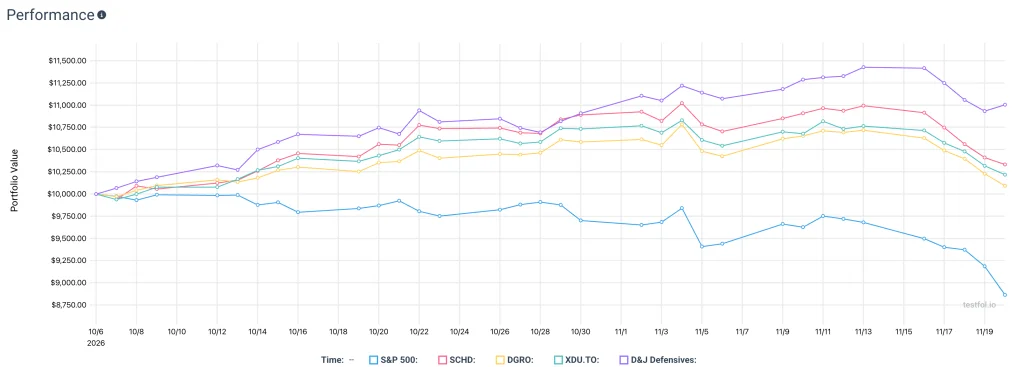
One Canadian low-volatility fund discussed in the comparison is BMO’s ZLB-T.
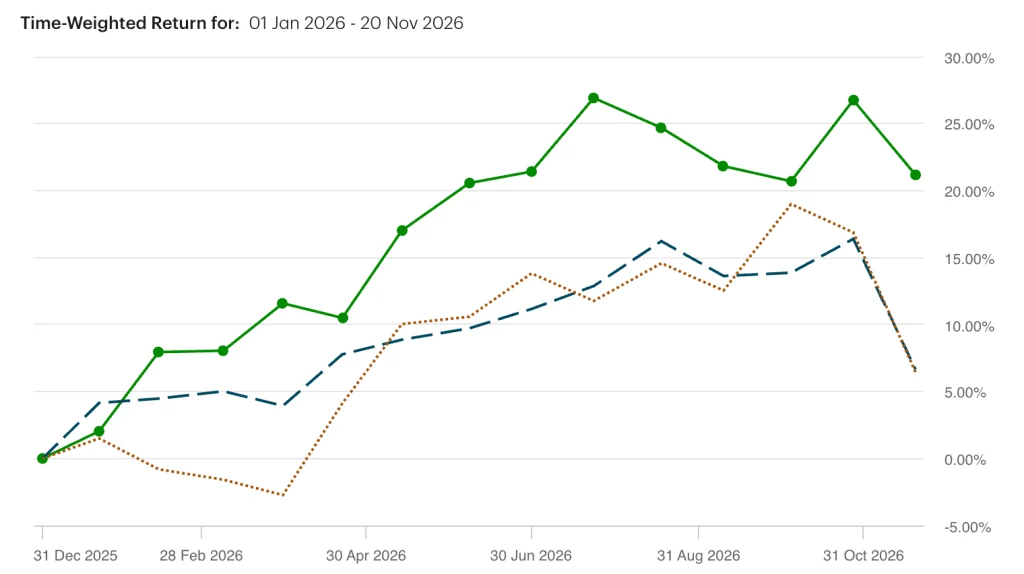
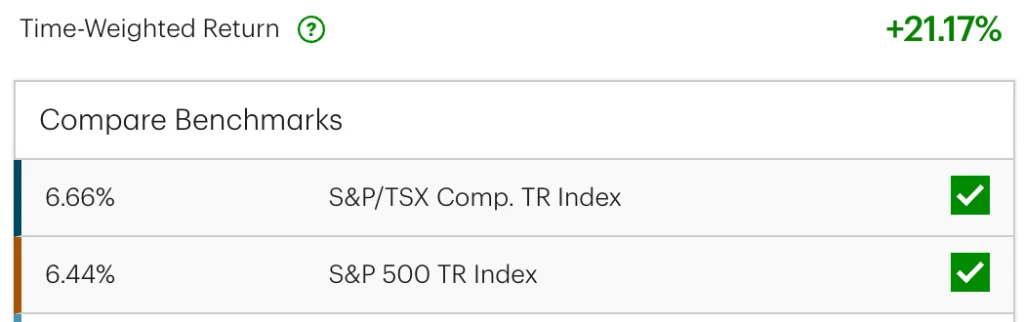
These examples illustrate a useful distinction: risk management aims to make a portfolio’s ups and downs more manageable, not to eliminate them. Defensive equities may fall less in some periods and still lose value. Combining them with cash and bonds can spread risk across different kinds of holdings, but the right balance depends on a household’s spending needs, time horizon and comfort with losses.
Time horizon changes the decision
Someone saving for a goal decades away may be able to sit through market declines more easily than someone who relies on investments for current expenses. For a long-term saver, lower prices can mean future contributions buy more shares, provided the saver can keep investing and tolerate the decline. That possibility doesn’t make a correction pleasant or guarantee a gain; it describes why the same market move can affect households differently.
Retirees, by contrast, may want a clearer picture of how withdrawals interact with a portfolio during a downturn. A retirement cash-flow plan can lay out expected spending and income, then help a household see where market losses might create pressure. The point is not to predict every return. It is to understand which risks could affect the ability to meet planned expenses and to consider those risks before a difficult period arrives.
For both groups, the practical starting point is to understand what the portfolio holds, how concentrated it is, and how much loss the household could live with without abandoning its plan. Market movements can change quickly; a considered plan gives investors a reference point when they do.