Driving the Western Balkans Off-Peak: Lakes, Coast and a Harder History
Retirement Planning [email protected] (Max King) 878 reads
Driving Slovenia, Croatia and Bosnia-Herzegovina in October offers lakes, coastline and war history with fewer crowds. Here's how the route works on a budget.
Few British visitors make it past the Adriatic coast or stray far from Slovenia's Lake Bled, which is a shame. The western Balkans are surprisingly easy to explore by car, and for anyone planning a trip with a set budget, the region rewards a little route planning. My read is that the places most people skip are often the ones that give the best value for time and money.
Why the road trip works
The roads are excellent, especially the stretch down the Adriatic coast, which is an engineering feat of tunnels and bridges. The catch is that most of the old towns along the coast are pedestrian-only, so getting your hotel door-to-door takes more planning than a standard drive. Check how far you can drive in before you book, and ask about where to unload bags and where to park. Those details are easy to overlook and can eat into an evening.
Timing matters too. We travelled in October on a 17-day circular itinerary through Slovenia, Croatia and Bosnia-Herzegovina, arranged by Regent Travel. October sits outside the high summer heat and the packed Adriatic crowds. The trade-off is that inland can be chilly, so pack layers rather than just swimwear. Shoulder-season travel often means fewer queues and more flexibility, but it also means some seasonal attractions may run shorter hours, so confirm opening times in advance.
Lakes, mountains and the Slovenian coast
We landed in Ljubljana and headed straight for Lake Bled, which looks as good in person as it does in photos. If you want a quieter lake, Lake Bohinj is only a short drive away and was less crowded. The snow-capped Julian Alps rise above both, and the waterfall at Savica, which tumbles over cliffs into gorges, is well worth the walk.
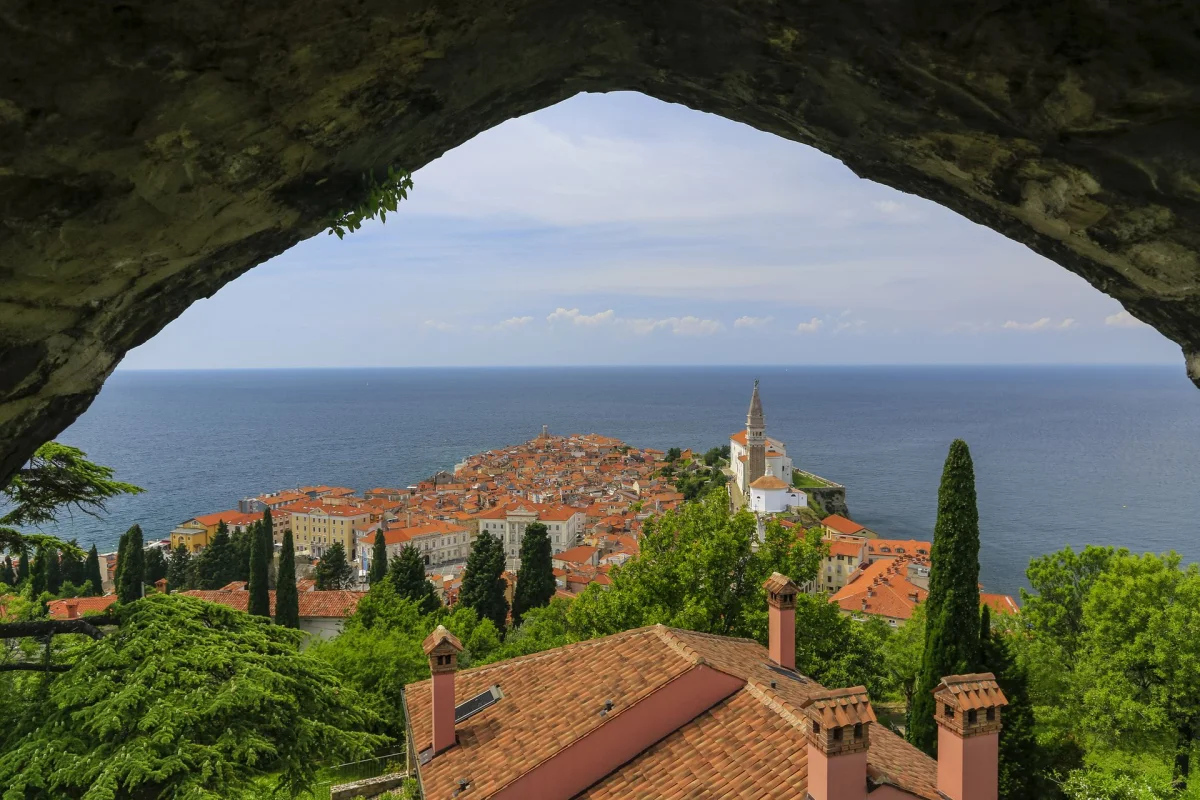
Slovenia also has a short stretch of coastline on the Istrian peninsula, including the Venetian town of Piran. It's a good example of how the region rewards those who look past the headline spots.
Food is a good place to save without giving anything up. Good restaurants turn up almost everywhere, especially in Ljubljana. The ones to skip are usually the places trading on a seaside view for the undiscerning visitor. Walk a few streets back from the waterfront and you'll usually find better meals at more sensible prices.
On the way to Rovinj we stopped at Predjama Castle, which is built into the mouth of a cave and looks almost impregnable. Its 15th-century lord, the robber baron Erasmus, met an unlucky end during a siege when a well-aimed cannonball struck the castle's most exposed spot: his privy, during his morning routine. It's a useful reminder that even the most fortified plans have a weak point.
Rovinj, in Croatian Istria, is oddly overlooked by British visitors, yet it's every bit as attractive as the more famous Split. Nearby, the hill town of Motovun is known for its truffles, and Pula has a Roman amphitheatre. If you're comparing destinations on cost and crowds, Istria is a strong candidate.
Plitvice and the road south
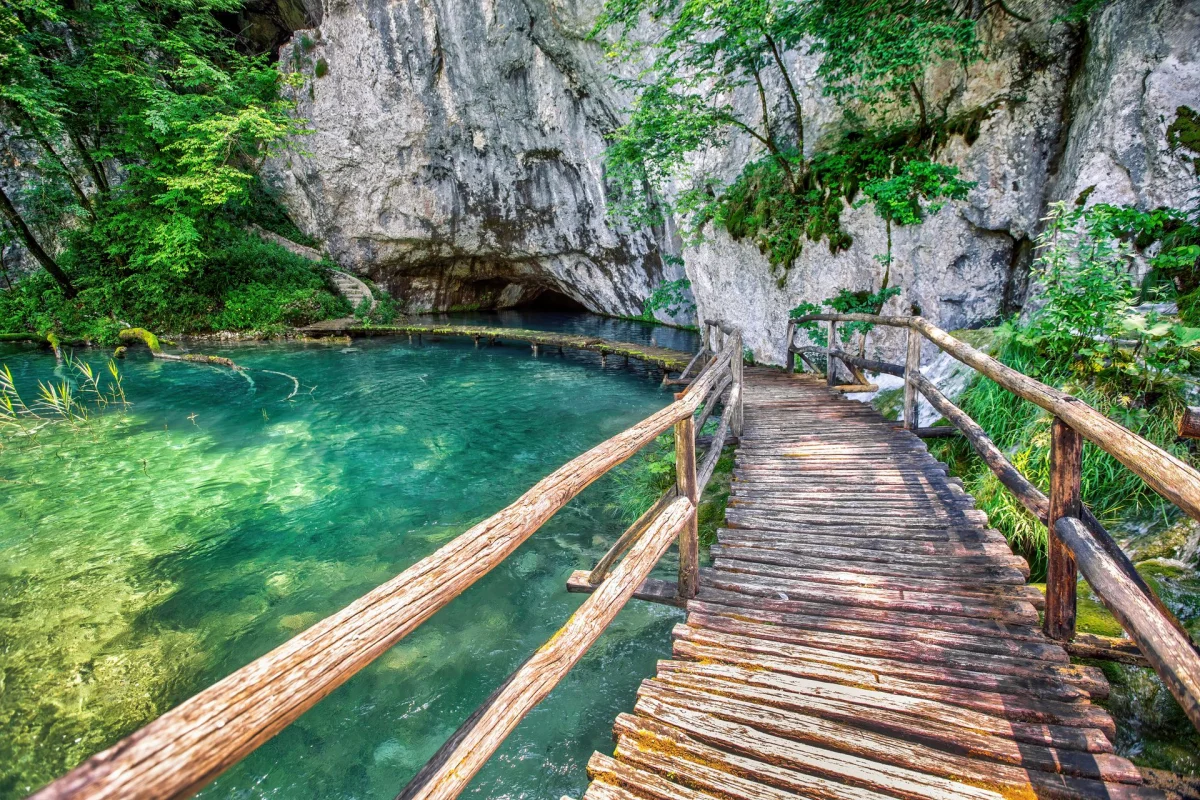
Plitvice National Park is unmissable, and autumn is a particularly good time to visit. Water cascades through a series of emerald lakes ringed by forested mountains, and there are around 50 miles of paths and walkways. The crowds cluster near the entrance, but they thin out quickly on the longer walks. If you can only manage one long hike, go past the first viewpoints.
Our route changed when the road to Split closed, forcing a detour through the Bosnian town of Bihac. The town was besieged by Serbian forces from 1992 to 1995 and relieved by Croatian forces just in time. Plans can shift, and a flexible itinerary with spare days built in can absorb a closure without wrecking the whole budget.
The back road from Bihac to Split was a hard reminder of the war. It runs through what was once the breakaway Serbian region of Krajina. The countryside is beautiful, but it's marred by abandoned and burned-out houses, uncultivated fields and overgrown cemeteries. Split, by contrast, feels a world away. It's the grandest of the Venetian towns on the Croatian coast, with Diocletian's Palace at its heart.
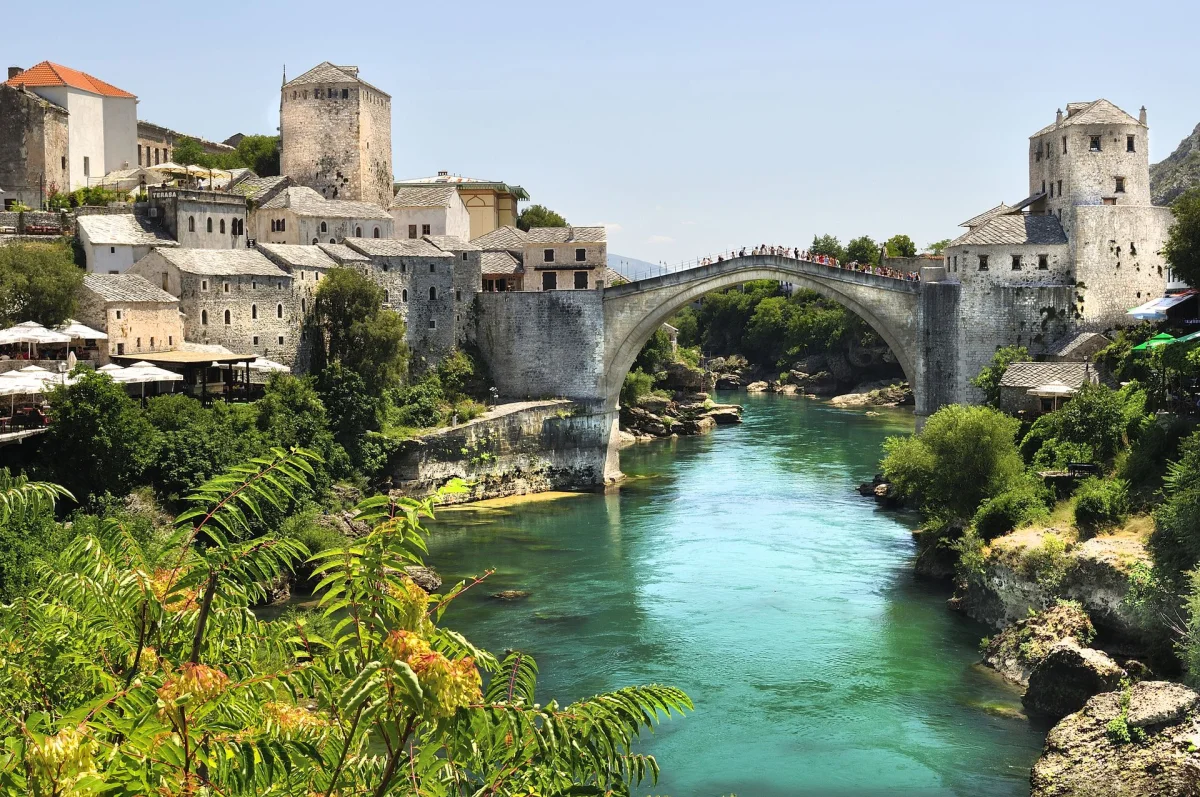
From Split, the road into Bosnia-Herzegovina heads south, though not as far as Dubrovnik, which we had visited on an earlier trip. Our next stop was the mountain village of Pocitelj, followed by Mostar. The city's famous bridge was destroyed in the fierce fighting of 1993 and later painstakingly rebuilt, and it now anchors a town of winding streets, mosques, shops and the river.
Memory in Mostar and Sarajevo
The Hamam museum in Mostar is essential. Its haunting display of war photographs is paired with regular screenings of Jeremy Bowen's graphic dispatch from the brutal battle of 1993. It's heavy going, but it changes how you read the rest of the town.
Once you look for them, the signs are everywhere. Buildings are still damaged, shrapnel holes pock the walls, and many of the gravestones mark lives that ended in 1993. The town's everyday life sits right alongside that history, which is what makes it so striking.
Sarajevo is where Austria-Hungary meets the Ottoman Empire. On one street you can stand at a point where you look west toward the former and east toward the latter. The spot where Archduke Franz Ferdinand was assassinated in 1914, sparking World War I, is marked by the car he was riding in, which had turned the wrong way. Its numberplate, A 111 118, is prophetic, as it points to armistice day four years later.
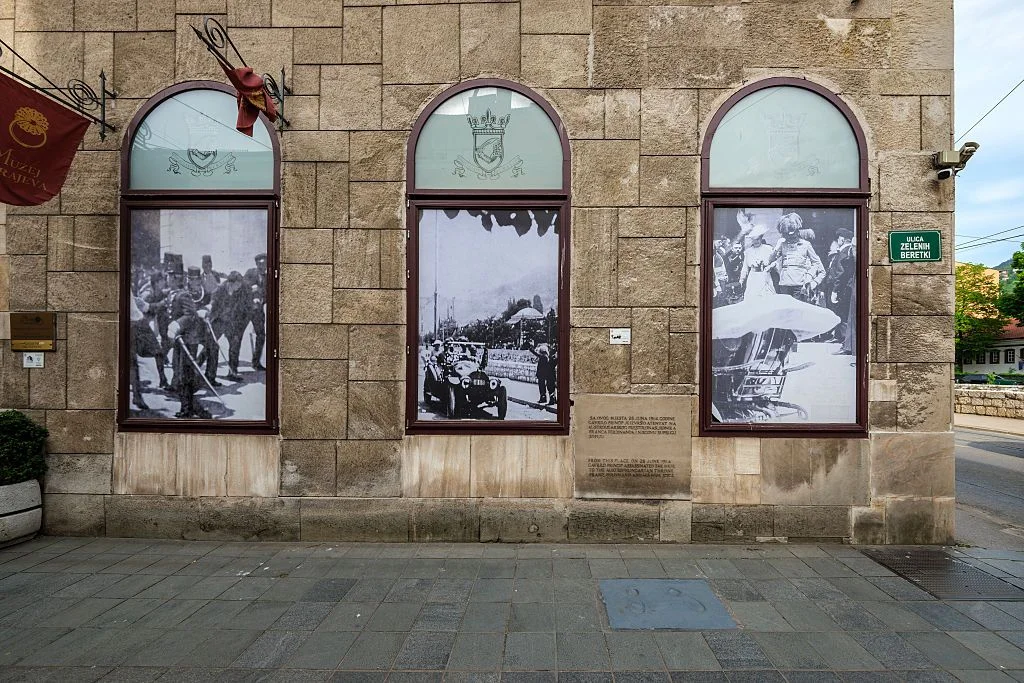
The drive to Zagreb passes through the Serbian region of Bosnia, where locals reject the authority of the central state and fly their own flag, a Russian flag flown upside down, instead of the national one. We didn't stop.
Zagreb and the odd museums
Zagreb, Croatia's capital, is a pleasant city without a lot of must-see sights. It makes up for that with a run of quirky museums: the Video Game History Museum, the Museum of Broken Relationships and the Museum of Hangovers. The prize, though, goes to the Bullsh*t Museum back in Ljubljana. It's a small place, and that's part of the joke.
My takeaway is simple. If you're planning a trip through the western Balkans, go in shoulder season, budget for a few days of slower driving, and don't be afraid of the less famous stops. The region rewards curiosity, and it asks you to pay attention to its history as well as its scenery.