Brazil's Black Monday: Why Markets Sold Off After Lula's Comeback
Debt & Credit [email protected] (Alex Rankine) 737 reads
Brazilian stocks and the real tumbled after Lula's comeback win. One analyst thinks investors overreacted, and there are lessons for ordinary savers.
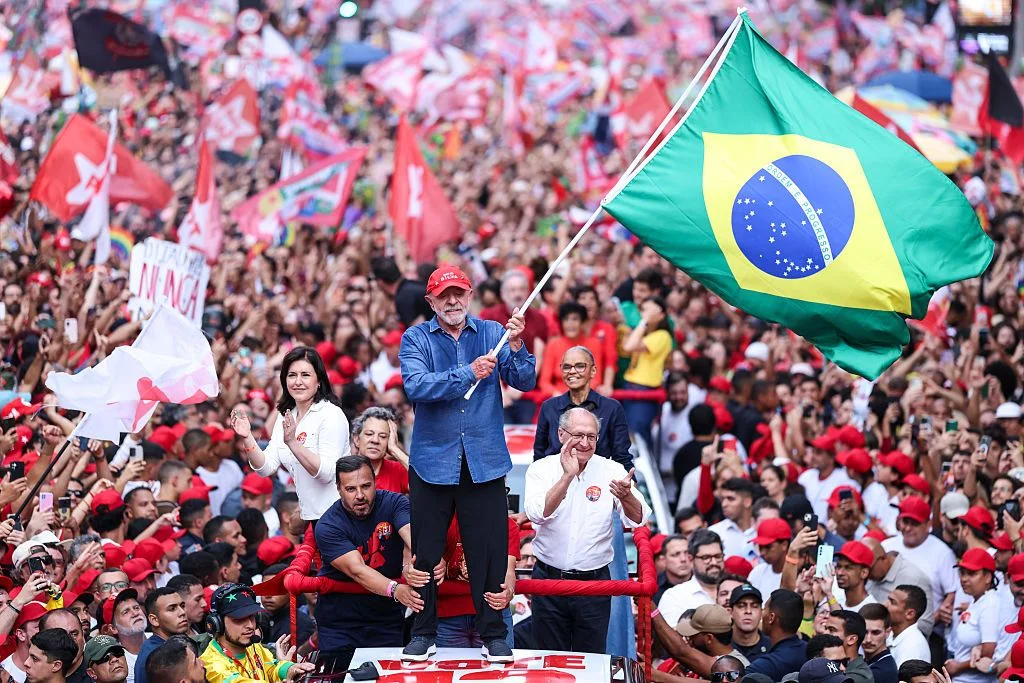
Brazil's markets had a brutal Monday. Stocks fell sharply, and the real lost ground against the dollar at its steepest one-day pace since 2002. The trigger was the return of Luiz Inacio Lula da Silva, the veteran left-wing leader, who came from behind to win the second-round contest. Investors had been pricing in a different outcome, and they reacted hard.
Why the sell-off was so steep
The benchmark Ibovespa share index dropped nearly 14% in a single session. The real fell about 8% against the dollar. Put those two moves together and the MSCI Brazil index, which is priced in dollars, slid close to 25%. John Authers, writing for Bloomberg, compared the scale of that drop to the 1987 Black Monday crash on Wall Street.
That double hit is worth pausing on. When a local stock market falls and the currency falls with it, a dollar-based investor loses on both fronts. The stocks lose value, and the money converted back to dollars buys less. That's why the headline number looks so dramatic for an index measured in dollars.
Was the market reacting to the result or to the candidate?
Here's the thing: Lula went into the second round as the underdog, having finished behind Flavio Bolsonaro, his right-wing rival, in the first round. Even so, the race had looked close for some time. My read is that the size of the sell-off says more about the expectations investors had built up than about the surprise itself. Stock and bond investors had, in effect, priced in a near-certain win for Bolsonaro.
Authers and other commentators point to a familiar pattern. Latin American markets have a tendency to panic whenever a left-leaning leader wins, and that reflex can push prices further than the underlying economics justify. For longer-term investors who don't share that reflex, the same moves can look like openings. That's a view, not a recommendation, and it depends heavily on how a given investor handles risk.
The economic promises behind the comeback
Lula's campaign came with a long list of costly pledges. They include a 15% rise in family benefits, a federal fuel tax holiday, a new monthly stipend for low-income university students, free public transport at weekends, and a cut in the maximum working week from 44 hours to 40 hours with no reduction in pay. Each one is popular with the people it helps. Together, they add up to a significant fiscal expansion.
The problem is that Brazil has limited room to pay for them. Gross public debt sits at around 83% of GDP, which is high for an emerging economy. The deficit is close to 10% of GDP. Thierry Larose of Vontobel Asset Management, speaking to Barron's, noted that Brazil also pays one of the highest real interest rates in the world. Interest payments reportedly absorb roughly 35% of current public revenue. When that much income goes to servicing debt, every new spending commitment gets harder to fund.
The case that investors are overreacting
Sebastian Pellejero, writing for Breakingviews, argues that history gives reasons for patience. Lula has a pragmatic streak, and his record during his first two terms in the 2000s is strong. The economy grew by more than 4% a year across that period. The Ibovespa is still about 57% higher than when he returned to office in 2023, even after this latest drop.
There are other moving parts too. The legislature leans right, and it is expected to block some of the spending plans. That creates a check on the most expansive proposals, though how far it goes remains unclear. Meanwhile, Brazil's large energy and farm resources are supporting growing trade surpluses at a time when commodity prices are climbing. Those strengths don't cancel the fiscal risks, but they complicate the picture.
What this means for household money
If you're a Brazilian saver, a currency drop like this one changes the value of your savings in ways that show up at the grocery store and on imported goods. If you're an investor elsewhere with exposure to emerging markets, a day like this is a reminder that single-country exposure can swing hard in either direction. Broad diversification is designed to soften exactly these moments, though it can't remove them.
For most households, the practical lesson is about timing and temperament. Sharp one-day drops tend to grab headlines, but they don't by themselves tell you whether a long-term plan is working. Before reacting to a headline, check how much of your money is tied to one country or one currency, how long you plan to keep it invested, and whether you could sit through a similar drop without selling in a panic.
Here's what I'd watch next: how the new government's spending plans fare in the legislature, whether debt costs ease or climb, and whether the real steadies once the initial shock fades. Markets often settle after the first reaction, but the fiscal math is what will decide whether Monday was an overreaction or an early warning.


