Jimmy Wales chose Wikipedia over a tech fortune
Budgeting & Saving [email protected] (Jane Lewis) 951 reads
As Wikipedia reaches 25, Jimmy Wales’s decision to make it a nonprofit looks central to both its legacy and the pressures it now faces.
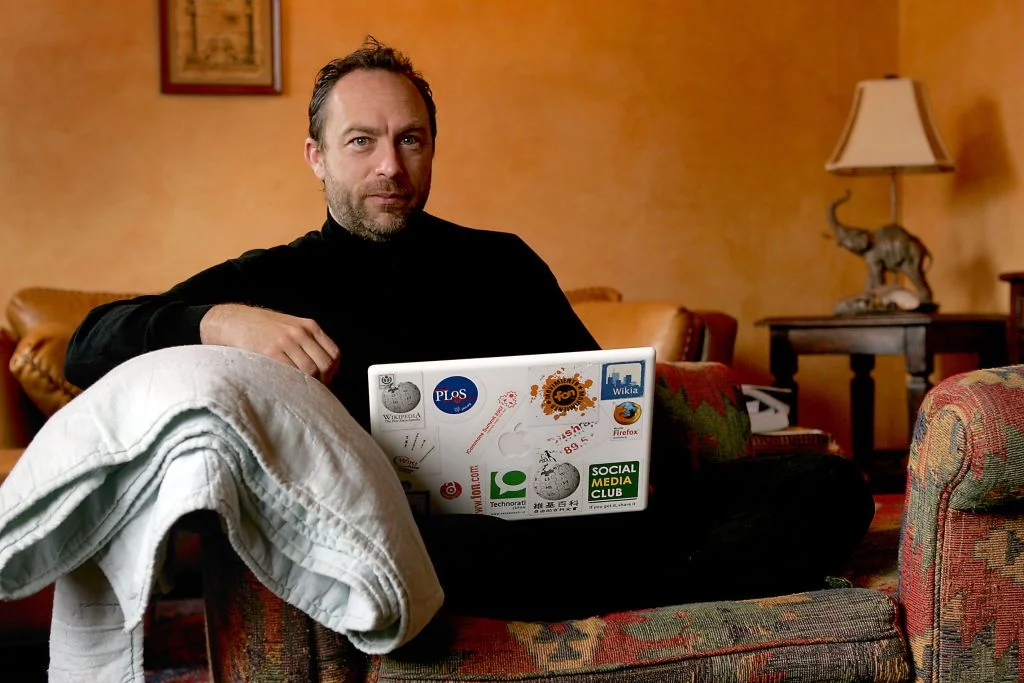
Jimmy Wales’s defining business decision may be the one that kept him from becoming a billionaire. In 2003, he made Wikipedia a nonprofit, giving up the chance to turn a rapidly growing online encyclopaedia into a conventional commercial company. That choice helped shape how the site works and how people view its founder. It also leaves a pointed question as Wikipedia approaches its 25th anniversary: can a project built on free access and volunteer effort keep thriving as online habits change?
Wales has described the nonprofit decision as possibly “the smartest or the dumbest thing I ever did”. The upside was a public resource with a mission that did not depend on selling subscriptions or maximizing ad revenue. The cost, at least in personal wealth, was substantial. Many of his contemporaries from the early internet boom, including Peter Thiel, Jeff Bezos, Elon Musk, Larry Page and Sergey Brin, became billionaires. Wales did not.
That gap helps explain why he attracts attention from both admirers and critics. He calls himself a “centrist dad” and says he is broadly supportive of business and capitalism. Yet his choice to place Wikipedia outside the usual pursuit of commercial growth has made him a symbol of a different way to build a major internet service. His public manner is often described as approachable, a contrast with the bigger-than-life personas associated with some technology founders.
The project behind the founder’s reputation
Wales was born in Huntsville, Alabama, in 1966 and was educated at home by his mother. After studying finance, he worked as an options trader in Chicago. The internet gradually became a consuming interest, and in 1995 he left trading to start an online business, inspired in part by Netscape’s public listing that year.
His first internet venture, Bomis, was a search engine aimed at men. It supplied money for a more ambitious idea: an online encyclopaedia. The first version, Nupedia, relied on a detailed editorial and fact-checking process. That approach proved slow: after five months, it had approved just one article. Wales and his collaborators then launched Wikipedia, where volunteers could write and revise entries directly.
The timing helped. Search engines were hungry for material, and Wikipedia grew quickly. Its open editing model brought recurring disputes about accuracy and bias, but it also let the site expand at a pace a small, tightly controlled team could not match. Over time, the encyclopaedia became a familiar part of how people find information online. Its scale is central to its achievement: it is described as the largest encyclopaedia written by people.
Wales no longer runs the site day to day, though he remains on its board and continues to represent it publicly. He has also started other ventures, including Fandom, an advertising-supported entertainment site, and WikiTribune, an experimental news project that did not last. Those efforts have not displaced Wikipedia as his most significant contribution.
Wikipedia’s next test
The site now faces pressure on several fronts. It is losing readers and volunteer editors, while arguments over its content have become more intense. Artificial intelligence adds a particularly difficult tension. Wikipedia’s large, free, multilingual collection of human-written material helped train large language models. Those same systems can now answer questions that once sent readers to the encyclopaedia, potentially reducing visits to the site.
That creates a problem for a resource that depends on people finding it, reading it and contributing to it. Fewer readers could mean fewer opportunities for new volunteers to join; fewer editors could make it harder to keep entries current. These are connected risks, though the available facts don’t establish how quickly they may unfold or how severe their effects will be.
There’s also a deeper question about what a future competitor would be. A new encyclopaedia could use AI to organize and generate information, but that would not automatically reproduce Wikipedia’s volunteer community or its accumulated editing history. The distinction matters: a large store of text and a sustained process for reviewing it are not the same thing.
Wales turned 60 during a year when Wikipedia marked its 25th anniversary. His book The Seven Rules of Trust reflects on credibility and knowledge, concerns that sit close to Wikipedia’s daily work. His career leaves a practical lesson about the trade-offs of building for public use: a nonprofit structure can protect a clear purpose, while leaving the project exposed to changes in attention, participation and technology. Wikipedia’s durability will depend on whether people continue to see value in helping maintain it.